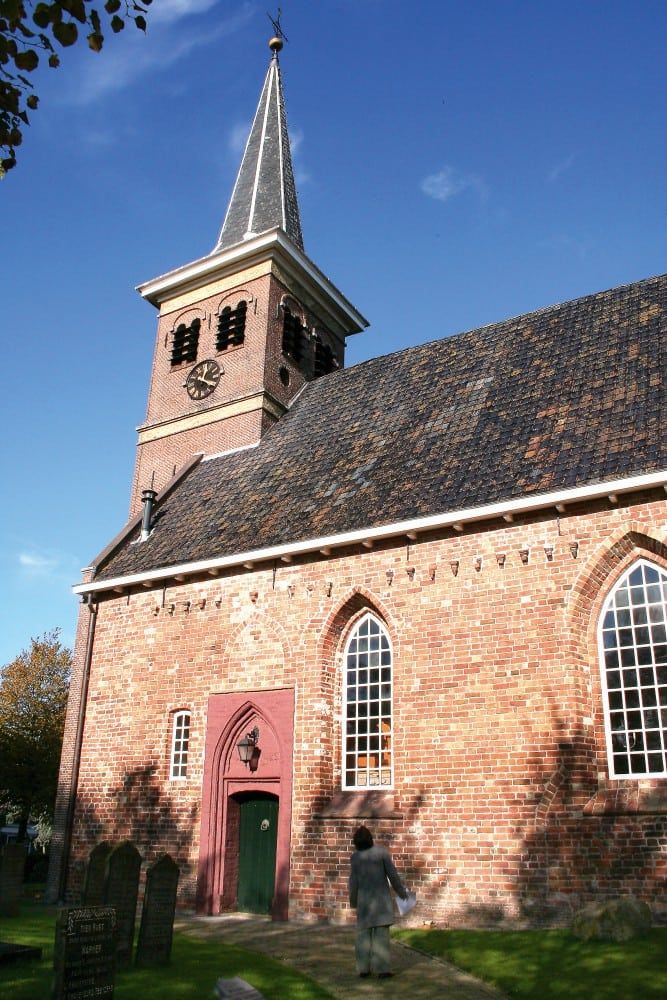
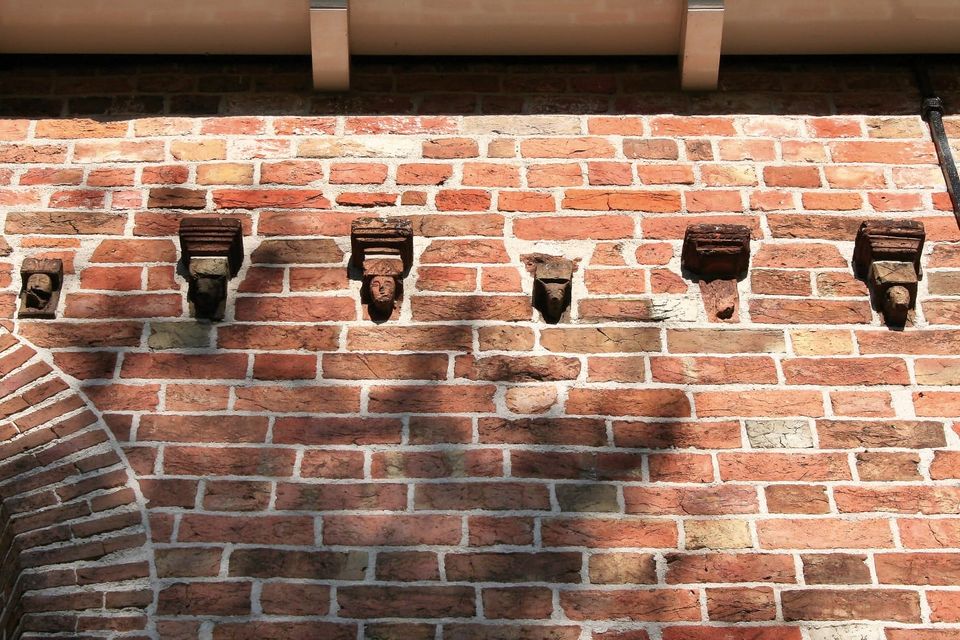
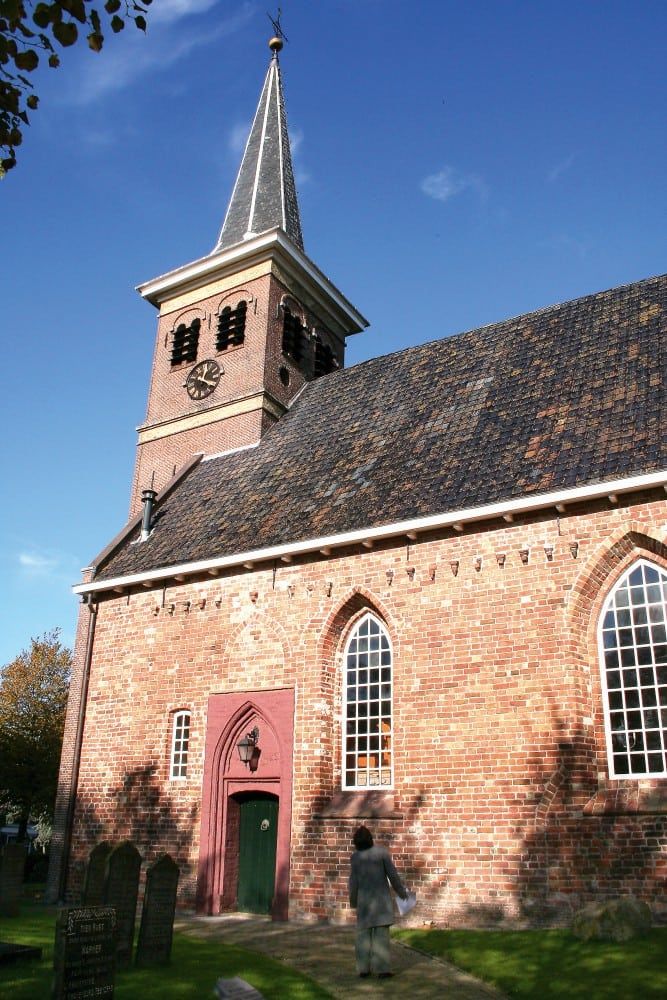
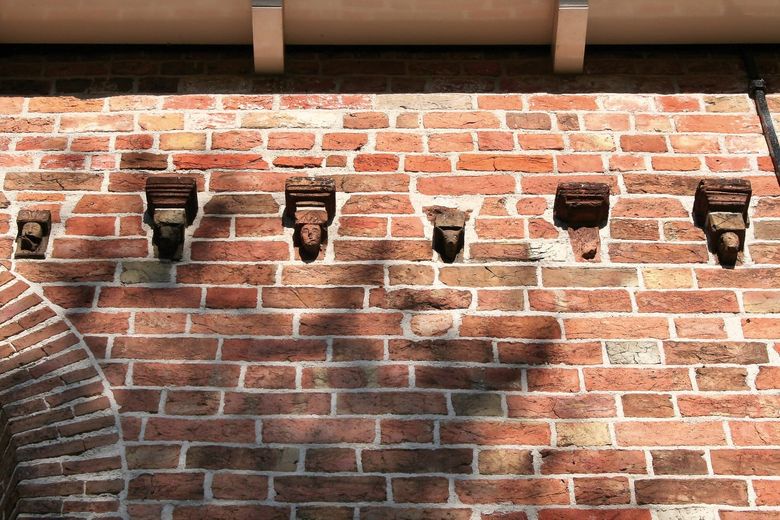
You can clearly see the romano-gothic character in the north wall, with (mostly bricked-up) pointed-arch windows. The south wall also has pointed-arch windows, but these were only inserted when the roof was raised in the 16th century. Striking and beautiful are the rows of corbels along both walls, resting on small supports shaped like human masks and animal heads. The tower and west façade are much younger, dating from 1869.
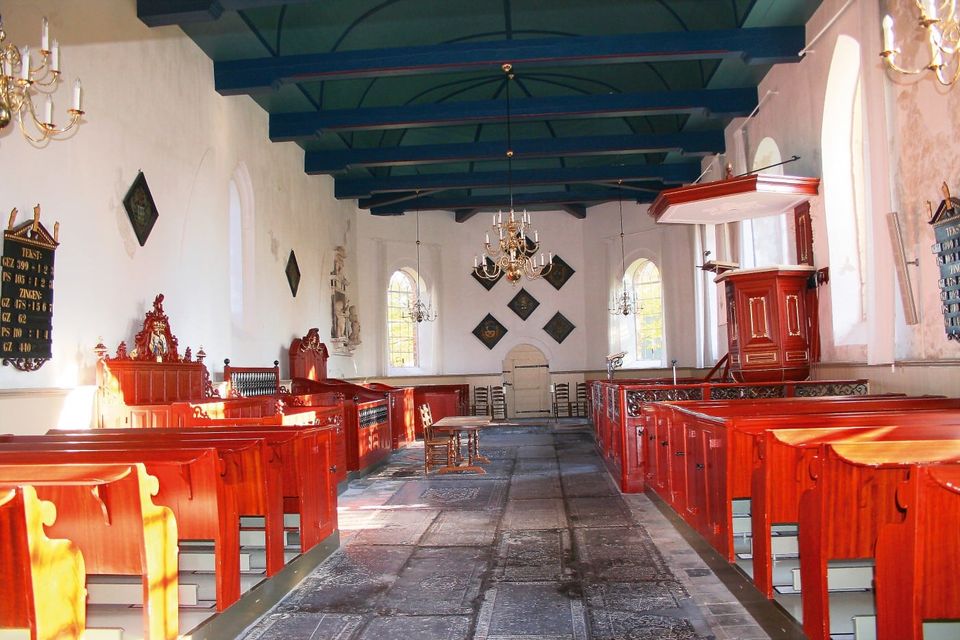
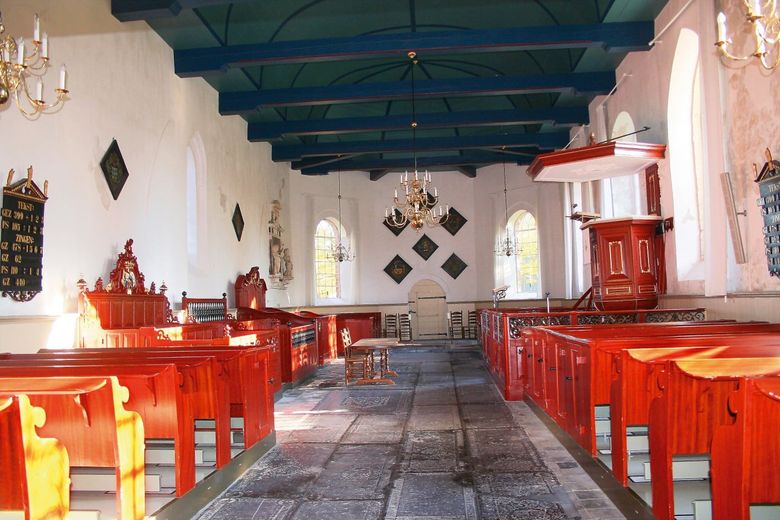
Inside, the furnishings immediately stand out in warm red. In the floor lies a large collection of carved tomb slabs. Nine diamond-shaped mourning boards hang on the walls, and in the north wall there is a richly decorated Renaissance epitaph. You’ll also find three double gentlemen’s pews from the 17th and 18th centuries. The one opposite the pulpit, so enclosed, almost looks like a monumental bed.