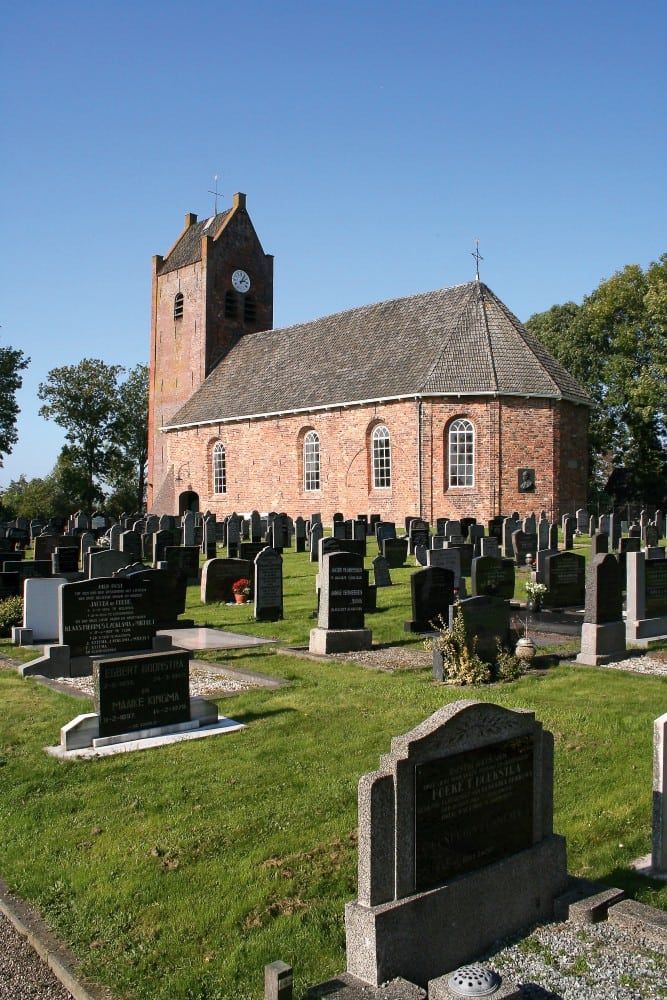
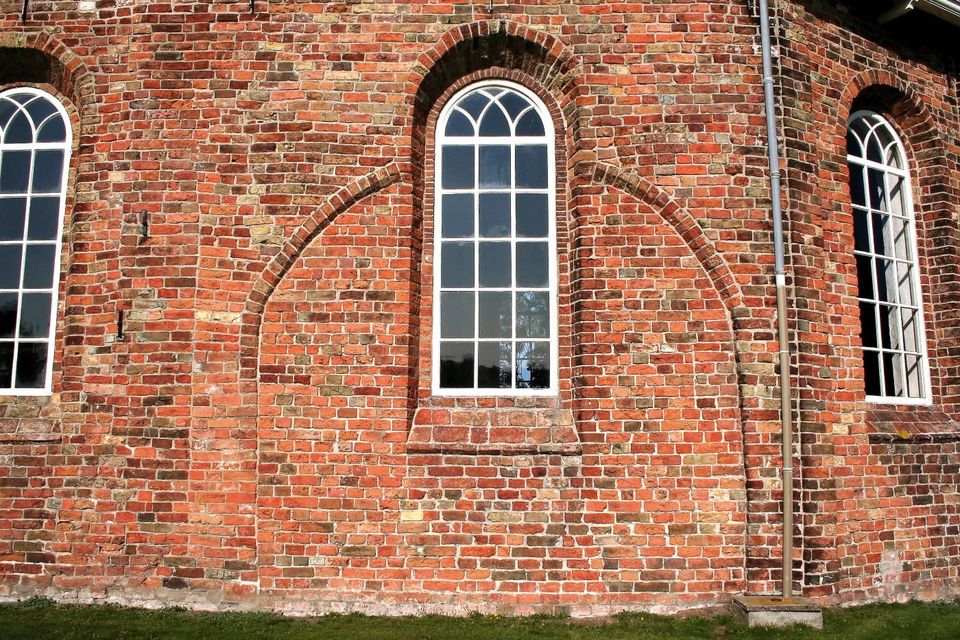
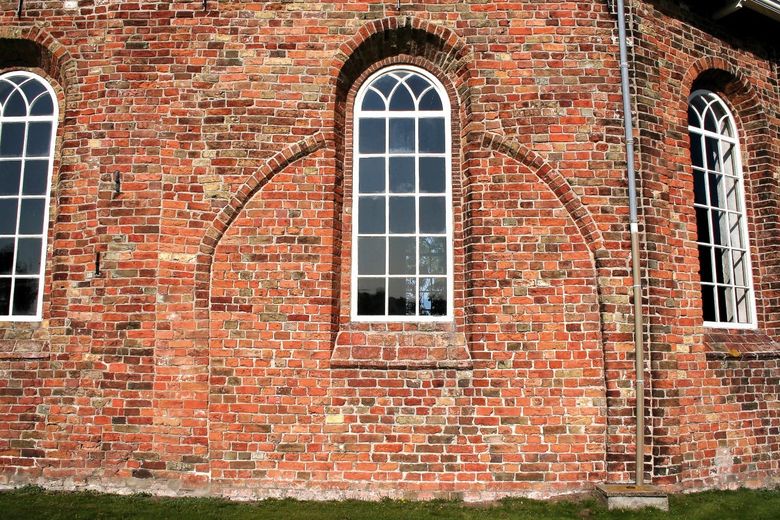
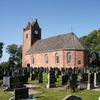
This old church was built with red monastery bricks. The traces in the masonry are fascinating: on both the north and south sides you can still see large round arches, marking where late-medieval chapels once stood. Those chapels were demolished in the 17th century. The choir was rebuilt in the 19th century, and a bronze memorial plaque was added for the philanthropist Theo van Welderen, Baron Rengers (1867–1945). The tower dates from the 14th century and was partly reinforced three centuries later.
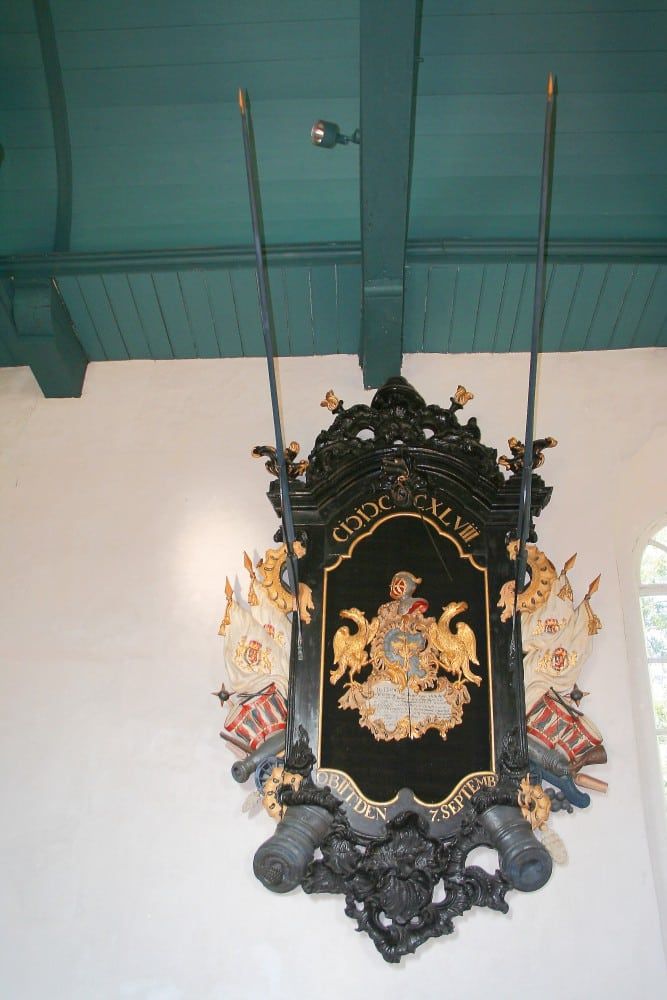
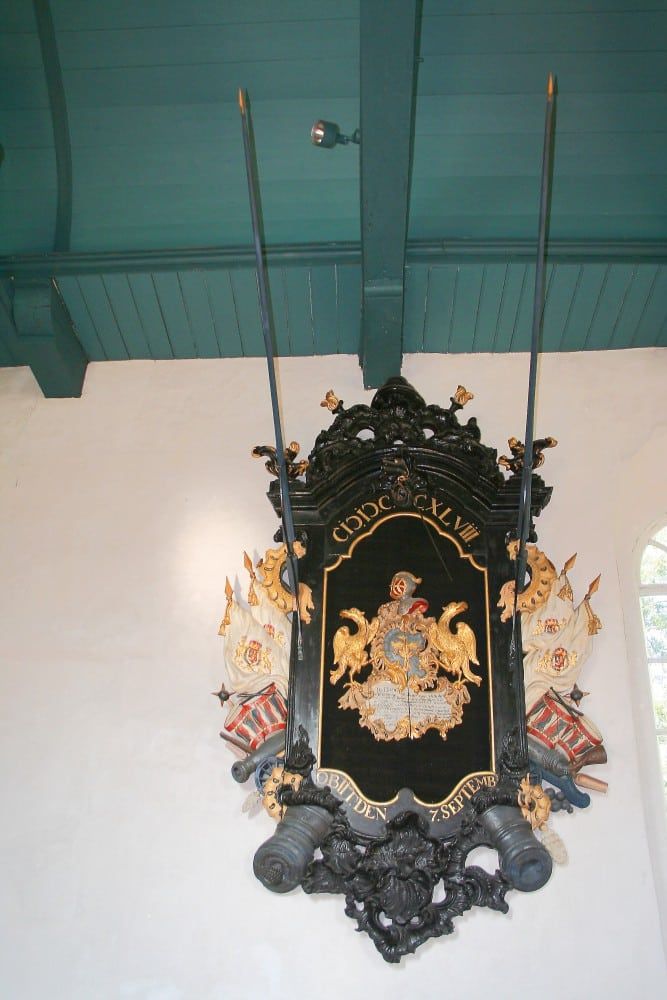
Beneath the segmental vaulted ceiling, the church has a beautifully preserved interior. Highlights include the pulpit from 1632, with panelling that runs all the way down to the floor. Opposite stands the gentlemen’s pew with a double front bench from the same period. Its canopy is crowned with obelisks and a cresting with coats of arms. Also unmissable are the mourning cabinets and funeral boards. The one for Feijo van Heemstra stands out, with banner poles that project into the church like lances. In the choir wall you’ll find a fine sandstone epitaph. The organ was built in 1871 by P. van Oeckelen from Groningen.
Extra information
The church was built around 1230 in red monastery bricks; its Late Romanesque character can still be read in the north wall, with traces of bricked-up round-arched windows and a former entrance. The large arches in both the east and south walls indicate earlier chapels added in the late Middle Ages and removed in the 17th century. The five-sided choir was rebuilt in the 19th century and includes a bronze memorial plaque (by Hildo Krop) for Theo van Welderen Baron Rengers. Near the choir lies the burial vault of the Van Heemstra family. The 14th-century tower, with small round-arched windows, was partly reinforced in the mid-17th century and likely received its current saddle roof then.
Inside, a segmental wooden vault covers the space. The pulpit with sounding board was made in 1632 by Dirck Claesz. A gentlemen’s pew from 1641 stands opposite, with balusters, fluted columns and a canopy crowned by obelisks and coats of arms. Several mourning cabinets and boards hang on the walls, including the trophy-adorned cabinet of Feijo van Heemstra. A richly coloured sandstone Renaissance epitaph commemorates Jelle van Eysinga. The organ on the west gallery dates from 1871.
Style: Late Romanesque
Date: early 13th century; tower: 14th century
Denomination: Protestant
Highlights: tomb slabs, pulpit, gentlemen’s pew, epitaph, organ