Locations
721 to 744 of 2764 results
-
Lewinski/Barry kookt
Lewinski/Barry kookt Sneek
-
Waterherberg It Beaken - De Kombuis + Het Vooronder
Waterherberg It Beaken - De Kombuis + Het Vooronder Heeg
Book now
-
FrieslandZeilen - ETAP 23
FrieslandZeilen - ETAP 23 Sneek
Book now
-
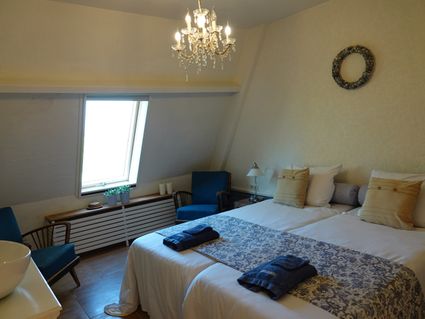
Former Notary's House
Former Notary's House Hurdegaryp
-
de Drijfveer - Friendship 26 Free - Heron
de Drijfveer - Friendship 26 Free - Heron Akkrum
Book now
-
Lutz Watervilla's - Wettervilla Alve
Lutz Watervilla's - Wettervilla Alve Balk
Book now
-
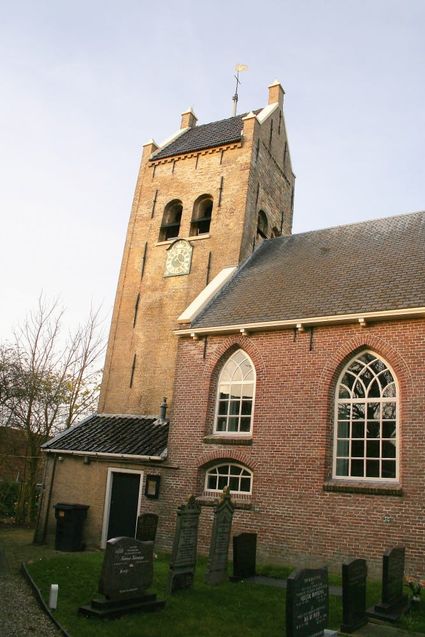
Reformed Church Gerkesklooster
Reformed Church Gerkesklooster Gerkesklooster
-
Zijda Yachting - Star of Grace
Zijda Yachting - Star of Grace Jirnsum
Book now
-
Slachtedijk Dike
Slachtedijk Dike Wommels
-
Sail Events Friesland
Sail Events Friesland Woudsend
Tip
Book now
-
Bennema State
Bennema State Hurdegaryp
-
Lutz Watervilla's - Wettervilla Trettjin
Lutz Watervilla's - Wettervilla Trettjin Balk
Book now
-
Marinaveste Campevaer
Marinaveste Campevaer Sneek
-
De HerdersHoeve
De HerdersHoeve Noardburgum
-
Aan het Water - Familiehuis Aan het Water
Aan het Water - Familiehuis Aan het Water Heeg
Book now
-
Cemetery Brongerga & Belfry
Cemetery Brongerga & Belfry Oranjewoud
-
E-Chopper verhuur Bolsward
E-Chopper verhuur Bolsward Bolsward
-
Yeb Hettinga Museum
Yeb Hettinga Museum Firdgum
-
Slapen Op De Gracht
Slapen Op De Gracht Leeuwarden
-
Gaastmeer
Gaastmeer Gaastmeer
-
Pizzeria ristorante La Gondola
Pizzeria ristorante La Gondola Lemmer
-
Ons Huis (poorhouse)
Ons Huis (poorhouse) Beetsterzwaag
-
Former Infant School
At the intersection of Voorstraat and Meester Andreaestraat stands the former bewaarschool, or infant school. A bewaarschool was a form of pre-school education in the Netherlands and Belgium during the 19th and early 20th centuries.
The infant school was intended for children between the ages of about three and six, before they entered primary school. The Dutch name literally means a place where children were “looked after” while their parents were at work. In practice, they received basic education, learning skills such as listening, counting, and playing together under supervision. The bewaarschool is regarded as the forerunner of today's daycare centres and preschool programmes.
The infant school in Kollum dates from 1828 and is located on the eastern side of the village. At that time, just as on the western side of Voorstraat, the area around the school was home to many small businesses and craftspeople. There was a farmer with a small slaughterhouse, carpenters lived and worked here, and there was a combined butcher's shop and livestock business, as well as a steam-powered grain mill with an animal feed business. The neighbourhood also included a small wholesale dealer in butter, cheese and buttermilk supplied by the factory at Dokkumer Nieuwezijlen, a liquor store, a blacksmith's workshop and a tailor's shop. On the opposite side of the street from the infant school stood a grocery store and a cigar shop.
Kollum
-
The liberation of Leeuwarden
On 11 April 1945, it became clear that German resistance in the north of the Netherlands was limited. On 12 April, the Allies seized this opportunity to advance on Friesland as quickly as possible. One of the main goals was to liberate Leeuwarden. The 9th Canadian Infantry Brigade was designated for this purpose. But things would turn out differently.
On 12 April, the Royal Canadian Dragoons entered Friesland at Noordwolde. They were to conduct reconnaissance with their armoured vehicles and reach the Wadden Sea as quickly as possible. As a result, the German troops in Friesland and Groningen would be separated.
On the night of 14 to 15 April, three Squadrons of the Dragoons were at Suameer. Burgum could not be reached earlier that day, because the bridge at Burgummerdam had been blown up by the Germans.
Meanwhile, all sorts of things were happening in nearby Leeuwarden. On 12 April, the airfield had been blown up by the Germans. And they left the city on 14 April. Leeuwarden would not be defended. The Burgerweeshuis (Civil Orphanage) that had housed several German agencies was set on fire. An attempt to blow up the telephone exchange failed due to an ingenious intervention by the resistance. In the early morning of 15 April, the resistance also took to the streets en masse to occupy important points and to capture Germans who had remained behind.
The Dragoons in Suameer were in contact with the resistance in Leeuwarden. Due to various reports, it was unclear whether there was now heavy fighting in Leeuwarden or whether the Germans had left the city completely. Because the Germans had blown up important bridges on the route from Heerenveen to Leeuwarden, the infantry could not quickly provide assistance.
So, the Dragoons went to take a look for themselves. Initially, a patrol of four vehicles was sent via the Groningerstraatweg into the city around half past eleven. One of the Canadians in those vehicles recorded the following:
"As we entered the city, passing through the concrete barrier by the narrow passageway left for normal traffic, we were met by an almost hysterical patrol of Resistance men [...] In a few moments the news of our arrival had spread through the city, and we were given a fantastic welcome as we rolled slowly forward into the centre of town."A resident of Leeuwarden recalled:
"We lived close to the Groningerstraatweg, where our liberators passed. Many hundreds of us stood there, all happy spectators. All of a sudden, two ladies from the row flung themselves forward and threw their arms around the Canadians' necks, saying: "Oh darlings, you’re here at last!"After the patrol determined that the coast was clear, the entire C Squadron, a detachment of the Royal Canadian Engineers and Regimental Headquarters of Lieutenant-Colonel Landell followed. Leeuwarden had been liberated. After this, thousands took to the streets. One of the Canadians wrote:
"We halted, and were immediately surrounded by laughing, yelling mobs of people, bringing flowers to give to us, and cheering every move. The Resistance men were everywhere, doing their best to keep the people within bounds and off the cars, but their efforts were hardly necessary. I never saw a more satisfying gathering in my life."Leeuwarden had been liberated by the Dragoons through unexpected circumstances. On the night of 15 to 16 April, Canadian infantry moved into the city.
Leeuwarden