Locations
1177 to 1200 of 5549 results
-
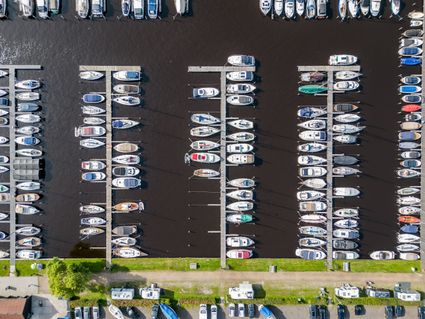
De historische haven van Lemmer
Lemmer
from your location
-
Het Kleine Paradijs
Het Kleine Paradijs
Easterein
Direct boekbaar
from your location
-
Minicamping Lyts mar Smûk
Vegelinsoord
from your location
-
Lutz Watervilla's - Wettervilla Ien
Balk
Direct boekbaar
from your location
-
Beurtveer Balk-Heeg
Beurtveer Balk-Heeg
Balk
Direct boekbaar
from your location
-
Camping Stoker - Farm Campsite
De Veenhoop
from your location
-
Doughpamine
Doughpamine
Leeuwarden
from your location
-
The Princessehof National Museum of Ceramics
Leeuwarden
from your location
-
Homminga's Fijne Winkeltje
Harlingen
from your location
-
De Yserman Streetfood
Leeuwarden
from your location
-
Snowcentrum Leeuwarden
Leeuwarden
from your location
-
Strandhuis: zicht op zee
-
Accept cookies to see this content.
-
-
Strandhuis: zicht op zee
(beluister hier het audioverhaal)
Strandhuis der Bildtpollen. Het staat er echt, op de woning hier aan de voet van de Nieuwebildtdijk. Een schelp siert het wapen op de gevel. Maar waar is het strand dan? Helaas. Zwemmen of recreëren kun je hier niet, maar strand betekent dan ook eigenlijk gewoon de overgang tussen land en zee.
Dit strandhuis werd in 1899 gebouwd voor het waterschap De Bildtpollen. Die Bildtpollen liggen hier achter je. Sinds 1715 is het een smalle polder van in totaal 55 hectare groot, die reikt tot aan het Noarderleech in het oosten.
Het waterschap van de Bildtpollen vergaderde eerder in de voorganger van dit huis, dat contributiehuis werd genoemd. En er waren nog twee andere strandhuizen op het Bildt, met hun eigen waterschap en strandmeester. Het statige Hooghuis aan de dijk tussen de Boonweg en Zwarte Haan moest in de jaren zeventig van de vorige eeuw verdwijnen voor de dijkverhoging, het strandhuis bij Westhoek is onherkenbaar.
De strandmeester van de Bildtpollen, die hier met zijn gezin woonde, voerde het dagelijkse werk voor het waterschap uit. Dat betekende vooral toezicht houden op de dijk, maar ook vaarten en weggetjes onderhouden die belangrijk waren voor de waterhuishouding, personeel aansturen en vee verzorgen dat in de polder graasde. De schuur stond vol met spullen voor dijkonderhoud en dijkbewaking.
De volmachten, bestuursleden wier gezichten op schilderijen en foto's zijn vereeuwigd, vergaderden altijd in de bovenkamer. Hier hadden ze goed zicht op zee en de (toen nog lagere) dijk een kilometer verderop. Soms sloten ook de 'ingelanden' bij de vergaderingen aan, eigenaren van de grond die tegen de zee beschermd moest worden. De vrouw des huizes kwam regelmatig met een dienblad de steile trap op om de heren met koffie, sigaren en sterke drank te bedienen.
Heerco Spoelstra was de laatste strandmeester. Toen het huis na fusies van waterschappen in 1980 vrijkwam, kochten de huidige bewoners het op een veiling. De eerste nacht dat het stormde, was het overduidelijk hoe zeer de wind hier de baas is. Toch hebben ze geen minuut spijt gehad.
Ingesproken door:
Arjen Boerstra creëert installaties, video’s, foto’s en voorstellingen op specifieke plekken. Daarbij staat de vraag ‘Wie of wat ben ik?’ centraal. Zijn werk toont in scene gezette situaties en vertelt verhalen over herinneringen, identiteit en menselijke ontwikkeling.
Oerol 2007 was het begin van een lange samenwerking tussen Arjen en Joop Mulder. Van het project De Aardappeleter tot Camera Batavia. “Als ik met Joop op stap was, maar ook als ik aan Joop denk, dan ging en ga ik opeens beter kijken. Uit opportunisme want ik wil projecten doen in dat landschap, maar ook uit een gedeelde liefde om verhalen te vertellen en ogen te openen. Dat delen en bewust maken was bij hem altijd voelbaar, het was waarvoor hij streed en waarmee hij tomeloos doorging.”Dit verhaal is onderdeel van de route Gemalen Verhalen van Sense of Place
Sint Annaparochie
from your location
-
-
Kwekerij Trimpe
Kwekerij Trimpe
Koudum
from your location
-
Weperbult aan de Helomaweg
Fochteloo
from your location
-
Stadslogement Westersingel - Bovenkamer Stadszicht
Sneek
Direct boekbaar
from your location
-
Strandhuys Makkum
Strandhuys Makkum
Makkum
from your location
-
De Nôtmûne Koartwâld
Surhuisterveen
from your location
-
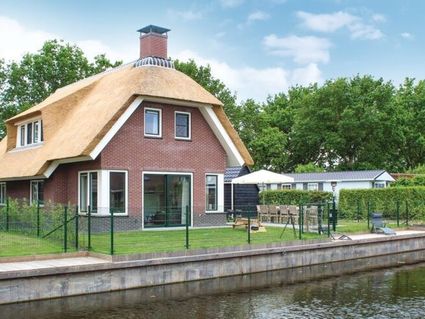
Watervillapark Idskenhuizen - Lytse Lies
Idskenhuizen
Direct boekbaar
from your location
-
Hervormde Kerk Westergeest
Westergeest
from your location
-
TrendingTent
TrendingTent
Oudemirdum
from your location
-
Boksum
Boksum
boksum
from your location
-
Marboei MB33
Marboei MB33
Sânmar
from your location
-
E-Chopper Oranjewoud
Oranjewoud
from your location
-
The battle for the Tjonger bridge in Mildam
In the afternoon of 12 April, rumours had reached Mildam that Englishmen or perhaps Canadians had been sighted at Peperga. The Canadian vanguards had entered Friesland. For the inhabitants of Mildam it was still a surprise when at first one and shortly afterwards another military vehicle with a few men in khaki-coloured overalls stopped at the bridge.
These vehicles were part of a patrol of "D" Squadron Royal Canadian Dragoons commanded by Lieutenant Homer Thomas. These Canadians established that unlike other bridges, the bridge in Mildam over the Tjonger had not yet been blown up by the occupying forces. The fact that the Tjonger bridge in Mildam had not been destroyed was due to the local resistance movement. The Germans had indeed planned to blow up this bridge as well. But at the risk of their own lives, resistance fighters had removed the detonators from the explosives affixed to the bridge.
The Squadron Commander immediately ordered all units to secure the bridge. And the Dutch Domestic Armed Forces were also requested to provide men. The precautions turned out to be justified. In the night of 12 to 13 April, German troops launched one of their few counter-attacks in the province of Friesland. From Heerenveen, they managed to surprise the Canadians in Mildam. They tried to regain control of the bridge three times. During the fierce fighting, Canadian vehicles were knocked out. But the Dragoons stood firm, and the Germans were driven off again. Mildam was freed.Four Canadian soldiers were injured in the fighting. The number of casualties on the German side is unknown. There was property damage in Mildam, but no civilians were killed. With a little less luck, though, there would have been several Dutch casualties. In the early morning of 13 April, a group of dozens of resistance fighters approached the bridge at dusk from the direction of Nieuweschoot. This was the reinforcement requested by the Canadians on 12 April when the undamaged bridge was discovered. The resistance fighters were partly carrying captured German weapons and were not noticed by the Dragoons in the semi-darkness until late.
Lieutenant Thomas, mentioned earlier, almost gave the order to open fire. It was only at the last moment that it became clear that they were not Germans. The resistance members had managed to make themselves known by singing songs in English.
The preservation of the bridge was important. During the following days, the Canadians would make extensive use of the bridge to advance further in the direction of Leeuwarden and liberate the province of Friesland.
Mildam
from your location
-