Locations
1369 to 1392 of 2779 results
-
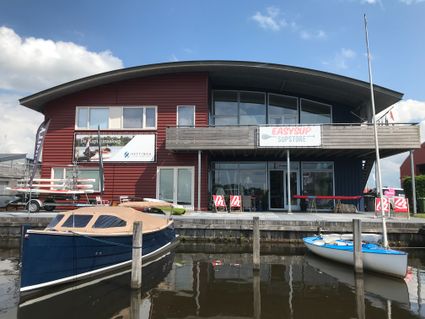
SPOT Langweer
SPOT Langweer Langweer
-
Museum De Tiid
Museum De Tiid Bolsward
Tip
Book now
-
Fisching company Andries van Netten
Fisching company Andries van Netten Gaastmeer
-
De Stille Boot
De Stille Boot Heeg
-
Unia 12
Unia 12 Leeuwarden
-
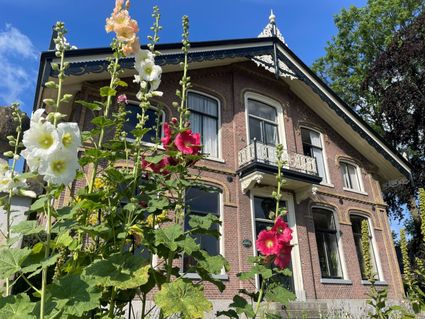
Sytzama House
Sytzama House
What is now a grand café has a history closely connected with local government, the Second World War, and Baron Willem van Sytzama, the building's first owner, after whom it is named.
In Van Sytzama's time, there were very few buildings nearby. Instead, a large landscaped garden with extensive ponds stretched out behind the house. Baron Willem van Sytzama believed he was happily married to Cecilia van Heemskerk, but she left him for another man. Although the baron took legal action in an attempt to prevent the separation, he was unsuccessful. She never returned, and he never remarried. In later years, however, the building served as Kollum's town hall, where hundreds of marriages were celebrated.
During the Second World War, Mayor Gerben Feitsma was sworn into office in this building. The ceremony took place with prominent displays of flags and the Nazi salute. For that reason, Feitsma is often described as an NSB (Dutch National Socialist Movement) mayor. At the same time, there is evidence that he occasionally helped prevent residents of Kollum from being sent to Germany for forced labour by employing them on his farm. Because of his wartime record, his name is not always included in historical accounts.
His brother, Jan Feitsma, became notorious for a different reason. As Prosecutor General, he ordered signs reading "Jews Forbidden" to be displayed throughout the occupied Netherlands. The policy caused considerable controversy in Kollum during the war. The local tennis club preferred to close its courts rather than display such a sign. In early 1945, Jan Feitsma was shot dead by members of the Dutch Resistance. His funeral in Kollum was attended by numerous members of the SS.
Kollum
-
Akkrum
Akkrum Akkrum
-
National Park 'De Alde Feanen'
National Park 'De Alde Feanen' Earnewâld
-
Vakantiepark Tjermelân
Vakantiepark Tjermelân Oosterend
Sustainability info
-
Sint-Gangulfuskerk Church in Ee
Sint-Gangulfuskerk Church in Ee Ee
-
Sparkberry
Sparkberry Burgum
-
Zijda Yachting - Felize Elite
Zijda Yachting - Felize Elite Jirnsum
Book now
-
Het Fotolokaal
Het Fotolokaal Tjerkwerd
-
Ambush at Oldeholtpade
On 12 April, the bridge over the Tjonger in Mildam fell into the hands of the Royal Canadian Dragoons reconnaissance regiment. Because the occupier had blown up many other bridges, the Canadians attached great importance to preserving this bridge for the crossing of other Canadian units. That is why dozens of armoured cars, mobile artillery guns and numerous other vehicles were sent to Mildam that day to reinforce the bridgehead over the Tjonger.
In one of those armoured cars, a Staghound, was 24-year-old Trooper Wilfred Robert George Berry from Ontario. The young Canadian had volunteered for military service in Europe. And had already fought with the Royal Canadian Dragoons in Italy. At the end of February 1945, they were transferred to Northwest Europe.
For Berry, the war ended in Friesland. In Oldeholtpade, on the road to Wolvega, his vehicle drove into an ambush along with at least one other Staghound. In the vicinity of a broken-down German car, German soldiers had hidden with Panzerfausts. The Panzerfaust was a very powerful and easy-to-use anti-tank weapon. The first shot missed, but the second projectile hit the front Staghound, on the side where driver Wilfred Berry was sitting at the time.2 The Staghound went off the road and overturned. The three other crew members got injured, but were able to leave the vehicle and took cover behind the second Staghound. One of them stated:
"[…]Flames burst through the turret, where the officer and I were half in and half out of the hatches. Any skin surface not covered was burned and the flames badly singed our eyebrows, eyelashes, moustaches and hands, sending me and the officer both wounded to the field hospital."3
Immediately after the first Staghound was hit, the second Staghound opened fire on the Germans. Seriously injured, Wilfred Berry remained in the vehicle. After about fifteen minutes of shooting back and forth, the other Staghounds retreated towards Oldeberkoop. The exact reason for this remains unclear. Berry was already dying and was briefly cared for by the elderly Andriesje Dekker-Oosterhof in the vehicle when the shooting had stopped. The tragedy had unfolded right in front of her house. He died in the wreck shortly afterwards.
Berry's remains were eventually transferred to the farm on "De Bult" in Oldeberkoop and buried there. After the war he would be reburied at the Canadian war cemetery in Holten. The other crew members were eventually able to return to their units after receiving medical treatment. The commander only had burns on his face.
The event made a deep impression on the inhabitants of Oldeholtpade. In 1945, a monument to Berry was erected. And in 1965, a street was named in his honour.
Oldeholtpade
-
HarTeluk Joure - Comfort Tweepersoons kamer bad
HarTeluk Joure - Comfort Tweepersoons kamer bad Joure
Book now
-
De Kan Hoeve
De Kan Hoeve De Veenhoop
-
Marina De Kuilart
Marina De Kuilart Koudum
-
Grand Café De Doelen
Grand Café De Doelen Franeker
-
Zijda Yachting - Zuiderzee Elite
Zijda Yachting - Zuiderzee Elite Jirnsum
Book now
-
Vakantiehuis Genereus
Vakantiehuis Genereus Grou
-
Strand bij Slotermeer: De Baaier
Strand bij Slotermeer: De Baaier Sloten
-
Jachthaven Friese Hoek
Jachthaven Friese Hoek Lemmer
-
Hike & Bike Hotel
Hike & Bike Hotel Noordwolde
-
Stichting Signaal Beheer
Stichting Signaal Beheer Heeg