Village Walk through Kollum
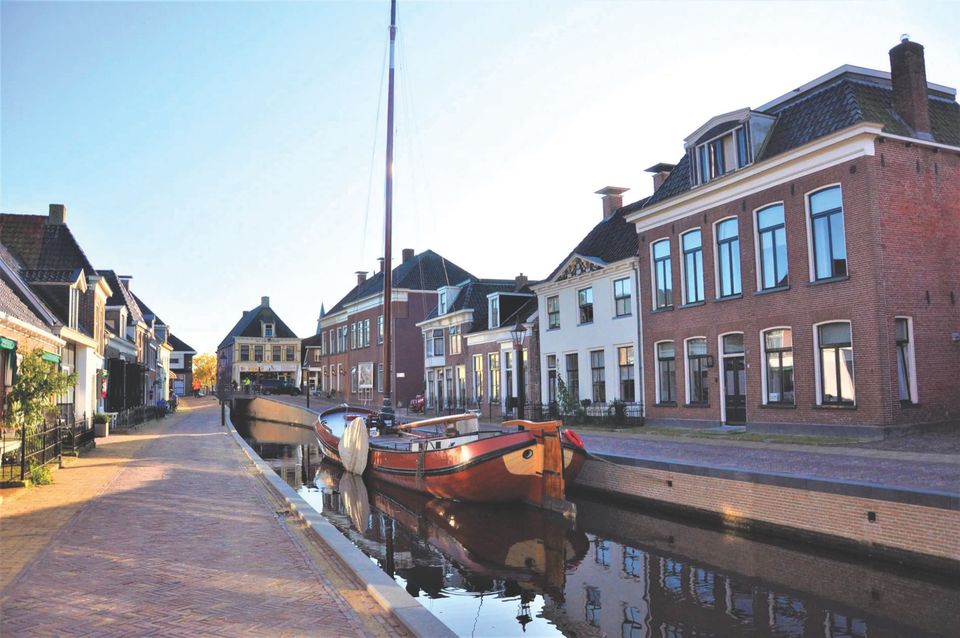
Discover twelve national heritage monuments and many more stories from the past on this 2-kilometre village walk through Kollum.
Please note: This route does not follow the numbered walking junction network.
A Village with the Character of a Town
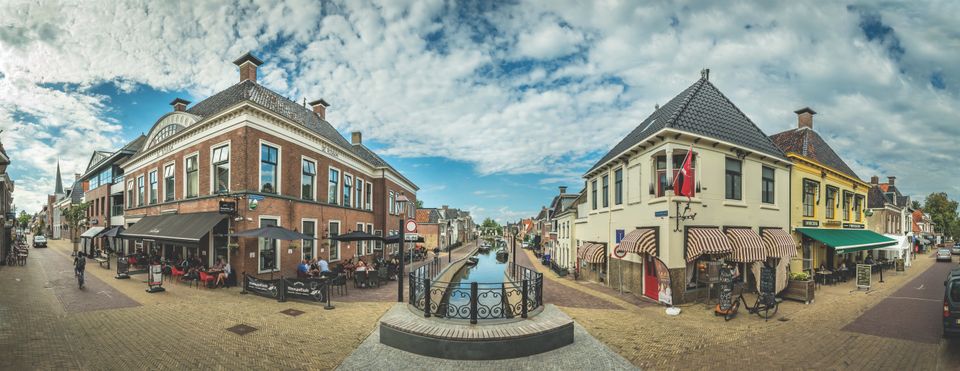
Although Kollum never received official town rights, it had many of the characteristics of a town during the 16th century. It boasted urban institutions such as a public weigh house, a Latin school and a hospital for travellers and the poor. In that respect, Kollum rivalled many of Friesland's small and picturesque towns. Today, its impressive historic buildings can still be admired, many of them lining the Voorstraat.
It is hard to imagine that Kollum once looked very different. Country estates, manor houses and stinzen, beautifully land…
Discover twelve national heritage monuments and many more stories from the past on this 2-kilometre village walk through Kollum.
Please note: This route does not follow the numbered walking junction network.
A Village with the Character of a Town
Although Kollum never received official town rights, it had many of the characteristics of a town during the 16th century. It boasted urban institutions such as a public weigh house, a Latin school and a hospital for travellers and the poor. In that respect, Kollum rivalled many of Friesland's small and picturesque towns. Today, its impressive historic buildings can still be admired, many of them lining the Voorstraat.
It is hard to imagine that Kollum once looked very different. Country estates, manor houses and stinzen, beautifully landscaped gardens with ornamental ponds, a compact centre bustling with craftsmen, and extensive woodlands once defined the village. Even earlier, Kollum occupied an important position on a coastal trade route.
Much has changed over the centuries, and many new buildings have been added, yet Kollum has retained its peaceful historic character. Today, the atmosphere of the past can still be experienced in the heart of the village. This walk takes you past twelve remarkable heritage sites, surrounded by many more traces of Kollum's rich history.
Locations on this route
-
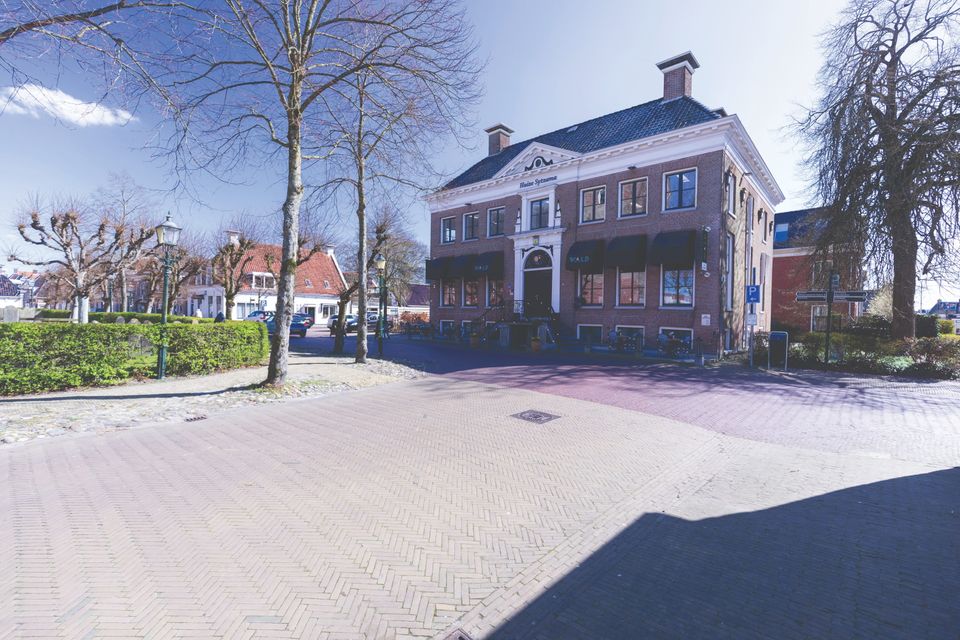
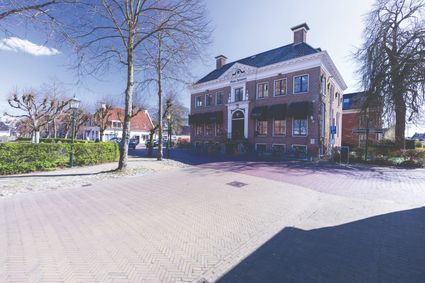
Sytzama House
What is now a grand café has a history closely connected with local government, the Second World War, and Baron Willem van Sytzama, the building's first owner, after whom it is named.
Sytzama HouseSytzama House
What is now a grand café has a history closely connected with local government, the Second World War, and Baron Willem van Sytzama, the building's first owner, after whom it is named.
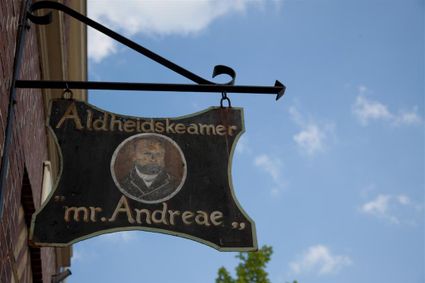
In Van Sytzama's time, there were very few buildings nearby. Instead, a large landscaped garden with extensive ponds stretched out behind the house. Baron Willem van Sytzama believed he was happily married to Cecilia van Heemskerk, but she left him for another man. Although the baron took legal action in an attempt to prevent the separation, he was unsuccessful. She never returned, and he never remarried. In later years, however, the building served as Kollum's town hall, where hundreds of marriages were celebrated.
During the Second World War, Mayor Gerben Feitsma was sworn into office in this building. The ceremony took place with prominent displays of flags and the Nazi salute. For that reason, Feitsma is often described as an NSB (Dutch National Socialist Movement) mayor. At the same time, there is evidence that he occasionally helped prevent residents of Kollum from being sent to Germany for forced labour by employing them on his farm. Because of his wartime record, his name is not always included in historical accounts.
His brother, Jan Feitsma, became notorious for a different reason. As Prosecutor General, he ordered signs reading "Jews Forbidden" to be displayed throughout the occupied Netherlands. The policy caused considerable controversy in Kollum during the war. The local tennis club preferred to close its courts rather than display such a sign. In early 1945, Jan Feitsma was shot dead by members of the Dutch Resistance. His funeral in Kollum was attended by numerous members of the SS.
-
-
-
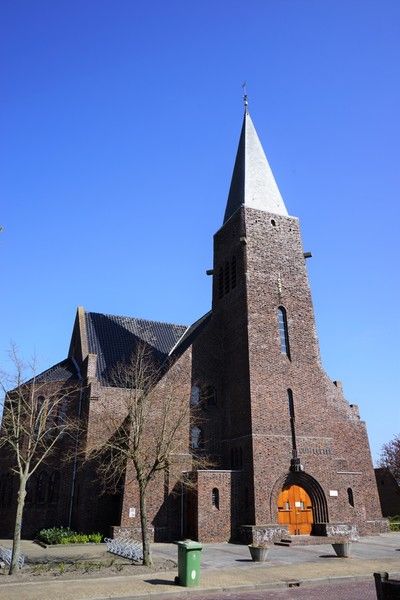
Oosterkerk
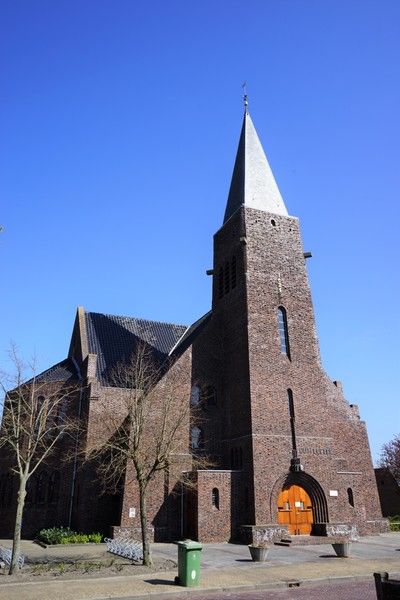
A church built in the Amsterdam School style, designed by the architect Egbert Reitsma.
OosterkerkOosterkerk
A church built in the Amsterdam School style, designed by the architect Egbert Reitsma.
Stepping inside the Oosterkerk in Kollum is a remarkable experience. Your attention is immediately drawn to the spectacular painted wooden ceiling, decorated with abstract, flowing and geometric patterns. The artwork was created by George Martens (1894–1979), a Dutch painter and graphic artist best known as a member of the Groningen artists' collective De Ploeg.
The ceiling's rich reds, ochres, blues and green accents seem almost to be in motion, creating a flowing, wave-like effect. Set against the brick walls and the church's restrained furnishings, the artwork becomes even more striking. Daylight streaming through the tall windows highlights the texture of the wood and makes the colours appear even more vibrant.
The church's architecture, designed by Egbert Reitsma—who was also a member of De Ploeg—enhances this unique experience. Its parabolic arch construction creates exceptional acoustics and a remarkable sense of space. Even the light fitting designed by Reitsma is considered a museum piece in its own right. Local tradition has it that not everyone in Kollum appreciated the lavish decoration when the church was first built. To some, it resembled a theatre or even a cinema more than a church. Today, however, the amphitheatre-shaped interior is precisely what makes a visit to the Oosterkerk so memorable.
-
-
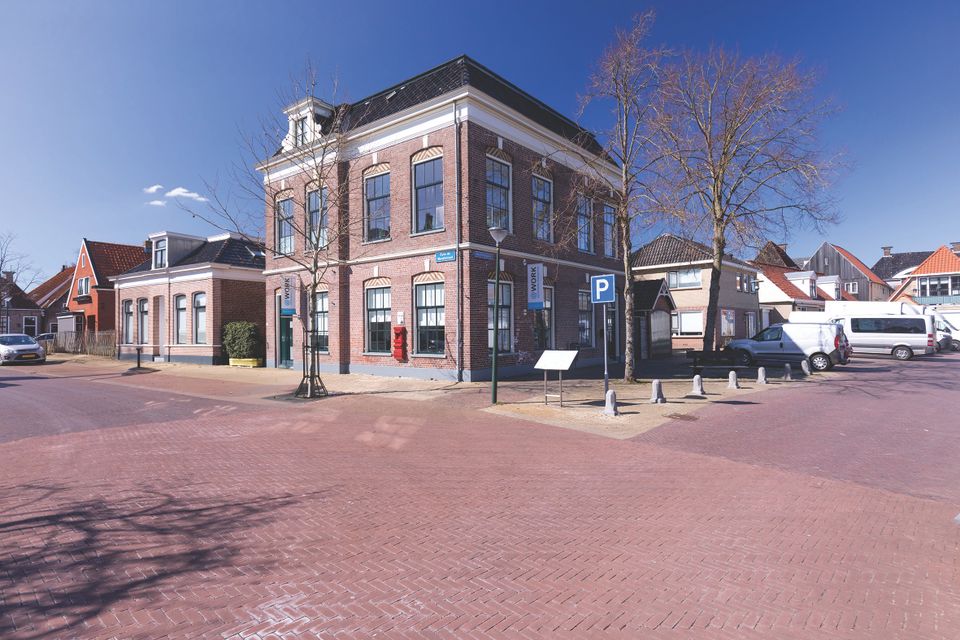
Former Post Office Kollum
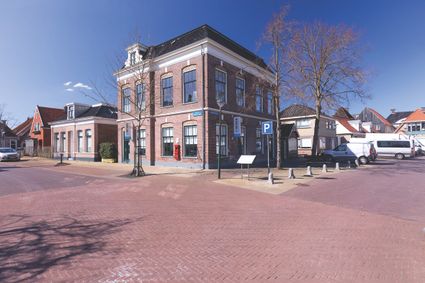
Although this building is now home to a business, it is well worth taking a look inside this former post office.
Former Post Office KollumFormer Post Office Kollum
Although this building is now home to a business, it is well worth taking a look inside this former post office.
Those who look closely can still spot the remains of the old post office within the current premises. The original wooden service counters have been preserved, while the bright red PTT letterbox outside is a reminder of days gone by.
Today it is hard to imagine, but for centuries the postal service was one of the most important means of communication. This main post office was built in 1888 for that purpose. It is one of the few post offices constructed after 1883 that was not designed by the Government Architect for the Northern Netherlands, C. H. Peters, but most likely by the municipal architect H. A. Zondag. The municipality leased the building to the national government. The post office occupied the ground floor, while the postmaster lived upstairs. Following a renovation in 1908, the telegraph and telephone services were also housed here. The post office remained in use until the end of 1972.
-
-
Former Courthouse
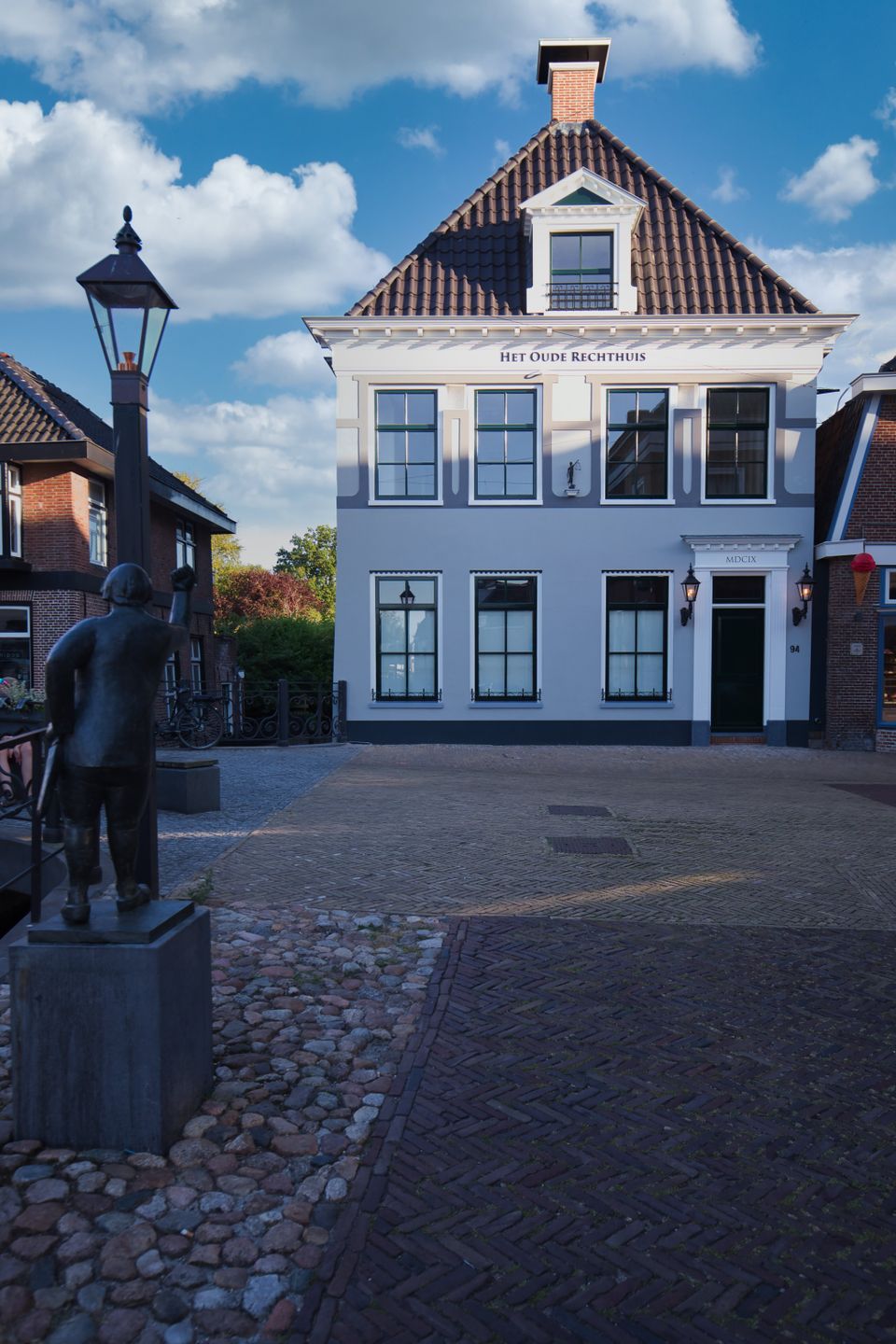
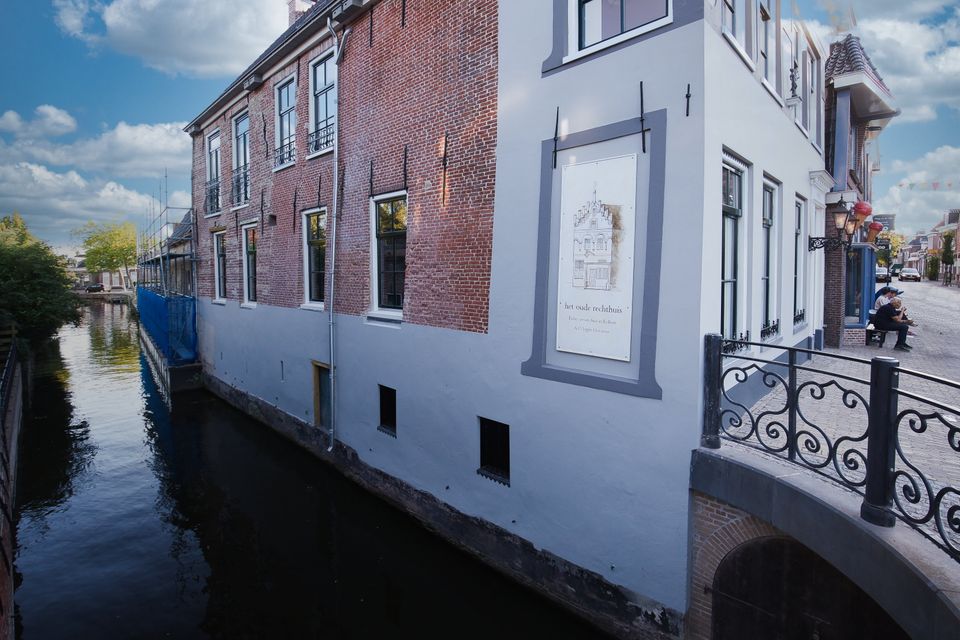
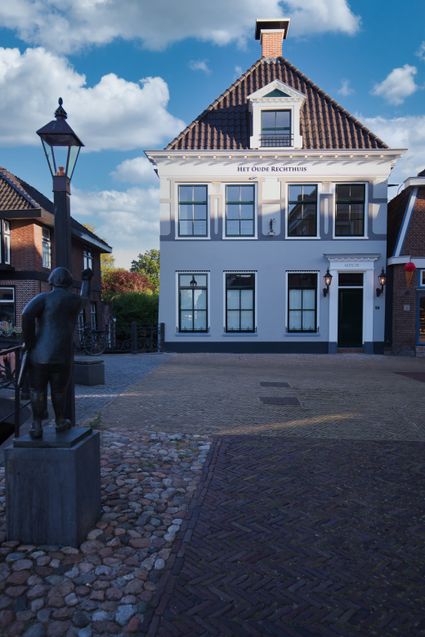
This building, now used as a shop, recalls the time when justice was administered in Kollum. It was purchased by the municipality in 1609 and has served a variety of purposes ever since. The Old Courthouse (Oude Rechthuis) played an important role during the Kollum Uprising of 1797.
Former CourthouseFormer Courthouse
This building, now used as a shop, recalls the time when justice was administered in Kollum. It was purchased by the municipality in 1609 and has served a variety of purposes ever since. The Old Courthouse (Oude Rechthuis) played an important role during the Kollum Uprising of 1797.
The building was bought by the municipality of Kollumerland in 1609 and converted into a courthouse. It can be recognised by the statue of Lady Justice, which still watches over the street from the façade. The Rechthuis is the oldest stone building in Kollum.
Kollum was given its own courthouse because the distance between Groningen and Leeuwarden was too great to travel in a single day. The ground floor was used as an inn and even included stables for horses and cattle. To this day, the space has continued to serve a variety of purposes.
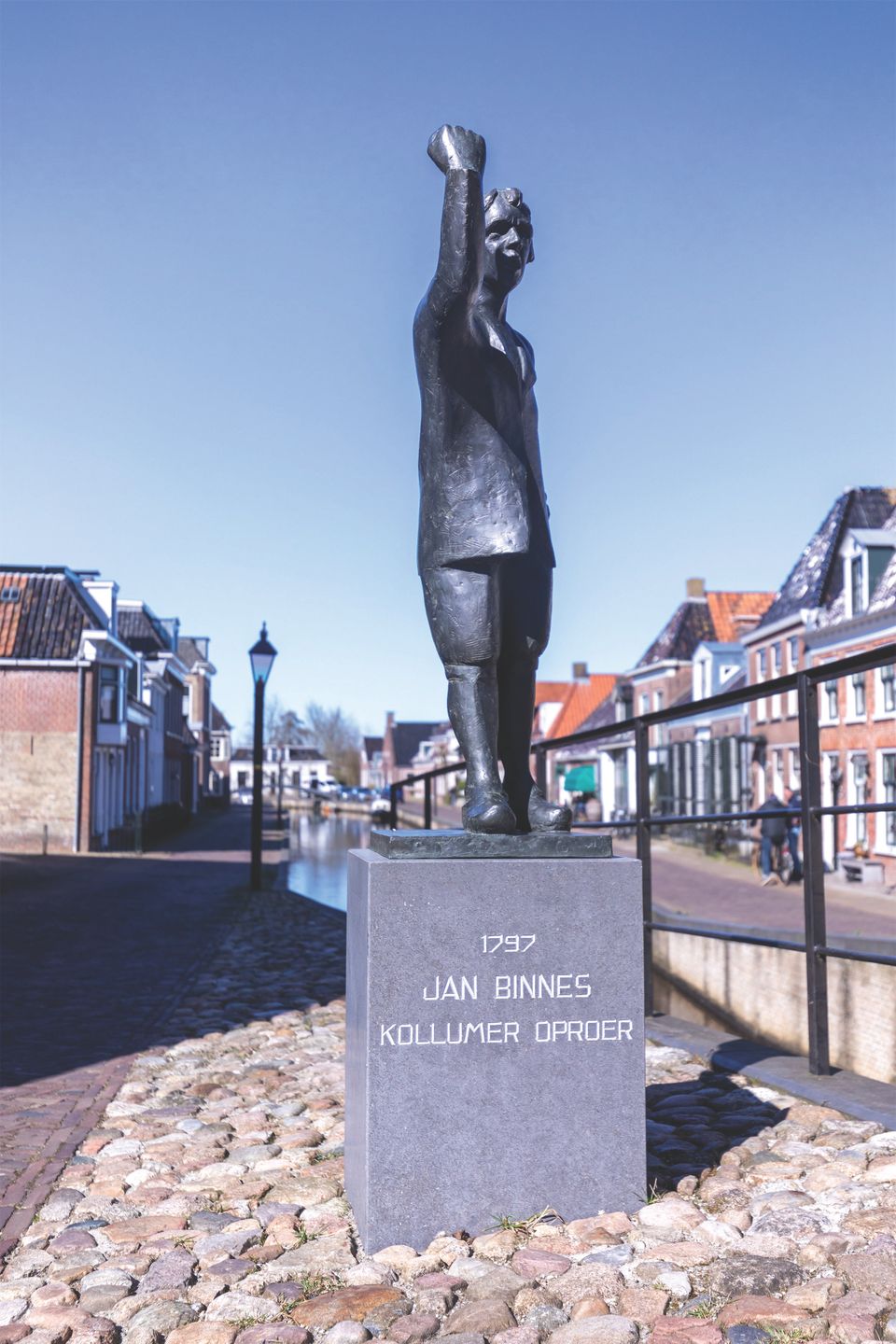
The Rechthuis played a significant role during the Kollum Uprising of 1797. In February of that year, the arrest of the Orangist supporter Abele Reitzes sparked an uprising in which a crowd stormed the courthouse in an attempt to free him. The revolt resulted in extensive damage and was harshly suppressed, with 168 people being arrested. You can learn more about these events at the statue of Jan Binnes further along this route. The prison cell in the building's basement has been preserved. From the bridge, you can still clearly see the small barred window of the former jail cell.
-
-
Former Infant School
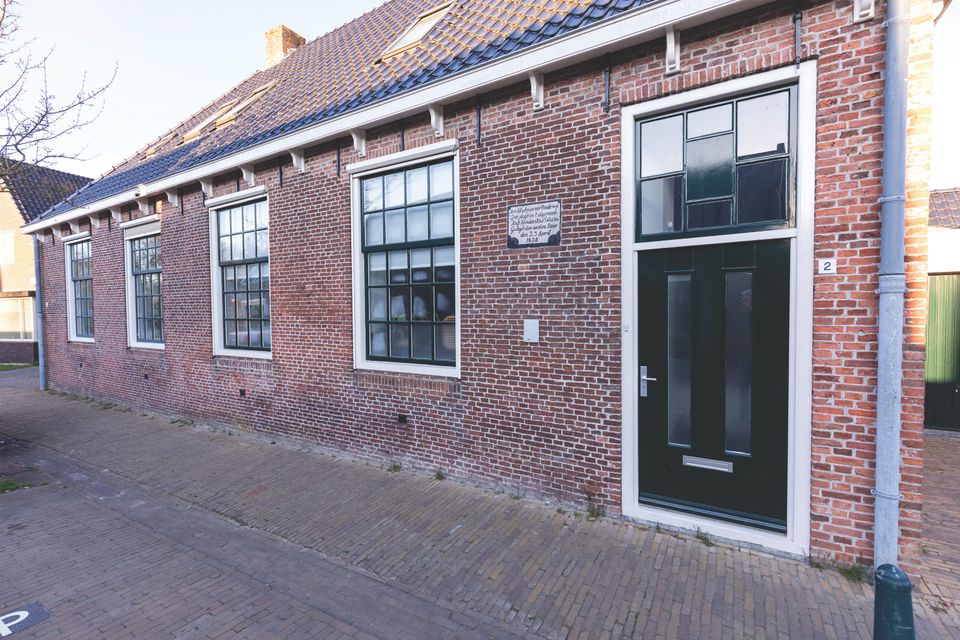
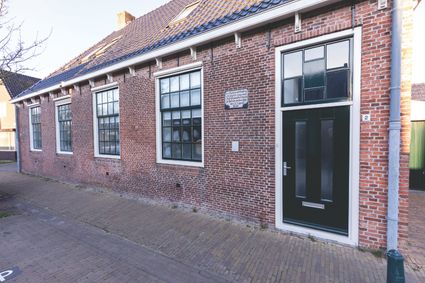
At the intersection of Voorstraat and Meester Andreaestraat stands the former bewaarschool, or infant school. A bewaarschool was a form of pre-school education in the Netherlands and Belgium during the 19th and early 20th centuries.
Former Infant SchoolFormer Infant School
At the intersection of Voorstraat and Meester Andreaestraat stands the former bewaarschool, or infant school. A bewaarschool was a form of pre-school education in the Netherlands and Belgium during the 19th and early 20th centuries.
The infant school was intended for children between the ages of about three and six, before they entered primary school. The Dutch name literally means a place where children were “looked after” while their parents were at work. In practice, they received basic education, learning skills such as listening, counting, and playing together under supervision. The bewaarschool is regarded as the forerunner of today's daycare centres and preschool programmes.
The infant school in Kollum dates from 1828 and is located on the eastern side of the village. At that time, just as on the western side of Voorstraat, the area around the school was home to many small businesses and craftspeople. There was a farmer with a small slaughterhouse, carpenters lived and worked here, and there was a combined butcher's shop and livestock business, as well as a steam-powered grain mill with an animal feed business. The neighbourhood also included a small wholesale dealer in butter, cheese and buttermilk supplied by the factory at Dokkumer Nieuwezijlen, a liquor store, a blacksmith's workshop and a tailor's shop. On the opposite side of the street from the infant school stood a grocery store and a cigar shop.
-
-
The Philippusfenne – Kollum's Notary Garden
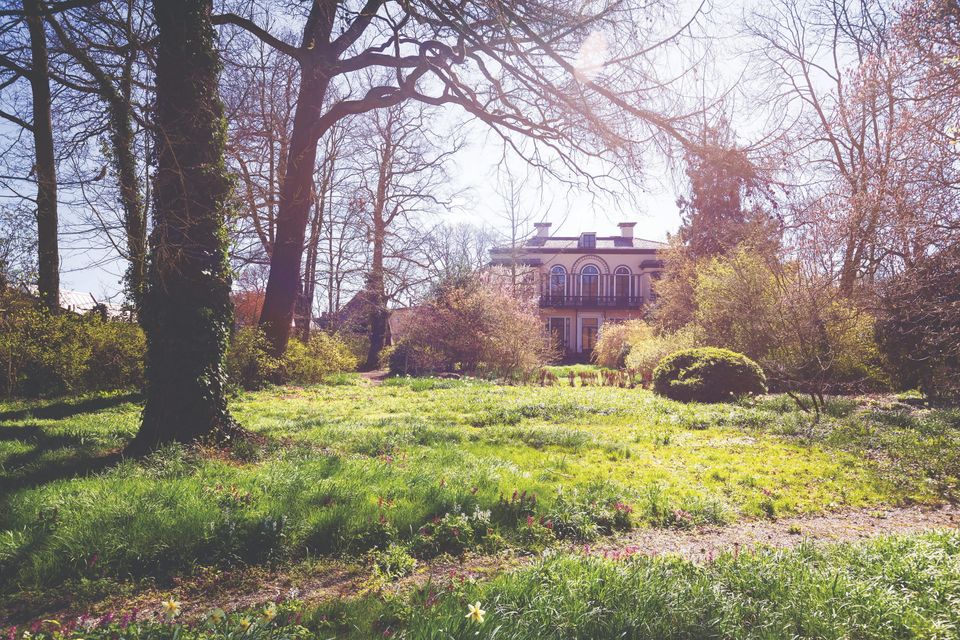
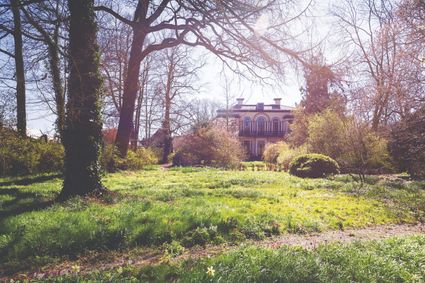
The Philippusfenne, better known as Kollum's Notary Garden, is a beautiful historic garden created in the 19th century as an oasis of peace and greenery.
The Philippusfenne – Kollum's Notary GardenThe Philippusfenne – Kollum's Notary Garden
The Philippusfenne, better known as Kollum's Notary Garden, is a beautiful historic garden created in the 19th century as an oasis of peace and greenery.
The Philippusfenne is a garden with a story. In 1847, the notary Daniel Hermannus Andreae commissioned the construction of a country house here, surrounded by an elegant garden designed in the English landscape style. The garden was created by the renowned landscape architect Lucas Pieters Roodbaard, who also designed the park surrounding Fogelsangh State in Veenklooster. Its winding paths, ornamental ponds and impressive mature trees create a unique combination of nature and history in the heart of Kollum.
One of the garden's most distinctive features is its abundance of stinzen plants—traditional spring-flowering bulbs associated with historic estates in the northern Netherlands. In early spring, snowdrops, crocuses and other rare flowers bloom in profusion, creating a fairy-tale landscape even during the colder months.
-
-
Oosterdiepswal and Westerdiepswal
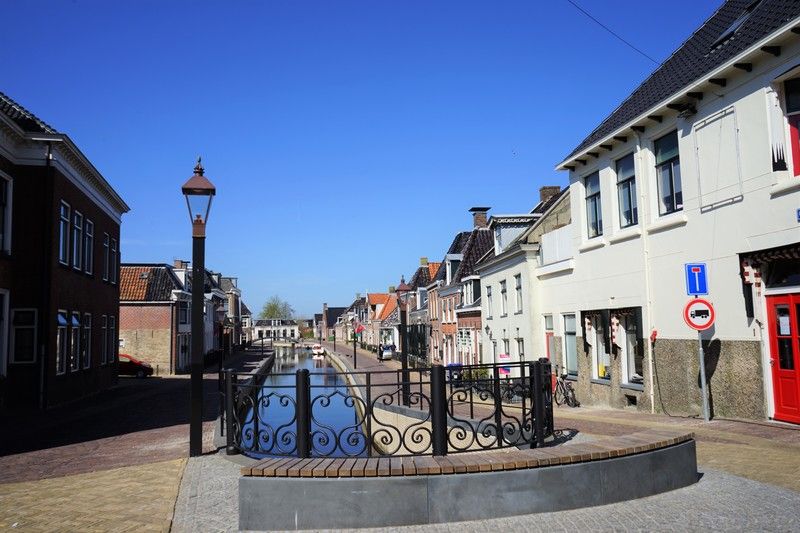
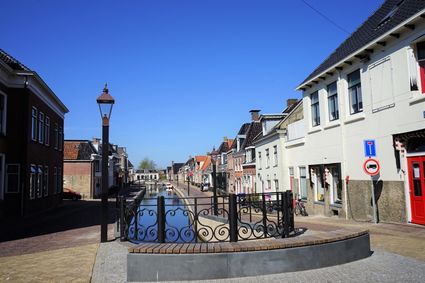
On both sides of the Sylster Ryd, in the oldest part of Kollum's historic centre, lie the Oosterdiepswal and Westerdiepswal.
Oosterdiepswal and WesterdiepswalOosterdiepswal and Westerdiepswal
On both sides of the Sylster Ryd, in the oldest part of Kollum's historic centre, lie the Oosterdiepswal and Westerdiepswal.
These embankments, locally known simply as the Wallen, are already mentioned in the earliest historical records of Kollum. The Sylster Ryd connected here with the major waterways to the north and south of the village.
During the 16th and 17th centuries, Kollum was a thriving centre of trade and commerce. Its town centre played an important logistical role in regional trading activities. Development along the Wallen began after this waterway was excavated in the early 16th century. Businesses that depended on water transport for the delivery of raw materials and the shipment of goods established themselves here. Historical records mention pottery workshops, a brewery, a tannery and a shipyard. Several windmills also stood along the Wallen, although mills could be found elsewhere in the village as well. Today, the Wallen form part of Kollum's protected historic townscape.
-
-
The Former Weigh House
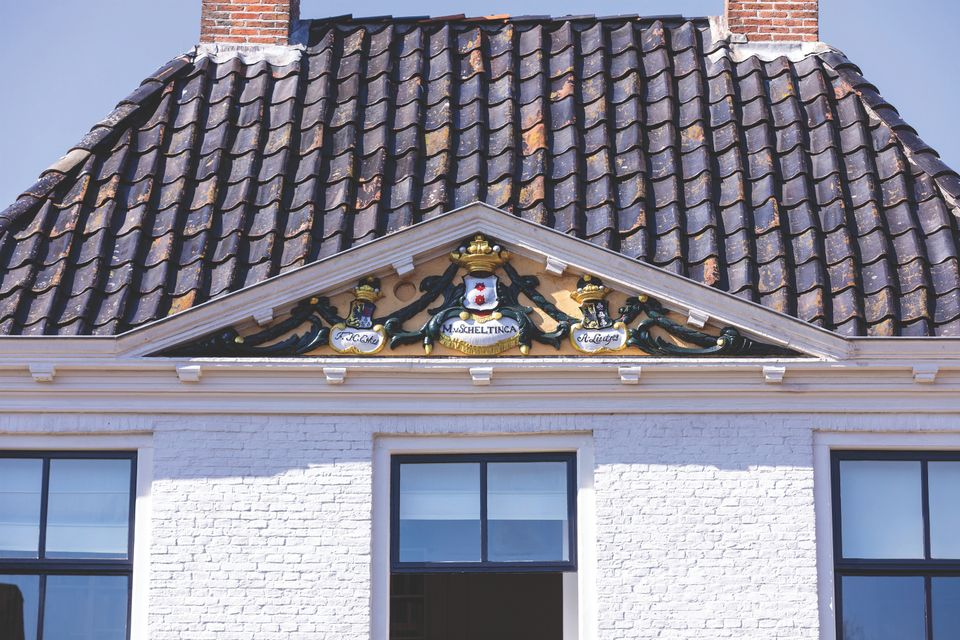
A look at old photographs reveals that the building looks even more attractive today than its predecessor. The people of Kollum have taken good care of this historic landmark. The weigh house was a public building where goods could be officially weighed.
The Former Weigh HouseThe Former Weigh House
A look at old photographs reveals that the building looks even more attractive today than its predecessor. The people of Kollum have taken good care of this historic landmark. The weigh house was a public building where goods could be officially weighed. Its presence was particularly important for trade in butter and cheese.
A public weigh house in Kollum is first mentioned in the 16th century. That original building stood next to the Rechthuis (courthouse). In 1779, a new weigh house was built here on the Westerdiepswal, at the heart of the bustling waterfront. The wide entrance to the former weighing hall, where two weighing scales were once installed, can still be clearly recognised in the façade.
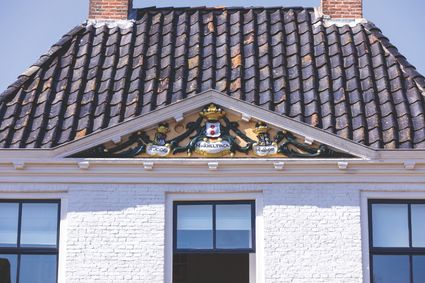
The pediment above the façade bears the coats of arms and names, added in 1779, of grietman (district magistrate) Martinus van Scheltinga, his deputy Focke Hijlckes Eskes, and Albert Luitjens, who served together with Eskes as church warden. The building was owned by the Dutch Reformed Church, which leased out the weigh house. In 1871 it was sold to a private owner, after which an official weighmaster appointed by the municipality supervised its operation. With the rise of the dairy industry in Friesland, the weigh house gradually lost its function. In 1895, the building was converted into a private residence.
-
-
De Roskam
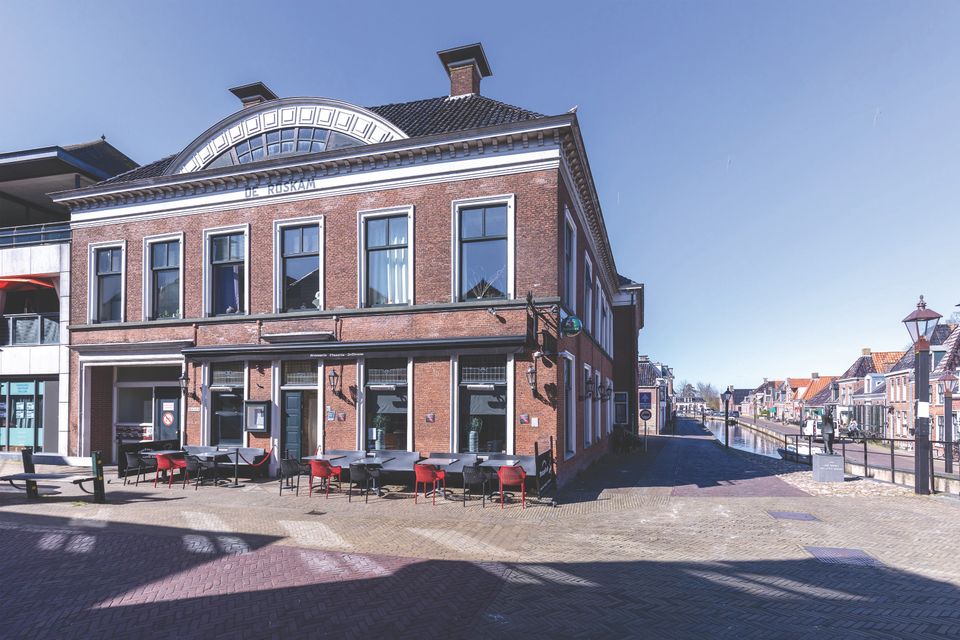
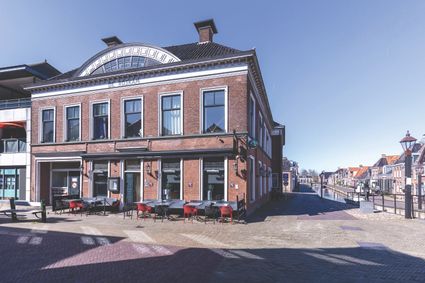
There was a time when Kollum boasted no fewer than sixteen establishments, ranging from pubs and cafés to inns and lodging houses. De Roskam has always been one of them.
De RoskamDe Roskam
There was a time when Kollum boasted no fewer than sixteen establishments, ranging from pubs and cafés to inns and lodging houses. De Roskam has always been one of them.
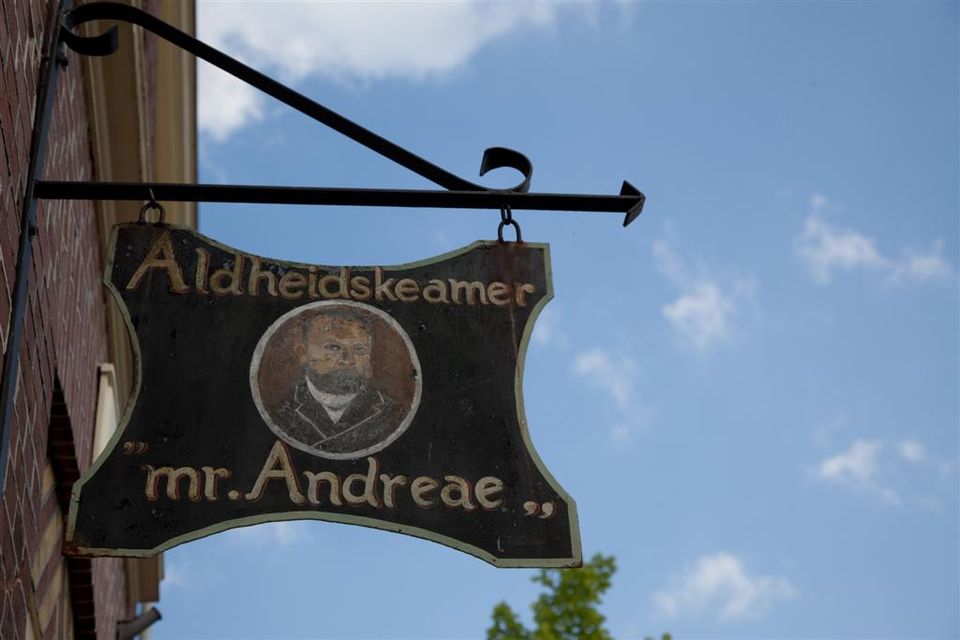
Those who remember Kollum in the last century may still picture the signboard of landlord Bonne Hof: a stout little man in swimming trunks with bright red cheeks. According to local tradition, Bonne Hof gathered the sweet flag plants used in his own homemade Kalmus Berenburg from the nearby Alde Swimmer. During the 1950s, Kollum Berenburg was a popular local drink. Another story concerns his father, Sietse Jan, whose croquettes were said to be so delicious that people travelled all the way from Groningen and Leeuwarden to taste them.
Many more colourful stories surround De Roskam. During a German raid in the Second World War, the notary Wassenberg is said to have hidden in the attic, only to crash through the ceiling while still sitting on his chair. Another tale dates from 1952, when the chauffeur of the King's Commissioner, Linthorst Homan, misplaced his cap after spending the night at De Roskam. At first, it was considered a major scandal, and the cap was thought to have been stolen. The commissioner left Kollum in great anger. In the end, however, the cap was simply found and carefully returned by courier by the people of Kollum.
-
-