
Water and land in Southeast Friesland
Make it easy to navigate. Download the route in Google Maps.
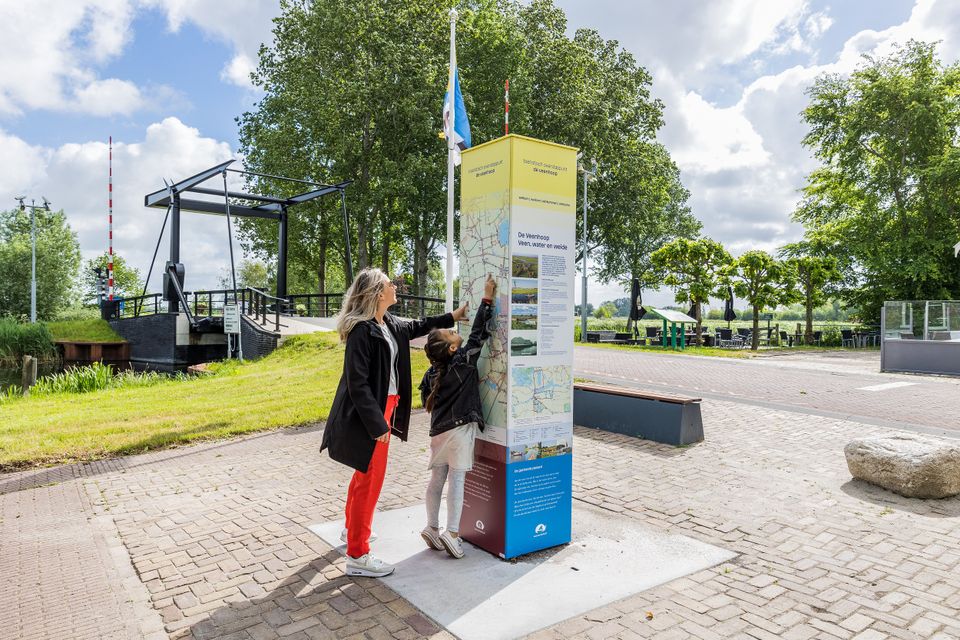
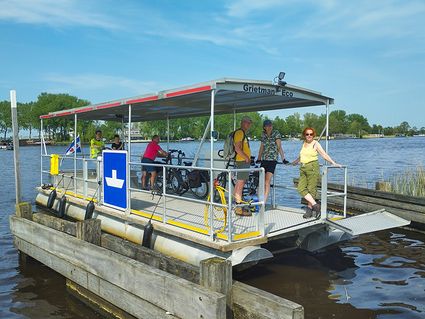
This route starts at the Tourist Transfer Point (Toeristisch Overstap Punt or ‘TOP’) in the village of De Veenhoop and takes you across land and water. Cross the water on a ferry then cycle along the bank and through beautiful little villages such as Oudega and Opeinde. Along the way, you pass the Nijega Skieppekamp pumping station and the Opeindervaart canal. The canal, also known as the Peinder Canal, was built in 1882 to solve the water problem at Juffersgat. It runs from the village of Opeinde to De Leijen lake and is 1.7 kilometres long.
You cycle on through the villages of Rottevalle and Drachtstercompagnie to Drachten, the largest village in the municipality of Smallingerland. Here you will get to see the colourful paintwork in Papegaaienbuurt - the ‘Parrot District’.
Mo…
Make it easy to navigate. Download the route in Google Maps.
This route starts at the Tourist Transfer Point (Toeristisch Overstap Punt or ‘TOP’) in the village of De Veenhoop and takes you across land and water. Cross the water on a ferry then cycle along the bank and through beautiful little villages such as Oudega and Opeinde. Along the way, you pass the Nijega Skieppekamp pumping station and the Opeindervaart canal. The canal, also known as the Peinder Canal, was built in 1882 to solve the water problem at Juffersgat. It runs from the village of Opeinde to De Leijen lake and is 1.7 kilometres long.
You cycle on through the villages of Rottevalle and Drachtstercompagnie to Drachten, the largest village in the municipality of Smallingerland. Here you will get to see the colourful paintwork in Papegaaienbuurt - the ‘Parrot District’.
More than 100 years ago, the well-known Dutch artist Theo van Doesburg, who founded the De Stijl group, formed a friendship with the Rinsema brothers in Drachten. This led to the emergence of a new movement in Drachten.
Evert and Thijs Rinsema were members of the avant-garde De Stijl movement. The aim of the movement was to reduce form and colour to the essentials. The aesthetic was defined
by vertical and horizontal lines and primary colours.
When properties in the village were designed in this style, it caused quite a stir in Drachten. The bright colours were repainted with more conventional shades. But in 1988 the original colours were restored. Thirty years later, in 2018, one of the properties was opened to the public as the Van Doesburg-Rinsemahuis historic house museum.
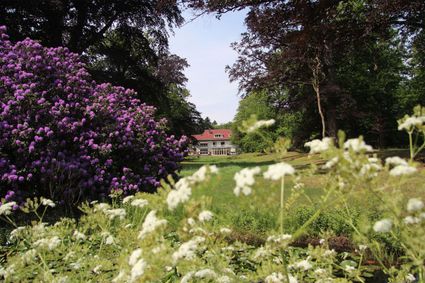
From the colourful street scenes of Drachten, you head out into the tranquillity of nature. You cycle past the Park Huize Olterterp country estate to the forests of Beetsterzwaag. The final stretch of the route back to De Veenhoop takes you through the Kraanlannen nature reserve, a unique wetland landscape with peat pits, swamp forests and narrow strips of land. The reserve is owned and managed by It Fryske Gea, the organisation that protects Friesland’s natural and cultural heritage.
In short, this route will also appeal to nature lovers!
Locations on this route
-
-
49
-
12
-
-
06
-
14
-
44
-
67
-
-
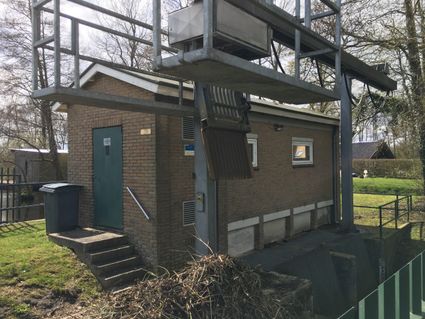
Nijega Skieppekamp Pumping Station
Nijega Skieppekamp Pumping Station
The Nijega Skieppekamp pumping station was built next to a small body of water known as Smeliester Sân. In prehistoric times, this wooded area was a place where hunters made their camps.
-
Opeindervaart Canal
Opeindervaart Canal
The Opeindervaart canal runs from the village of Opeinde to the De Leijen lake in the municipality of Smallingerland. Read on to find out how the canal played an important role in bringing economic prosperity to the area.

-
11
-
95
-
46
-
55
-
26
-
02
-
02
-
56
-
72
-
54
-
30
-
58
-

-
66
-
-
36
-
92
-
-
83
-
90
-
13
-
-
86
-
88
-
94
-
- 49
- 12
- 06
- 14
- 44
- 67
- 11
- 95
- 46
- 55
- 26
- 02
- 02
- 56
- 72
- 54
- 30
- 58
- 66
- 36
- 92
- 83
- 90
- 13
- 86
- 88
- 94