Locations
577 to 600 of 2312 results
-
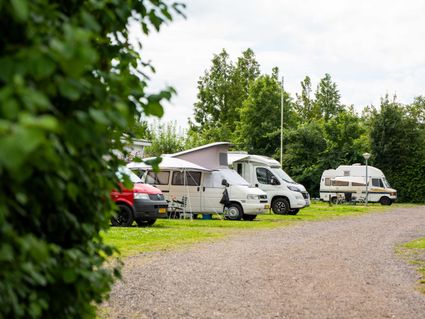
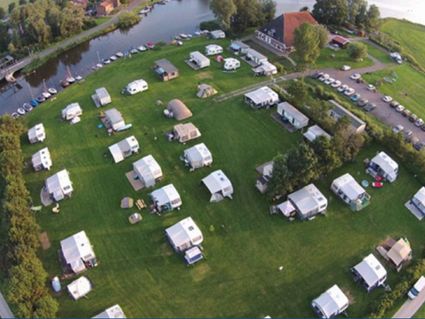
Minicampsite and Tea Garden Slappeterp
Minicampsite and Tea Garden Slappeterp Slappeterp
-
Restaurant "De Zeven Wouden"
Restaurant "De Zeven Wouden" Sloten
-
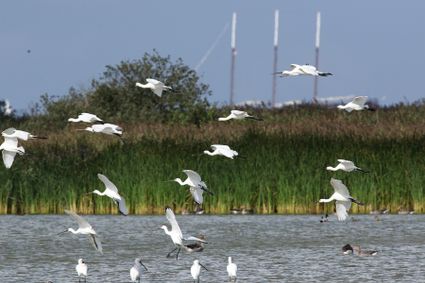
Fochteloërveen Nature Reserve
Fochteloërveen Nature Reserve Fochteloo
-
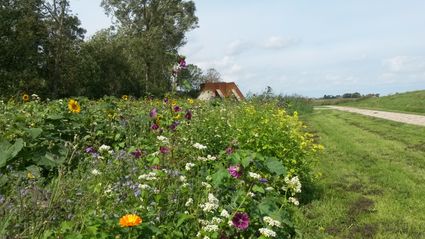
Oudebildtdijk Dike
Oudebildtdijk Dike Oudebildtdijk
-
Ottenhome Heeg- boten - Barkas 1100 C
Ottenhome Heeg- boten - Barkas 1100 C Heeg
Book now
-
Museum Sloten
Museum Sloten Sloten
-
Boutique Hotel Joure
Boutique Hotel Joure Joure
Book now
-
Pizzeria Pompeï
Pizzeria Pompeï Leeuwarden
-
Weeruusz
Weeruusz Oudega (gemeente de Fryske Marren)
Book now
-
Iselmar Sporthotel - Comfort hotelkamer
Iselmar Sporthotel - Comfort hotelkamer Lemmer
Book now
-
Nieuw Allardsoog - de Eekhoorn
Nieuw Allardsoog - de Eekhoorn Bakkeveen
Book now
-
Ichthustsjerke (Ichthuskerk gereformeerde kerk)
Ichthustsjerke (Ichthuskerk gereformeerde kerk) Heeg
-
Greenjoy
Greenjoy Leeuwarden
-
Galerie Hoogenbosch
Galerie Hoogenbosch Gorredijk
-
Stuttebosch Forest
Stuttebosch Forest Oldeberkoop
-
Zijda Yachting - Triton
Zijda Yachting - Triton Jirnsum
Book now
-
Windsurfschool Skills
Windsurfschool Skills Oudega SWF
-
B&B De Dream
B&B De Dream Leeuwarden
-
Headmaster Jakob Klok in the resistance
During the war, Jakob (Jaap) Klok ended up in the resistance in Dantumadeel, where he played an important role. At the time, he lived with his wife and four children in Akkerwoude, where he was headmaster of the school at Hearewei 13. He stayed there until 1947 and will always be remembered as "Headmaster Klok."
Jaap Klok was active socially and in politics as a member of the Dutch Social Democratic Labour Party (SDAP). When party meetings were banned by the German occupiers, Jaap imperceptibly became ever more involved in resistance activities. He passed on party information, distributed illegal newspapers, and looked for addresses for people in hiding. Jaap Klok joined the LO, the National Organisation for Aid to people in Hiding, and became the Akkerwoude village commander.
Although people did not know exactly what he did, it was known that he was in the resistance. Despite the fact that his name circulated among NSB members, he decided not to go into hiding, but instead tried to be even more careful and to sleep at home more often than not.
As the war drew to a close, Jaap became very busy. The Dutch government in exile was calling on railway workers to go on strike. The resistance arranged for the hiding. On 15 December 1944, a group of about sixty refugees from Arnhem arrived at his school. Jaap was indirectly involved in the evacuation committee, which was looking for addresses for the unfortunate Arnhem residents.
Shortly thereafter, he was warned at the schoolhouse that during a raid in Murmerwoude, explicit questions were asked about schoolmaster Klok. Jaap did not hesitate a second and quickly left the house. And not a moment too soon, as ten minutes after his departure the Germans were already on his doorstep. From that moment on, Jaap knew that he had to be very careful. He hardly ever slept at home anymore.
From January 1945 onwards, the situation became explosive. After the discovery of weapons on a farm in Aalsum, the Germans became fanatical. They relentlessly hunted down resistance fighters and used any means to make those who were caught talk. The name "Jaap Klok" was also mentioned during these interrogations. Sufficient reason to leave then and there, with his whole family. The children stayed with relatives. He and his wife went into hiding elsewhere.
During the last weeks of the war, Jaap was very busy. Much had to be organised and discussed within the resistance to expel the Germans and prepare for the arrival of the Canadians. Just before Dantumadeel was liberated, the inhabitants were already beside themselves with joy. They raised the flag and took to the streets en masse to celebrate. Because of his resistance work, Jaap knew exactly what the situation was with regard to the liberation. He climbed onto the balcony of the town hall and addressed the people. After all, the danger had not yet passed. Even when that was the case shortly thereafter, he ensured that peace was maintained among the population of Dantumadeel and thus prevented the molestation of a number of NSB members.
After the war, he held many administrative positions in the province of Friesland. In 1984, Jaap Klok died at the age of 91. Fifteen years later, a statue of him was erected in Akkerwoude, which was then called Damwoude, as a tribute.
From the book "De oorlog een gezicht geven" (deel 6) – Dantumadeel in de periode '40 - '45 by Yvonne te Nijenhuis and Reinder H. Postma
Damwald
-
Zijda Yachting - Liona Elite
Zijda Yachting - Liona Elite Jirnsum
Book now
-
Friesland Holland Tourist Information & Travel Service
Friesland Holland Tourist Information & Travel Service Holwerd
-
Boutiquehotel & Grandcafé 't Gerecht - Junior Suite
Boutiquehotel & Grandcafé 't Gerecht - Junior Suite Heerenveen
Book now
-
De Weyde Blick
De Weyde Blick Warns
Book now
-
Noordwolde the first village to be liberated by land
In the evening of 11 April 1945, units of the Canadian Reconnaissance Regiment Royal Canadian Dragoons arrived at Dwingeloo, just before the so-called Frieslandriegel. This line of defence had been constructed shortly before by the work of many Dutch forced labourers. However, the line was hardly occupied and eventually turned out to be incorrectly constructed.
The Dragoons' task was to scout the road well ahead of the rest of the Canadian units. And they noted that the Germans in this area were barely able to defend themselves effectively. Partly for this reason, it was decided on 11 April that units of the 3rd Canadian Infantry Division and supporting units would make a jump to Leeuwarden in the following days. If the Frisian capital and possibly the rest of Friesland could be taken, the Germans would be trapped in the western part of the Netherlands. After all, large parts of Overijssel and Gelderland had also been liberated at this point.
The infantry had to advance through Zwolle, Meppel, Steenwijk, Heerenveen to Leeuwarden. To get them to Leeuwarden as soon as possible, all kinds of extra vehicles had been arranged. Meanwhile, the Royal Canadian Dragoons, and not much later another reconnaissance regiment, the Duke of York´s Royal Canadian Hussars, would enter Friesland to scout the planned main route there. And to create as much chaos as possible among the German defenders.Thanks to the citizens of Dieverbrug in Drenthe, an emergency bridge was built over the Drentse Hoofdvaart canal so that the Canadian vehicles could advance to Friesland. Then, on the morning of 12 April, the Dragoons were the first Canadian land unit to enter the province of Friesland. The village of Noordwolde was the first to be liberated.
Although this first Frisian village could be taken without a fight, there was brief fighting immediately north of Noordwolde. About twenty Germans and Dutch accomplices tried to delay the Canadians. After a short fight, the Germans fled the scene, leaving all their equipment behind. Others, including ten Dutch accomplices of the Landwacht and Ordnungspolizei, were captured.But the very first liberators to set foot on Frisian soil were French SAS paratroopers from the 3e Régiment de Chasseurs Parachutistes. Just over 700 of them were dropped over Drenthe and south-east Friesland on the night of 7 to 8 April. Their mission was to support the Allied ground operation. They did so by creating chaos behind German lines, capturing bridges, and carrying out all kinds of operations together with the resistance. They had to keep this up until the Canadian ground units reached them. A small proportion ended up at Appelscha and Haulerwijk and carried out their assignments there. In the performance of these assignments, 21-year-old Chasseur de 2e Classe (Private 2nd Class) Henri Pintaud was killed on 8 April.
Noordwolde