Locations
913 to 936 of 2804 results
-
Former Infant School
Former Infant School
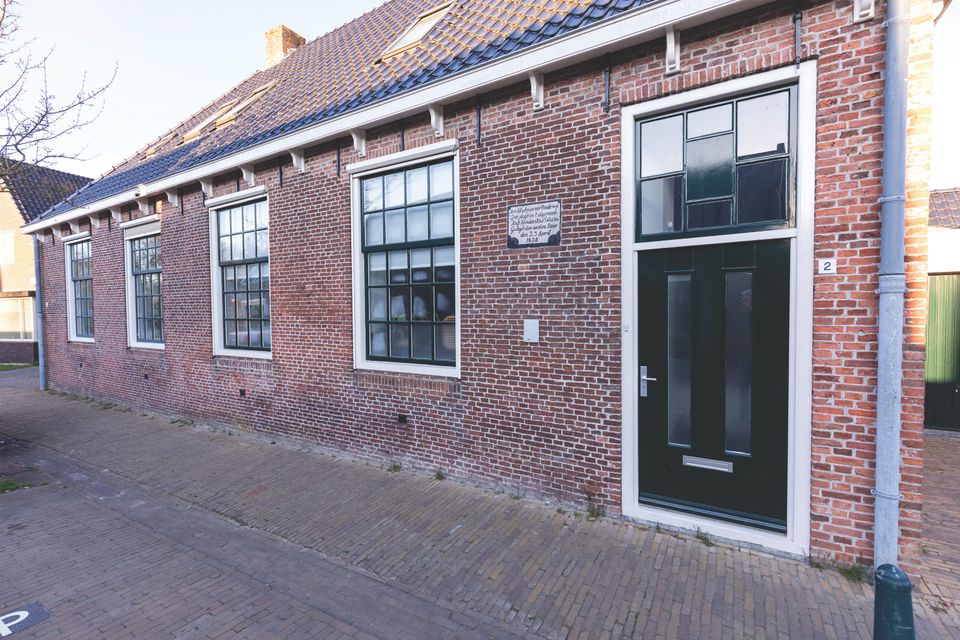
At the intersection of Voorstraat and Meester Andreaestraat stands the former bewaarschool, or infant school. A bewaarschool was a form of pre-school education in the Netherlands and Belgium during the 19th and early 20th centuries.
The infant school was intended for children between the ages of about three and six, before they entered primary school. The Dutch name literally means a place where children were “looked after” while their parents were at work. In practice, they received basic education, learning skills such as listening, counting, and playing together under supervision. The bewaarschool is regarded as the forerunner of today's daycare centres and preschool programmes.
The infant school in Kollum dates from 1828 and is located on the eastern side of the village. At that time, just as on the western side of Voorstraat, the area around the school was home to many small businesses and craftspeople. There was a farmer with a small slaughterhouse, carpenters lived and worked here, and there was a combined butcher's shop and livestock business, as well as a steam-powered grain mill with an animal feed business. The neighbourhood also included a small wholesale dealer in butter, cheese and buttermilk supplied by the factory at Dokkumer Nieuwezijlen, a liquor store, a blacksmith's workshop and a tailor's shop. On the opposite side of the street from the infant school stood a grocery store and a cigar shop.
-
-
Zijda Yachting - Lotus Elite
Zijda Yachting - Lotus Elite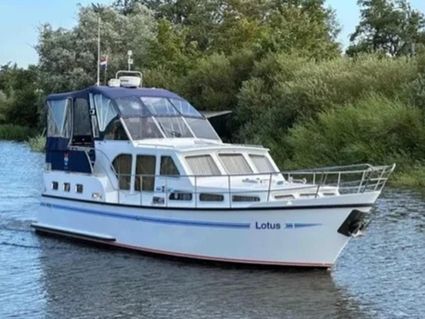
Book now
-
Mini- campercamping Oer de Haske
Mini- campercamping Oer de Haske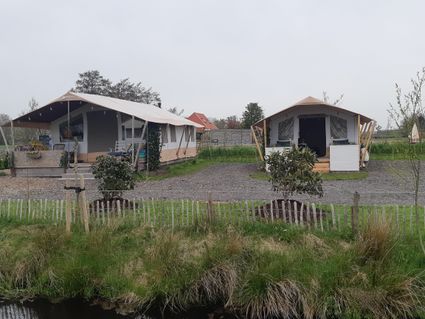
-
de Tijnjehoeve - Safaritent L - de Tijnjehoeve
de Tijnjehoeve - Safaritent L - de Tijnjehoeve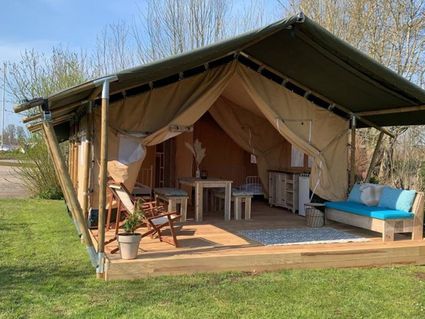
Book now
-
B&B De Koesfabriek
B&B De Koesfabriek
-
Boutique Hotel Dokkum
Boutique Hotel Dokkum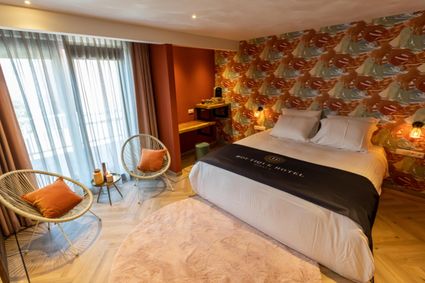
-
d'Oude Herbergh - Appartement Buthus
d'Oude Herbergh - Appartement Buthus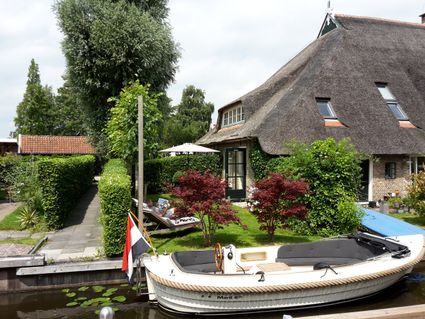
Book now
-
Boutique Hotel de Eilanden
Boutique Hotel de Eilanden
-
Zijda Yachting - Isala
Zijda Yachting - Isala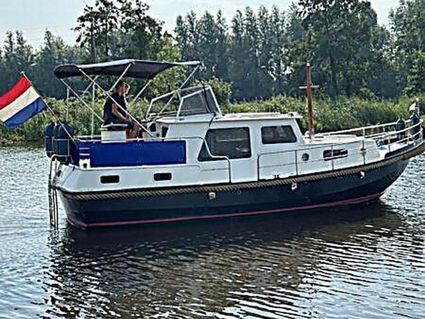
Book now
-
Uitgerust voor Zaken
Uitgerust voor Zaken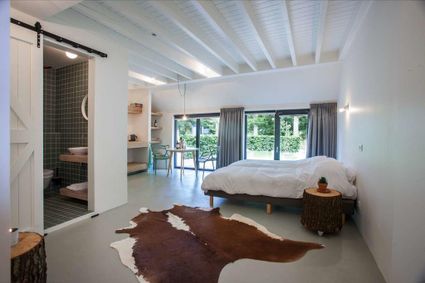
-
Wellekom Watersport
Wellekom Watersport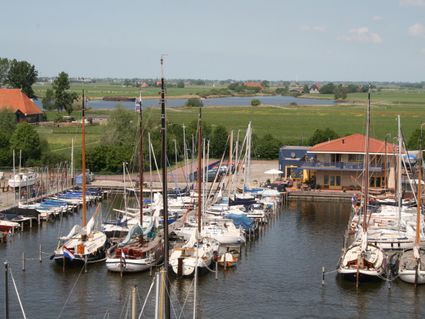
-
Weeruusz - Kamer Twa
Weeruusz - Kamer Twa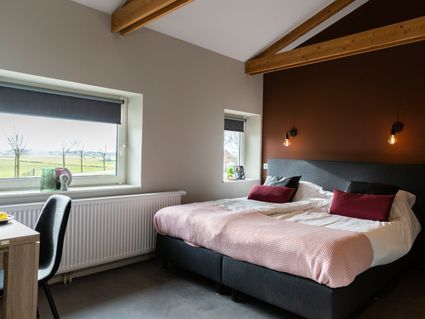
-
Statue ‘Lapkepoep and Frisian farmer's wife’
Statue ‘Lapkepoep and Frisian farmer's wife’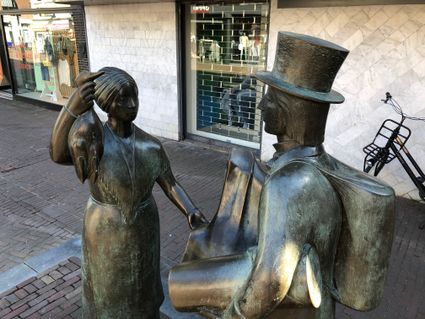
-
Nieuw Allardsoog - de Das
Nieuw Allardsoog - de Das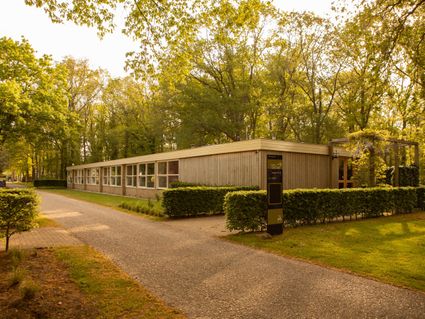
Book now
-
Oranje Bierhuis
Oranje Bierhuis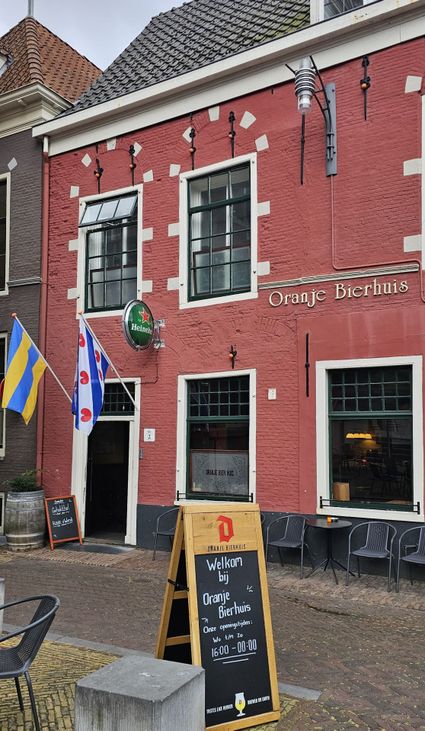
-
Gastenverblijf De Loft
Gastenverblijf De Loft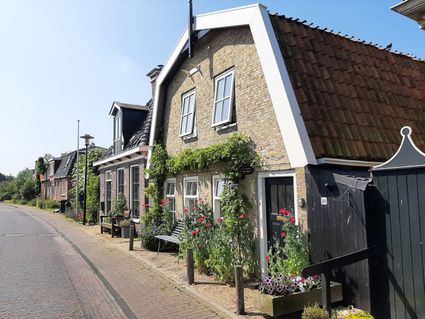
-
Fisherman's monument Wierum
Fisherman's monument Wierum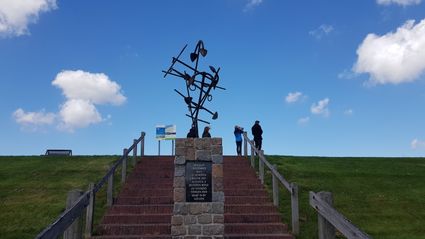
-
Tjitsma-state Koningsterp Wijnaldum
Tjitsma-state Koningsterp Wijnaldum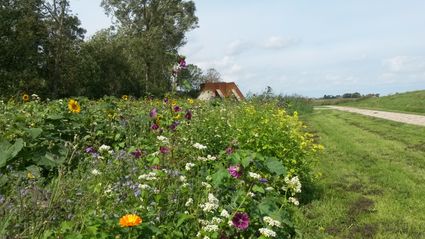
-
Houseboat Lemmer - Houseboat Lemmer aan het water
Houseboat Lemmer - Houseboat Lemmer aan het water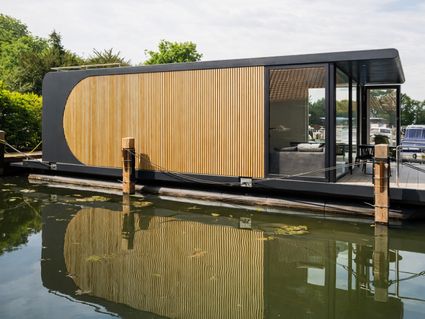
Book now
-
Streekmuseum / Oudheidskamer Lemster Fiifgea
Streekmuseum / Oudheidskamer Lemster Fiifgea
-
Ambush at Oldeholtpade
Ambush at Oldeholtpade
On 12 April, the bridge over the Tjonger in Mildam fell into the hands of the Royal Canadian Dragoons reconnaissance regiment. Because the occupier had blown up many other bridges, the Canadians attached great importance to preserving this bridge for the crossing of other Canadian units. That is why dozens of armoured cars, mobile artillery guns and numerous other vehicles were sent to Mildam that day to reinforce the bridgehead over the Tjonger.
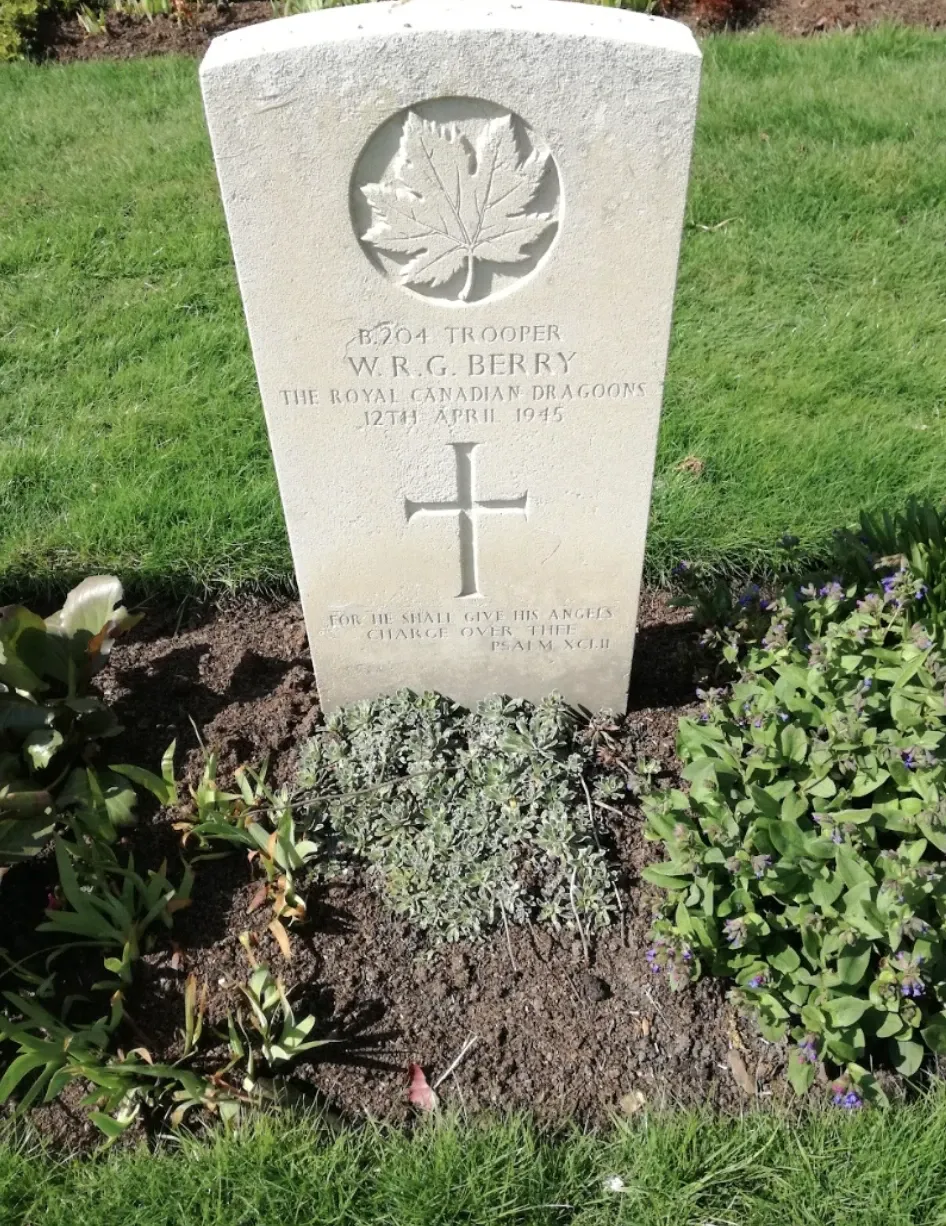
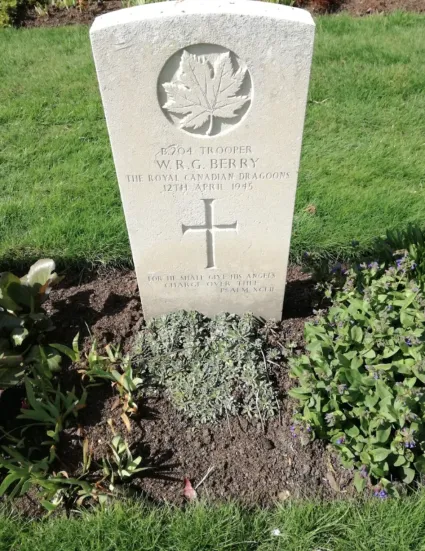
In one of those armoured cars, a Staghound, was 24-year-old Trooper Wilfred Robert George Berry from Ontario. The young Canadian had volunteered for military service in Europe. And had already fought with the Royal Canadian Dragoons in Italy. At the end of February 1945, they were transferred to Northwest Europe.
For Berry, the war ended in Friesland. In Oldeholtpade, on the road to Wolvega, his vehicle drove into an ambush along with at least one other Staghound. In the vicinity of a broken-down German car, German soldiers had hidden with Panzerfausts. The Panzerfaust was a very powerful and easy-to-use anti-tank weapon. The first shot missed, but the second projectile hit the front Staghound, on the side where driver Wilfred Berry was sitting at the time.2 The Staghound went off the road and overturned. The three other crew members got injured, but were able to leave the vehicle and took cover behind the second Staghound. One of them stated:
"[…]Flames burst through the turret, where the officer and I were half in and half out of the hatches. Any skin surface not covered was burned and the flames badly singed our eyebrows, eyelashes, moustaches and hands, sending me and the officer both wounded to the field hospital."3
Immediately after the first Staghound was hit, the second Staghound opened fire on the Germans. Seriously injured, Wilfred Berry remained in the vehicle. After about fifteen minutes of shooting back and forth, the other Staghounds retreated towards Oldeberkoop. The exact reason for this remains unclear. Berry was already dying and was briefly cared for by the elderly Andriesje Dekker-Oosterhof in the vehicle when the shooting had stopped. The tragedy had unfolded right in front of her house. He died in the wreck shortly afterwards.
Berry's remains were eventually transferred to the farm on "De Bult" in Oldeberkoop and buried there. After the war he would be reburied at the Canadian war cemetery in Holten. The other crew members were eventually able to return to their units after receiving medical treatment. The commander only had burns on his face.
The event made a deep impression on the inhabitants of Oldeholtpade. In 1945, a monument to Berry was erected. And in 1965, a street was named in his honour.
-
-
Aldegeaster Brekken
Aldegeaster Brekken
-
Camping De Verborgen Hoek
Camping De Verborgen Hoek
-
B&B Zathe de Spieker
B&B Zathe de Spieker