Locations
625 to 648 of 2309 results
-
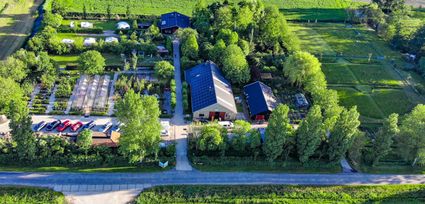
Iepenarboretum
Iepenarboretum Joure
-
Boerderijrecreatie
Boerderijrecreatie Delfstrahuizen
-
Public toilet on Rienck Bockemakade in Sneek
Public toilet on Rienck Bockemakade in Sneek Sneek
-
Bremer Wildernis
Bremer Wildernis Sondel
-
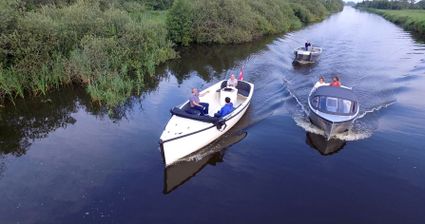
Zijda Yachting - IJssel Elite
Zijda Yachting - IJssel Elite Jirnsum
Direct boekbaar
-
Sparjebird
Sparjebird Hemrik
-
Sustainable and spacious holiday home Blue Lodge
Sustainable and spacious holiday home Blue Lodge Stavoren
-
Iselmar Sporthotel
Iselmar Sporthotel Lemmer
Direct boekbaar
-
Klokkenstoel Smallebrugge
Klokkenstoel Smallebrugge Smallebrugge
-
De Overtuin & Landgoed Oranjewoud
De Overtuin & Landgoed Oranjewoud Oranjewoud
-
Occupation of the Blesse bridge by the NBS
On 8 April 1945, the words "The bottle is empty" sounded on Radio Orange. This code message was the go-ahead for the resistance to start putting bridges, roads and railway lines out of order thirty-six hours later. The Frisian resistance answered this call en masse.
As soon as the Allied vanguard drew near, the armed resistance was also deployed to support their advance. And that sometimes meant that there were also bridges that had to be occupied rather than deactivated. One such action took place in the municipality of Weststellingwerf.
On 12 April 1945, the Canadian vanguard approached the village of De Blesse. The local section of the Dutch Domestic Armed Forces (NBS) was instructed by the resistance leadership to scout the railway bridge and road bridge (the Blesse bridge) over the Linde and, if possible, to occupy them.These bridges were important for maintaining the speed of the Canadian advance. Partly for this reason, they were also often guarded by German soldiers. In most cases, the bridges were also fitted with explosives. This allowed the bridge to be blown up if the Germans eventually had to retreat.
The reconnaissance revealed that the Blesse bridge was guarded by a total of about 10 soldiers. The NBS then decided to attack the bridge from two sides in the evening. Thanks to several aerial arms drops, the resistance fighters were well armed. In the dark, the men set off and split up into three groups. They eventually took up posts north and south of the bridge. The plan was to storm the bridge at two in the morning from the south.To their surprise, their fire was not returned as they approached the bridge. The guards appeared to have disappeared. With that, the bridge had unexpectedly fallen into the hands of the NBS without bloodshed. Moreover, no explosives were found to be affixed to bridge. After the bridge was secured, it was guarded until the Canadians arrived.
News of the occupation of the bridge was reported to the section commander the same night. And through other means of communication, the news also reached the Canadians. Holding the bridge facilitated and accelerated the Canadians' advance later in the day.
De Blesse
-
Strandje Put van Nederhorst
Strandje Put van Nederhorst Joure
-
Hotel 't Schippershuis - Ruime kamer
Hotel 't Schippershuis - Ruime kamer Terherne
Direct boekbaar
-
Pura Vida Foodbar
Pura Vida Foodbar Midsland
-
Recreatiepark de Jerden - Achtpersoons appartement
Recreatiepark de Jerden - Achtpersoons appartement Sloten
Direct boekbaar
-
Information Point Sint Nicolaasga (Landgoed Eysinga State)
Information Point Sint Nicolaasga (Landgoed Eysinga State) Sint Nicolaasga
-
Aqua State - Efkes Pypskoft
Aqua State - Efkes Pypskoft Lemmer
Direct boekbaar
-
Houseboat Heeg
Houseboat Heeg Heeg
Direct boekbaar
-
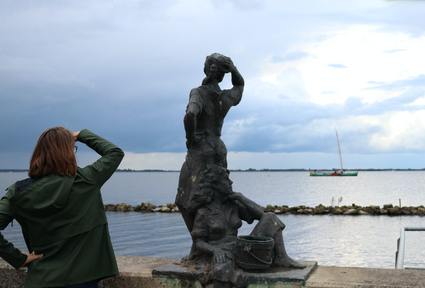
Titus Brandsma monument
Titus Brandsma monument Bolsward
-
Brasserie Om de dobben
Brasserie Om de dobben Burgum
-
The battle for the Tjonger bridge in Mildam
In the afternoon of 12 April, rumours had reached Mildam that Englishmen or perhaps Canadians had been sighted at Peperga. The Canadian vanguards had entered Friesland. For the inhabitants of Mildam it was still a surprise when at first one and shortly afterwards another military vehicle with a few men in khaki-coloured overalls stopped at the bridge.
These vehicles were part of a patrol of "D" Squadron Royal Canadian Dragoons commanded by Lieutenant Homer Thomas. These Canadians established that unlike other bridges, the bridge in Mildam over the Tjonger had not yet been blown up by the occupying forces. The fact that the Tjonger bridge in Mildam had not been destroyed was due to the local resistance movement. The Germans had indeed planned to blow up this bridge as well. But at the risk of their own lives, resistance fighters had removed the detonators from the explosives affixed to the bridge.
The Squadron Commander immediately ordered all units to secure the bridge. And the Dutch Domestic Armed Forces were also requested to provide men. The precautions turned out to be justified. In the night of 12 to 13 April, German troops launched one of their few counter-attacks in the province of Friesland. From Heerenveen, they managed to surprise the Canadians in Mildam. They tried to regain control of the bridge three times. During the fierce fighting, Canadian vehicles were knocked out. But the Dragoons stood firm, and the Germans were driven off again. Mildam was freed.Four Canadian soldiers were injured in the fighting. The number of casualties on the German side is unknown. There was property damage in Mildam, but no civilians were killed. With a little less luck, though, there would have been several Dutch casualties. In the early morning of 13 April, a group of dozens of resistance fighters approached the bridge at dusk from the direction of Nieuweschoot. This was the reinforcement requested by the Canadians on 12 April when the undamaged bridge was discovered. The resistance fighters were partly carrying captured German weapons and were not noticed by the Dragoons in the semi-darkness until late.
Lieutenant Thomas, mentioned earlier, almost gave the order to open fire. It was only at the last moment that it became clear that they were not Germans. The resistance members had managed to make themselves known by singing songs in English.
The preservation of the bridge was important. During the following days, the Canadians would make extensive use of the bridge to advance further in the direction of Leeuwarden and liberate the province of Friesland. Mildam
-
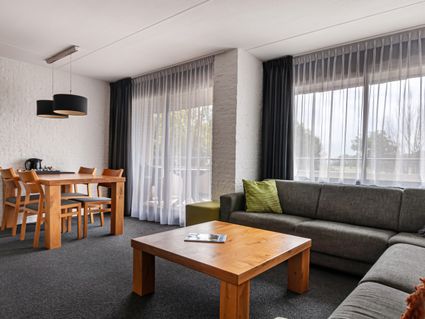
Hotel Stedswal - Kamer 5 - Hylpen
Hotel Stedswal - Kamer 5 - Hylpen Sloten
Direct boekbaar
-
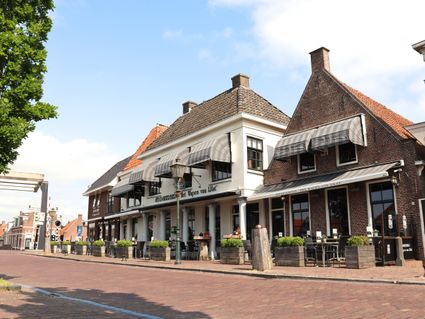
Hotel Pub Restaurant de Posthoorn
Hotel Pub Restaurant de Posthoorn Dokkum
-
Museum Warkums Erfskip
Museum Warkums Erfskip Workum