Locations
241 to 264 of 2773 results
-
Pathé Leeuwarden
Pathé Leeuwarden Leeuwarden
-
Bed & Breakfast ByPaula - Kamer Huishoudster
Bed & Breakfast ByPaula - Kamer Huishoudster Easterwierrum
Book now
-
Aardappelhandel De Jong farm shop
Aardappelhandel De Jong farm shop Ternaard
-
Landal Natuurdorp Suyderoogh
Landal Natuurdorp Suyderoogh Lauwersoog
-
de Markestee - de Markestee
de Markestee - de Markestee Blesdijke
Book now
-
HarTeluk Joure
HarTeluk Joure Joure
-
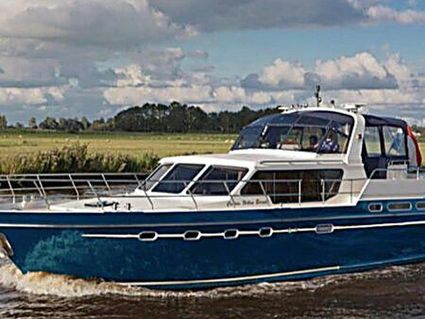
Familieboten - Blue Fox
Familieboten - Blue Fox Franeker
Book now
-
Wielinga Wine and Liquorstore
Wielinga Wine and Liquorstore LEEUWARDEN
-
Jantje Slot Hoeve - Friesian ruime 2 persoonskamer
Jantje Slot Hoeve - Friesian ruime 2 persoonskamer Oosterzee
-
Gezinshuis Druvebeam
Gezinshuis Druvebeam Oudega (gemeente Súdwest-Fryslân)
Book now
-
Parkhotel Tjaarda
Parkhotel Tjaarda Oranjewoud
-
Execution of ten Dutch collaborators near Oldeberkoop
On the afternoon of 12 April, Oldeberkoop was liberated by "D" Squadron of the Royal Canadian Dragoons. Later that day, they established a temporary headquarters in the village. The movements of "D" squadron were coordinated from the headquarters. This was also the place where prisoner of war from the immediate surroundings were gathered.
These prisoners of war were often Germans, but sometimes also Dutch who served voluntarily in the Waffen-SS, the NSKK (a paramilitary section of the Nazi party NSDAP) or the Dutch Landwacht. On this 12th of April, ten of these collaborators were brought into the encampment in Oldeberkoop amid great interest. Hatred of people who fought with or for the Germans was strong among most of the Dutch population. A resident of Oldeberkoop described the moment the men were brought in:
"The crowd booed and whistled, some spat, and some could not keep their hands off them. One of them got such a blow to the head that hit made his head spin."Not much later, these POWs were taken away again. Presumably with the aim of taking them to a real prison camp in Vledder. But the men would never get there. All ten of them were shot without trial in the Koepelbos just outside Oldeberkoop.
It was long thought that the Canadians were responsible for these unlawful executions. But by 1995, it became clear that Canadian involvement had been minimal. Stories about the involvement of two former resistance fighters were confirmed when one of them confessed to having fired the shots. In addition to himself, a colleague, a Canadian driver and some men who had dug the graves were present at the execution.
The exact reason for the murder of the Dutch collaborators and the exact role of the two Dutchmen and the Canadian have never been fully clarified. There are different accounts of the events leading up to the shooting. On 14 April, the bodies were finally buried in a mass grave on the side of the road. Later they were transferred to the German war cemetery in Ysselsteyn. The names of most of the victims also became known at that time:
Egbert Jan Hommes, Ordnungspolizei
Otto Frikken, Ordnungspolizei
Gerrit Jan Seevinck, Dutch Landwacht
Hendrik Dales, Dutch Landwacht
Heike Ham, Dutch Landwacht
Douwe Jonkman, Dutch Landwacht
Bernard Janssen, Dutch Landwacht
Arnold Pieter Post, Dutch Landwacht
The identities of two men from the Dutch Landwacht could not yet be ascertained. Oldeberkoop
-
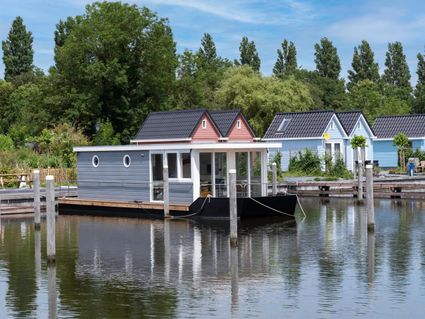
Zeehuisje Ahoy
Zeehuisje Ahoy Harlingen
-
Sytzama House
Sytzama House
What is now a grand café has a history closely connected with local government, the Second World War, and Baron Willem van Sytzama, the building's first owner, after whom it is named.
In Van Sytzama's time, there were very few buildings nearby. Instead, a large landscaped garden with extensive ponds stretched out behind the house. Baron Willem van Sytzama believed he was happily married to Cecilia van Heemskerk, but she left him for another man. Although the baron took legal action in an attempt to prevent the separation, he was unsuccessful. She never returned, and he never remarried. In later years, however, the building served as Kollum's town hall, where hundreds of marriages were celebrated.
During the Second World War, Mayor Gerben Feitsma was sworn into office in this building. The ceremony took place with prominent displays of flags and the Nazi salute. For that reason, Feitsma is often described as an NSB (Dutch National Socialist Movement) mayor. At the same time, there is evidence that he occasionally helped prevent residents of Kollum from being sent to Germany for forced labour by employing them on his farm. Because of his wartime record, his name is not always included in historical accounts.
His brother, Jan Feitsma, became notorious for a different reason. As Prosecutor General, he ordered signs reading "Jews Forbidden" to be displayed throughout the occupied Netherlands. The policy caused considerable controversy in Kollum during the war. The local tennis club preferred to close its courts rather than display such a sign. In early 1945, Jan Feitsma was shot dead by members of the Dutch Resistance. His funeral in Kollum was attended by numerous members of the SS.
Kollum
-
Yachtcharter De Drait Woudsend - Kotterjacht Helena/ Veroniek/ Michelle/ Jeanette
Yachtcharter De Drait Woudsend - Kotterjacht Helena/ Veroniek/ Michelle/ Jeanette Woudsend
Book now
-
Camping 't Séleantsje
Camping 't Séleantsje Molkwerum
-
Groepsaccommodatie De Kikkert
Groepsaccommodatie De Kikkert Lemmer
Book now
-
Waterrecreatie Syperda - Lady Jacquelyn
Waterrecreatie Syperda - Lady Jacquelyn Gaastmeer
Book now
-
Tourist Information Balk
Tourist Information Balk Balk
-
Padelhal Joure
Padelhal Joure Joure
Tip
-
Hempolders
Hempolders Tjerkwerd
-
Beach Resorts Makkum - Star+ 5 personen
Beach Resorts Makkum - Star+ 5 personen Makkum
Book now
-
Het Theehuis Grou
Het Theehuis Grou Grou
-
Bed and Breakfast Unia Zathe
Bed and Breakfast Unia Zathe Ee