Locations
1417 to 1440 of 5534 results
-
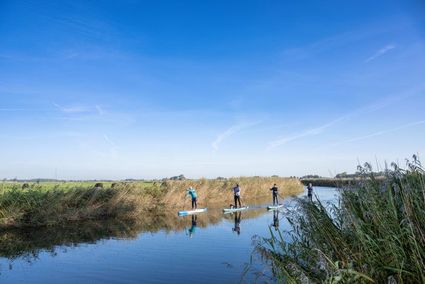
FrieWheelers Friesland
Hindeloopen
-
Echopperz Drachten
Echopperz Drachten
Drachten
-
The bombing of Terherne lock
On 11 November 1944, pilots of the Royal Canadian Air Force, based at Welschap airfield near Eindhoven, were ordered to bomb the lock at Terherne in two groups. The reason for the bombardment of Terherne lock was to restrict (German) transport movements. The lock complex was situated on the main shipping route from Germany via Groningen to the Randstad, along which the Germans transported goods and military equipment.
After the railway strike in September had already disrupted rail transport considerably, actions against shipping traffic followed in the months thereafter. The southern part of the country may have been liberated, but fierce battles were still to be fought in the other parts.
Such was the case on that 11th November just after nine o'clock in the morning when the two groups of Hawker Typhoon fighter-bombers took off shortly after each other from Eindhoven for their mission. Around 10:00, the lock at Terherne was bombed from the north for the first time and then again around 10:30.
The consequences were huge for the people living on the lock. The wives of both lock keepers, a one-year-old baby and a German soldier were killed. Also, pilot John Gordon Fraser's aircraft was damaged to such extent that he had to make an emergency landing at St. Johannesga. Although the bombing resulted in the northern passageway being deactivated and no longer usable, the southern passageway remained open and could still be used.
Today, a boathouse for the State yacht of the province of Friesland has been built over the southern passage. A new building, that serves as a guest house for the province, was put up on the site of the lock keeper's house on the south side.
A monument has been erected on the northern pier in memory of those who perished at the lock. This monument was unveiled on 10 November 1985 by Hattum Hoekstra, son of 1st lock keeper Wiemer and Tietje Hoekstra. Since then, the commemoration of the dead in Terherne has always taken place at the old lock, and the children of primary school 'It Kampke' have adopted the monument.
Terherne
-
-
Tao Tapas
Tao Tapas
Leeuwarden
-
Grutte Wielen
Grutte Wielen
Leeuwarden
-
Museum Opsterlân
Museum Opsterlân
Gorredijk
-
Camperpark Zwarte Haan
Sint Jacobiparochie
-
Voormalige Huisartsenpraktijk
Appelscha
-
Hulzinga Tweewielers
Elsloo
-
Zuid4 Food & Drinks
Zuid4 Food & Drinks
Leeuwarden
-
Reahûs
Reahûs
Reahûs
-
Molen De Mûnts
Molen De Mûnts
Buitenpost
-
Titus Brandsma monument
Bolsward
-
Driewegsluis, de Linde
-
Accept cookies to see this content.
Driewegsluis, de Linde
Nijetrijne
-
-
Natural Yachts
Natural Yachts
Marknesse
-
Villa Nova
Villa Nova
Hurdegaryp
-
Sloep1920
Sloep1920
Wijckel
-
Poepekrús Bakkeveen
Poepekrús Bakkeveen
Bakkeveen
-
Luxe appartement
Luxe appartement
Gaastmeer
Direct boekbaar
-
Blauwhoek Bathing Site
Jistrum
-
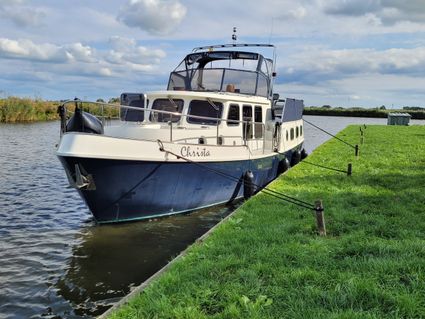
Yachtcharter Wetterwille - Aquanaut 950 Mistral
Terherne
Direct boekbaar
-
Ljepperklub Buitenpost
Buitenpost
-
Beeld ovonde Boerenstreek
-
Accept cookies to see this content.
Beeld ovonde Boerenstreek
Appelscha
-
-
Poem 'Graf te Blauwhuis'
The small village of Abbega and the neighbouring hamlet of Abbegaasterketting hid dozens of people in hiding during the war. In February 1945, a raid shocked the small community. Resistance fighter Gerrit Rijpma, 18, was fatally hit in the process. The famous Dutch writer Gerard Reve, who lived next door to a sister of Gerrit Rijpma in nearby Greonterp from 1953 to 1971, was deeply moved by the story of his neighbour's youngest brother. As a tribute to Gerrit, he wrote the poem 'Graf te Blauwhuis'.
According to witnesses, as many people in hiding lived in Abbega and the neighbouring hamlet of Abbegaasterketting as civilians.
Among them were Jewish people in hiding, people who had participated in railway strikes, deserters and young men from the surrounding area who wanted to avoid forced labour. Weapons for the resistance were also hidden there.
Abbegaasterketting was located next to the Bolswardervaart canal, and the absence of paved roads made access difficult. In addition, the inhabitants had implemented an ingenious alarm system: by means of an electric bell, people warned each other when something was wrong, and two people in hiding were on guard every night.
On 8 February 1945, at around half past eleven in the morning, the alarm bell sounded in the Rijpma family home. At that time, the brothers Yp and Gerrit were working in the barn.
When they went outside, they saw a lot of people running away in panic. This is why the brothers decided to sail down the Bolswardervaart, which divides the hamlet in two pieces, in a rowing boat. They hoped that they could get themselves to safety a little bit further on in a bend of the canal, behind the net. On their way there, they picked up their neighbour Minze van der Veen and a person in hiding, who were standing on the other side of the canal. Meanwhile, the German soldiers, aided by members of the Landwacht, a Dutch semi-military organisation, had set off in pursuit and opened fire on the fleeing people. Minze van der Veen was hit in his right elbow. Gerrit was hit three times: one bullet went straight through his body, another lodged in his back, and the third bullet went through his cheeks and teeth. Because the occupiers refused to help, Yp had to carry his dying brother to the boat and take him to a farmhouse nearby all by himself. The help from a woman living in the neighbourhood, who was a nurse, came too late. In great haste, curate Stolwijk of Blauwhuis was sent for, who administered the last rites to Gerrit. He died shortly afterwards. He was buried in the Catholic Cemetery in Blauwhuis.
The famous Dutch writer Gerard Reve, who lived in nearby Greonterp next to a sister of Gerrit Rijpma from 1953 to 1971, was deeply touched by the story of his neighbour's youngest brother. As a homage to Gerrit, he wrote the poem 'Grave in Blauwhuis':
GRAVE IN BLAUWHUIS (for neighbour H., in G.) He ran away, but did not escape, and was hit, and died, eighteen years old. A militant inscription cries out loud, but a sad and silent face looks out from the brown enamelled portrait. Still a child. Goodbye dear boy. You, who are King, of this and that, of whatever, yes, You, answer me, You know why, I don't. That Kingdom of Yours, remember, will it ever be?
In 1983, the mortal remains of Gerrit were transferred from the cemetery of Blauwhuis to Loenen National War Cemetery.
Greonterp
-