Locations
961 to 984 of 2317 results
-
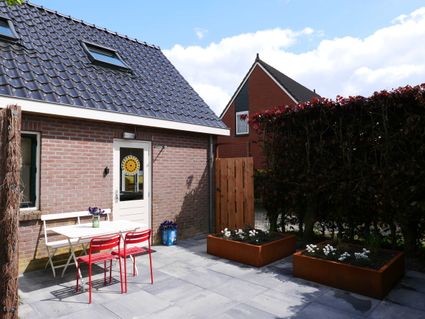
Eysinga State - Boerderijbungalow seis
Eysinga State - Boerderijbungalow seis Sint Nicolaasga
Book now
-
Welgelegen - Vakantiehut
Welgelegen - Vakantiehut Workum
Book now
-
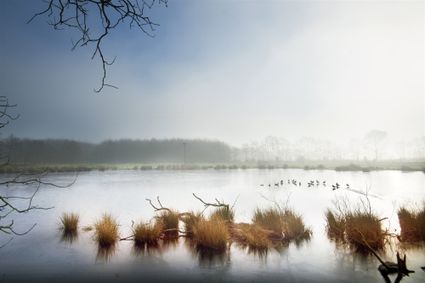
Opeindervaart Canal
Opeindervaart Canal Opeinde
-
It Frysk Skildershûs
It Frysk Skildershûs Leeuwarden
-
WestCord WTC Hotel
WestCord WTC Hotel Leeuwarden
Book now
-
Happynes.nl
Happynes.nl Nes, Ameland
-
The battle for the Tjonger bridge in Mildam
In the afternoon of 12 April, rumours had reached Mildam that Englishmen or perhaps Canadians had been sighted at Peperga. The Canadian vanguards had entered Friesland. For the inhabitants of Mildam it was still a surprise when at first one and shortly afterwards another military vehicle with a few men in khaki-coloured overalls stopped at the bridge.
These vehicles were part of a patrol of "D" Squadron Royal Canadian Dragoons commanded by Lieutenant Homer Thomas. These Canadians established that unlike other bridges, the bridge in Mildam over the Tjonger had not yet been blown up by the occupying forces. The fact that the Tjonger bridge in Mildam had not been destroyed was due to the local resistance movement. The Germans had indeed planned to blow up this bridge as well. But at the risk of their own lives, resistance fighters had removed the detonators from the explosives affixed to the bridge.
The Squadron Commander immediately ordered all units to secure the bridge. And the Dutch Domestic Armed Forces were also requested to provide men. The precautions turned out to be justified. In the night of 12 to 13 April, German troops launched one of their few counter-attacks in the province of Friesland. From Heerenveen, they managed to surprise the Canadians in Mildam. They tried to regain control of the bridge three times. During the fierce fighting, Canadian vehicles were knocked out. But the Dragoons stood firm, and the Germans were driven off again. Mildam was freed.Four Canadian soldiers were injured in the fighting. The number of casualties on the German side is unknown. There was property damage in Mildam, but no civilians were killed. With a little less luck, though, there would have been several Dutch casualties. In the early morning of 13 April, a group of dozens of resistance fighters approached the bridge at dusk from the direction of Nieuweschoot. This was the reinforcement requested by the Canadians on 12 April when the undamaged bridge was discovered. The resistance fighters were partly carrying captured German weapons and were not noticed by the Dragoons in the semi-darkness until late.
Lieutenant Thomas, mentioned earlier, almost gave the order to open fire. It was only at the last moment that it became clear that they were not Germans. The resistance members had managed to make themselves known by singing songs in English.
The preservation of the bridge was important. During the following days, the Canadians would make extensive use of the bridge to advance further in the direction of Leeuwarden and liberate the province of Friesland. Mildam
-
Jachthaven Lemsterpoort
Jachthaven Lemsterpoort Sloten
-
Stavoren (Starum)
Stavoren (Starum) Stavoren
-
Wereldwinkel Leeuwarden
Wereldwinkel Leeuwarden leeuwarden
-
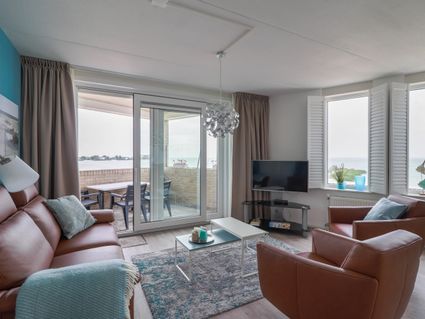
de Fluessen - Loft de Fluessen
de Fluessen - Loft de Fluessen Elahuizen
Book now
-
Attack on the port of Oostmahorn
The liberation of the north-eastern part of Friesland was not achieved without a struggle. The Dutch Domestic Armed Forces (NBS) and Canadian troops fought fierce battles, partly side by side. It was mainly occupiers fleeing in panic who caused fights and shootings that claimed victims on both sides. A fierce battle was also fought over the port of Oostmahorn.
After the liberation of Dokkum, Kollum and Dokkumer Nieuwe Zijlen, the attention of the Canadian troops turned to the port of Oostmahorn. It was the gateway to the island of Schiermonnikoog, which was part of the German defence line, the Atlantic Wall. This bulwark ran along the coasts of France to Norway. During the war, and extensive occupying force was stationed on the Wadden Island.
The village of Oostmahorn was "relieved" by the Dutch Domestic Armed Forces (NBS) on Saturday, 14 April, after the German Grenzschutz (border control) left in silence for Schiermonnikoog. Meanwhile, a group of more than a hundred fleeing SS and SD men and a dozen women crossed the Lauwerszee from Groningen near Zoutkamp with three boats to the island. A number of them were high-ranking SD members of the infamous Scholtenhuis in Groningen. When the NBS saw them sailing past from the port of Oostmahorn, shots were fired back and forth.
The German occupying forces on Schiermonnikoog then wanted to take revenge. The village and the port of Oostmahorn were attacked from the island for two hours on Monday, 16 April. A convoy of three Dutch boats left for the port with the aim of landing there. Meanwhile, the help of the B-Squadron of the Royal Canadian Dragoons (1st Armoured Carrier Regiment) in Dokkum had been called in. The attack was narrowly repelled, but two Canadian soldiers from a reconnaissance group were killed. A defence line of foxholes and armoured vehicles was erected around the village.
Further reinforcements were called in that day from Leeuwarden, where C Company of the North Nova Scotia Highlanders were sent to the coastal strip to patrol for German landing attempts.
After a brief but heavy shelling from the Canadians as a warning, a mediator was sent to the island the next day. The highest-ranking SD officer refused to surrender. They were waiting for an escape with a Schnell boat that was to take them to the German Wadden island of Borkum on 3 May. That turned out to be in vain, but in the meantime they kept the island occupied, even after the general capitulation of the whole of the Netherlands on 5 May.It was not until 11 June that two boats, the MS Waddenzee and the MS Brakzand, transported the last occupiers of Schiermonnikoog to the port of Oostmahorn. A column of army trucks packed with prisoners of war left the port under the guard of the Allies. From there they went to the POW camp in Beerta (Groningen).
Eanjum
-
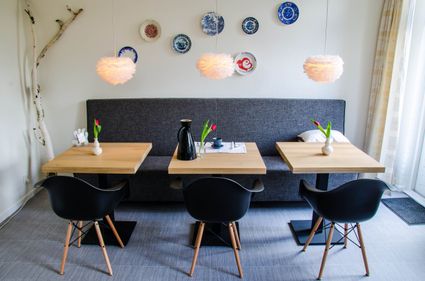
Hotel Restaurant 't Schippershuis
Hotel Restaurant 't Schippershuis Terherne
-
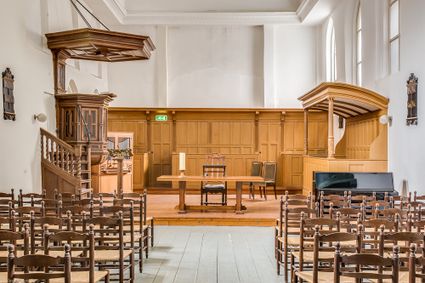
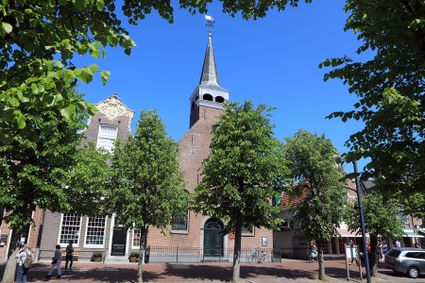
Reformed Church Iens
Reformed Church Iens Iens
-
de Markestee - de Markestee
de Markestee - de Markestee Blesdijke
Book now
-
De Kamer
De Kamer Sint Nicolaasga
Book now
-
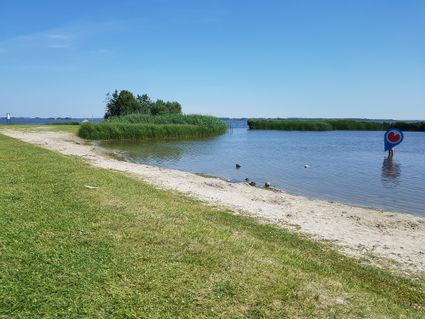
Strandje Pharshoeke (Heeg)
Strandje Pharshoeke (Heeg) Heeg
-
The Bakery Leeuwarden
The Bakery Leeuwarden Leeuwarden
-
Rinsma State Country House and Estate
Rinsma State Country House and Estate Driezum
-
Wier
Wier Wier
-
Public toilet Tsjerkewei in Oudega
Public toilet Tsjerkewei in Oudega Oudega
-
B&B Franeker Boppe
B&B Franeker Boppe Franeker
-
Skrins Meadow Bird Reserve
Skrins Meadow Bird Reserve Hennaard
-
Blaugerzen Grassland Area
Blaugerzen Grassland Area Akmarijp