Locations
673 to 696 of 2321 results
-
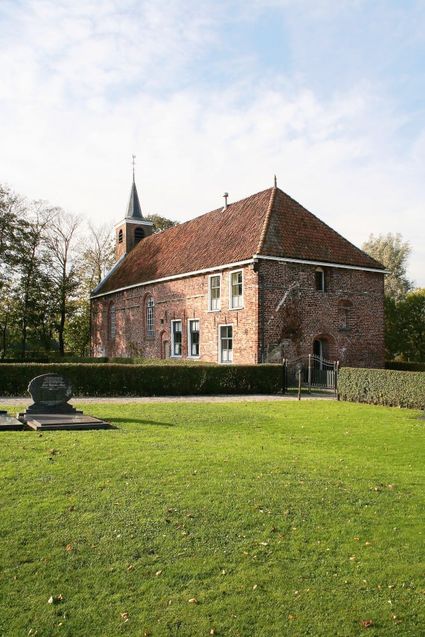
Gaasterlands Streek Museum Eppinga Sate
Gaasterlands Streek Museum Eppinga Sate Sondel
-
Recreatiecentrum Sneek
Recreatiecentrum Sneek Sneek
-
Beach Resorts Makkum - Schakel 4 persoons
Beach Resorts Makkum - Schakel 4 persoons Makkum
Book now
-
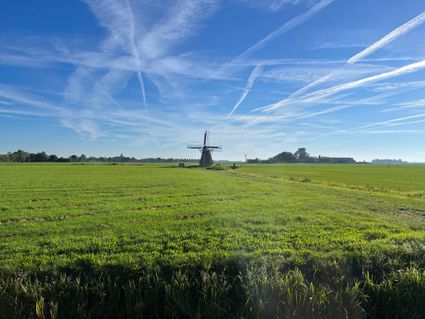
Rispens polder mill Easterein
Rispens polder mill Easterein Hidaard
-
Witmarsum
Witmarsum Witmarsum
-
HarTeluk Joure
HarTeluk Joure Joure
Book now
-
Strandhotel Vigilante - Kamer Zuiderzeezicht
Strandhotel Vigilante - Kamer Zuiderzeezicht Makkum
Book now
-
Jachthaven Hoora Heeg - Safaritent Tweepersoons
Jachthaven Hoora Heeg - Safaritent Tweepersoons Heeg
Book now
-
The liberation of Leeuwarden
On 11 April 1945, it became clear that German resistance in the north of the Netherlands was limited. On 12 April, the Allies seized this opportunity to advance on Friesland as quickly as possible. One of the main goals was to liberate Leeuwarden. The 9th Canadian Infantry Brigade was designated for this purpose. But things would turn out differently.
On 12 April, the Royal Canadian Dragoons entered Friesland at Noordwolde. They were to conduct reconnaissance with their armoured vehicles and reach the Wadden Sea as quickly as possible. As a result, the German troops in Friesland and Groningen would be separated.
On the night of 14 to 15 April, three Squadrons of the Dragoons were at Suameer. Burgum could not be reached earlier that day, because the bridge at Burgummerdam had been blown up by the Germans.
Meanwhile, all sorts of things were happening in nearby Leeuwarden. On 12 April, the airfield had been blown up by the Germans. And they left the city on 14 April. Leeuwarden would not be defended. The Burgerweeshuis (Civil Orphanage) that had housed several German agencies was set on fire. An attempt to blow up the telephone exchange failed due to an ingenious intervention by the resistance. In the early morning of 15 April, the resistance also took to the streets en masse to occupy important points and to capture Germans who had remained behind.
The Dragoons in Suameer were in contact with the resistance in Leeuwarden. Due to various reports, it was unclear whether there was now heavy fighting in Leeuwarden or whether the Germans had left the city completely. Because the Germans had blown up important bridges on the route from Heerenveen to Leeuwarden, the infantry could not quickly provide assistance.
So, the Dragoons went to take a look for themselves. Initially, a patrol of four vehicles was sent via the Groningerstraatweg into the city around half past eleven. One of the Canadians in those vehicles recorded the following:
"As we entered the city, passing through the concrete barrier by the narrow passageway left for normal traffic, we were met by an almost hysterical patrol of Resistance men [...] In a few moments the news of our arrival had spread through the city, and we were given a fantastic welcome as we rolled slowly forward into the centre of town."A resident of Leeuwarden recalled:
"We lived close to the Groningerstraatweg, where our liberators passed. Many hundreds of us stood there, all happy spectators. All of a sudden, two ladies from the row flung themselves forward and threw their arms around the Canadians' necks, saying: "Oh darlings, you’re here at last!"After the patrol determined that the coast was clear, the entire C Squadron, a detachment of the Royal Canadian Engineers and Regimental Headquarters of Lieutenant-Colonel Landell followed. Leeuwarden had been liberated. After this, thousands took to the streets. One of the Canadians wrote:
"We halted, and were immediately surrounded by laughing, yelling mobs of people, bringing flowers to give to us, and cheering every move. The Resistance men were everywhere, doing their best to keep the people within bounds and off the cars, but their efforts were hardly necessary. I never saw a more satisfying gathering in my life."Leeuwarden had been liberated by the Dragoons through unexpected circumstances. On the night of 15 to 16 April, Canadian infantry moved into the city.
Leeuwarden
-
The Nannewiid
The Nannewiid Oudehaske
-
Woning Scharsterbrug
Woning Scharsterbrug Scharsterbrug
Book now
-
Zijda Yachting - Jordy Elite
Zijda Yachting - Jordy Elite Jirnsum
Book now
-
Eeltsjemar Lake Beach
Eeltsjemar Lake Beach Rinsumageast
-
Beach Langehoekspôlle
Beach Langehoekspôlle It Heidenskip
-
Zijda Yachting - Zuiderzee Elite
Zijda Yachting - Zuiderzee Elite Jirnsum
Book now
-
Drink & Eetlokaal Proefverlof
Drink & Eetlokaal Proefverlof Leeuwarden
-
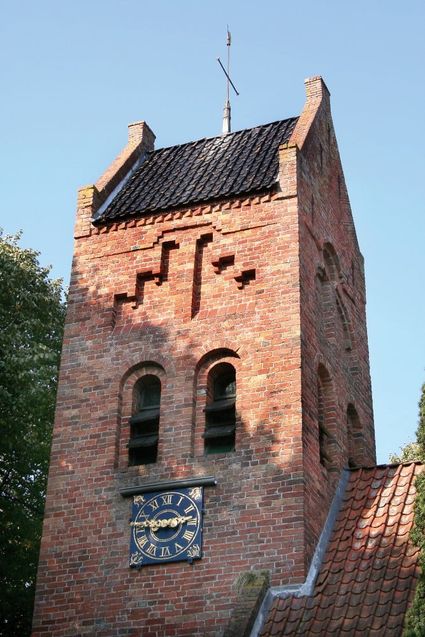
Goïngarijp Bell Tower
Goïngarijp Bell Tower Goïngarijp
-
Earnewâld
Earnewâld Earnewâld
-
Noordwolde the first village to be liberated by land
In the evening of 11 April 1945, units of the Canadian Reconnaissance Regiment Royal Canadian Dragoons arrived at Dwingeloo, just before the so-called Frieslandriegel. This line of defence had been constructed shortly before by the work of many Dutch forced labourers. However, the line was hardly occupied and eventually turned out to be incorrectly constructed.
The Dragoons' task was to scout the road well ahead of the rest of the Canadian units. And they noted that the Germans in this area were barely able to defend themselves effectively. Partly for this reason, it was decided on 11 April that units of the 3rd Canadian Infantry Division and supporting units would make a jump to Leeuwarden in the following days. If the Frisian capital and possibly the rest of Friesland could be taken, the Germans would be trapped in the western part of the Netherlands. After all, large parts of Overijssel and Gelderland had also been liberated at this point.
The infantry had to advance through Zwolle, Meppel, Steenwijk, Heerenveen to Leeuwarden. To get them to Leeuwarden as soon as possible, all kinds of extra vehicles had been arranged. Meanwhile, the Royal Canadian Dragoons, and not much later another reconnaissance regiment, the Duke of York´s Royal Canadian Hussars, would enter Friesland to scout the planned main route there. And to create as much chaos as possible among the German defenders.Thanks to the citizens of Dieverbrug in Drenthe, an emergency bridge was built over the Drentse Hoofdvaart canal so that the Canadian vehicles could advance to Friesland. Then, on the morning of 12 April, the Dragoons were the first Canadian land unit to enter the province of Friesland. The village of Noordwolde was the first to be liberated.
Although this first Frisian village could be taken without a fight, there was brief fighting immediately north of Noordwolde. About twenty Germans and Dutch accomplices tried to delay the Canadians. After a short fight, the Germans fled the scene, leaving all their equipment behind. Others, including ten Dutch accomplices of the Landwacht and Ordnungspolizei, were captured.But the very first liberators to set foot on Frisian soil were French SAS paratroopers from the 3e Régiment de Chasseurs Parachutistes. Just over 700 of them were dropped over Drenthe and south-east Friesland on the night of 7 to 8 April. Their mission was to support the Allied ground operation. They did so by creating chaos behind German lines, capturing bridges, and carrying out all kinds of operations together with the resistance. They had to keep this up until the Canadian ground units reached them. A small proportion ended up at Appelscha and Haulerwijk and carried out their assignments there. In the performance of these assignments, 21-year-old Chasseur de 2e Classe (Private 2nd Class) Henri Pintaud was killed on 8 April.
Noordwolde
-
Lycklamahuis
Lycklamahuis Beetsterzwaag
-
Zijda Yachting - Florien Elite
Zijda Yachting - Florien Elite Jirnsum
Book now
-
Tsjûke and Marchje statue
Tsjûke and Marchje statue Echten
-
Aldskou Bridge (Old Schouw)
Aldskou Bridge (Old Schouw) Akkrum
-
Recreatiebedrijf de Koevoet - Drie kamer appartement
Recreatiebedrijf de Koevoet - Drie kamer appartement Teroele
Sustainability info
Book now