Dit punt is onderdeel van de route 'It Paad Werom Terherne'. Bekijk hier de hele route. Deze route start bij het grote parkeerterrein in het dorp, Koailan 2.
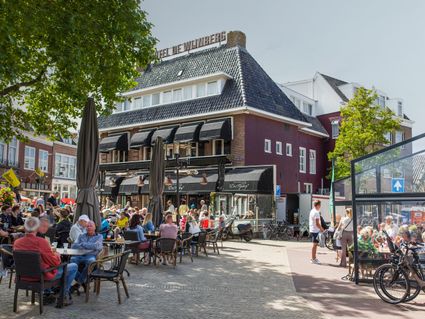
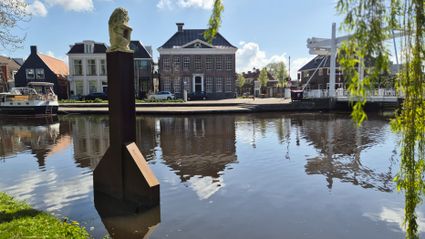
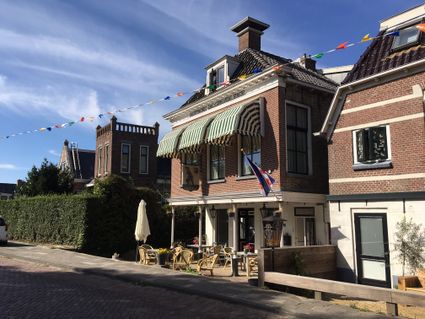
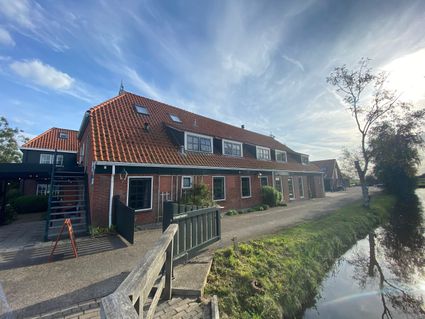
In de huidige tijd is dit een druk knooppunt in Terherne. Een vernauwing in de grootste ader van het dorp. Dus kijk goed om je heen, blijf op de stoep, en pas op voor auto’s en fietsers. Hier aan de overkant staat het Schippershuis.
Het Schippershuis draagt haar naam sinds een aantal jaar weer met verve. ’t Schippershuis heet zo omdat deze plek in vroegere tijden een aanlegplaats voor schippers was. Het was een dranklokaaltje en een wachtlokaal van de beurtschippers. Dit punt in het dorp was een knooppunt, waar alle vaarroutes bij elkaar kwamen. Kijk maar eens om je heen. Vanuit Leeuwarden, Sneek, Heerenveen en Gorredijk. Rond 1900 werd het ook een hotel. Dit was in de tijd dat de Rijpkema’s ook dit horecapand in eigendom hadden. Dina Rijpkema kon heerlijk koken. Het was ook de tijd dat de eerste toeristen naar Terherne kwamen. Het was redelijk exclusief en er werd dan ook gesproken van ‘uitzonderlijk en verwende watersporters’, die kwamen eten. In deze tijd heette het nog Café Rijpkema. Deze naam bleef tot de tweede wereldoorlog en het pand is steeds uitgebreid.
We gaan verder en we gaan hier links de Stripe op. In deze straat doe ik weer een beroep op je inlevingsvermogen en maak ik een sprong in de tijd met je.
We zijn in 1886. Je bevindt je namelijk in het nieuwe economische zwaartepunt van Terherne. We lopen door deze drukke winkelstraat tussen de schippers, diens vrouwen en handelaren door. De pandjes aan je rechterkant zijn bedrijven en winkels die bijdragen aan de scheepvaart. Hier vind je alle handel voor boeren en schippers: van mast- blok en pompmaker, tot fouragehandelaar.
Tussen de winkels en de bedrijven zie je een paar rentenierswoningen, bijvoorbeeld op nummer 6 en 7. We lopen rustig verder naar het einde van de straat, naar de helling van Leemburg. Hier vind je het volgende paaltje.
Dit punt is onderdeel van de route 'It Paad Werom Terherne'. Klik hier om terug te gaan naar de route. Deze route start bij het grote parkeerterrein in het dorp, Koailan 2.
On 11 April 1945, it became clear that German resistance in the north of the Netherlands was limited. On 12 April, the Allies seized this opportunity to advance on Friesland as quickly as possible. One of the main goals was to liberate Leeuwarden. The 9th Canadian Infantry Brigade was designated for this purpose. But things would turn out differently.
On 12 April, the Royal Canadian Dragoons entered Friesland at Noordwolde. They were to conduct reconnaissance with their armoured vehicles and reach the Wadden Sea as quickly as possible. As a result, the German troops in Friesland and Groningen would be separated.
On the night of 14 to 15 April, three Squadrons of the Dragoons were at Suameer. Burgum could not be reached earlier that day, because the bridge at Burgummerdam had been blown up by the Germans.
Meanwhile, all sorts of things were happening in nearby Leeuwarden. On 12 April, the airfield had been blown up by the Germans. And they left the city on 14 April. Leeuwarden would not be defended. The Burgerweeshuis (Civil Orphanage) that had housed several German agencies was set on fire. An attempt to blow up the telephone exchange failed due to an ingenious intervention by the resistance. In the early morning of 15 April, the resistance also took to the streets en masse to occupy important points and to capture Germans who had remained behind.
The Dragoons in Suameer were in contact with the resistance in Leeuwarden. Due to various reports, it was unclear whether there was now heavy fighting in Leeuwarden or whether the Germans had left the city completely. Because the Germans had blown up important bridges on the route from Heerenveen to Leeuwarden, the infantry could not quickly provide assistance.
So, the Dragoons went to take a look for themselves. Initially, a patrol of four vehicles was sent via the Groningerstraatweg into the city around half past eleven. One of the Canadians in those vehicles recorded the following:
"As we entered the city, passing through the concrete barrier by the narrow passageway left for normal traffic, we were met by an almost hysterical patrol of Resistance men [...] In a few moments the news of our arrival had spread through the city, and we were given a fantastic welcome as we rolled slowly forward into the centre of town."
A resident of Leeuwarden recalled: "We lived close to the Groningerstraatweg, where our liberators passed. Many hundreds of us stood there, all happy spectators. All of a sudden, two ladies from the row flung themselves forward and threw their arms around the Canadians' necks, saying: "Oh darlings, you’re here at last!"
After the patrol determined that the coast was clear, the entire C Squadron, a detachment of the Royal Canadian Engineers and Regimental Headquarters of Lieutenant-Colonel Landell followed. Leeuwarden had been liberated. After this, thousands took to the streets. One of the Canadians wrote: "We halted, and were immediately surrounded by laughing, yelling mobs of people, bringing flowers to give to us, and cheering every move. The Resistance men were everywhere, doing their best to keep the people within bounds and off the cars, but their efforts were hardly necessary. I never saw a more satisfying gathering in my life."