Locations
961 to 984 of 2467 results
-
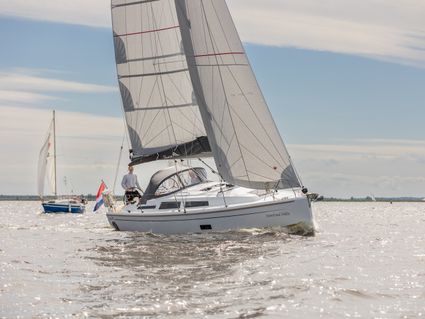
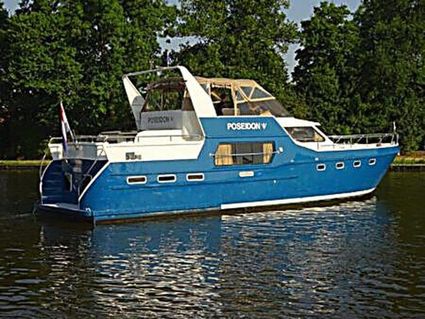
Zijda Yachting - Captain Willem Barentsz Elite
Zijda Yachting - Captain Willem Barentsz Elite Jirnsum
Book now
-
Huize Goede Reede - Appartement met terras
Huize Goede Reede - Appartement met terras Oudemirdum
Book now
-
Greenjoy Gytsjerk
Greenjoy Gytsjerk Gytsjerk
-
Aparthotel de Bank
Aparthotel de Bank Harlingen
-
Bij De Pastorie Boutique Hotel
Bij De Pastorie Boutique Hotel Reitsum
-
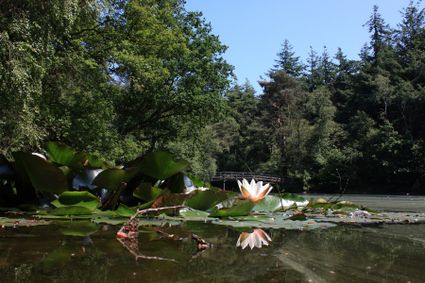
Schwarzenbergerbos Forest
Schwarzenbergerbos Forest Noardburgum
-
The liberation of Friesland
By 18 April, the whole province of Friesland had been liberated, except for the Wadden Islands. Compared to other provinces, there was little fighting in Friesland. Overall, the few thousand German troops who had been unable to escape from Friesland were defeated by the Canadians relatively quickly.
The commander of the Royal Canadian Dragoons, Lieutenant Colonel Landell, praised the actions of the resistance by stating that "Friesland liberated herself". While that may be a bit of an exaggeration, the actions of the Frisian resistance undoubtedly accelerated the liberation. And reduced the number of casualties on the Allied side.
At least 31 resistance fighters lost their lives in confrontations with German troops and their Dutch accomplices. At least eleven Canadians and one Frenchman were killed on the Allied side. Dozens of civilian victims were also killed in the fighting and shelling. The number of casualties on the German side is not known, but it is believed that the number ran into hundreds. With 320 destroyed and 4000 damaged homes and 80 destroyed bridges, Friesland was materially the least damaged province of the Netherlands.
Many German soldiers fled towards the western part of the country. The retreating German troops gathered mostly in Harlingen, Makkum and Lemmer. From there, they tried to get away by boat across the IJsselmeer or via the Afsluitdijk to North Holland. The Wadden Islands also became a refuge for collaborators and German soldiers. Here, liberation was longer in coming.
On the island of Terschelling, the last German troops were disarmed by a British artillery regiment on 29 May. Two days later, the British crossed from Terschelling to Vlieland, and the liberation of that island was also a fact. Ameland was liberated on 3 June.
Personnel from the infamous Scholtenhuis, the SD headquarters in Groningen, had entrenched themselves on Schiermonnikoog. After their departure on 31 May, there was a celebration on the island, in spite of the six hundred members of the occupying troops who still were there. Only on 11 June did the last German soldiers leave Schiermonnikoog, and then the whole province of Friesland was free.
Most Canadian units that had liberated Friesland continued the battle in Groningen and North Germany after 18 April. Their war ended on 8 May 1945, when the surrender of all German armed forces became effective.
Eanjum
-
Jachthaven Hoora Heeg - Safaritent Deluxe
Jachthaven Hoora Heeg - Safaritent Deluxe Heeg
Book now
-
Camping Lan en Mar - Terras Chalet
Camping Lan en Mar - Terras Chalet Heeg
Book now
-
Boshuis Bambi
Boshuis Bambi Oudemirdum
Book now
-
't Golfje
't Golfje Midsland Noord
-
Moai fuort
Moai fuort Grou
-
B&B Zathe de Spieker - Rembrandt kamer
B&B Zathe de Spieker - Rembrandt kamer Itens
-
Under de Wol - Boerderij appartement Twa
Under de Wol - Boerderij appartement Twa Oudega (gemeente Súdwest-Fryslân)
-
Park Heremastate
Park Heremastate Joure
-
Russian Orthodox Monastery in Hemelum
Russian Orthodox Monastery in Hemelum Hemelum
-
Strandhotel Vigilante - Family Suite
Strandhotel Vigilante - Family Suite Makkum
Book now
-
The battle for the Tjonger bridge in Mildam
In the afternoon of 12 April, rumours had reached Mildam that Englishmen or perhaps Canadians had been sighted at Peperga. The Canadian vanguards had entered Friesland. For the inhabitants of Mildam it was still a surprise when at first one and shortly afterwards another military vehicle with a few men in khaki-coloured overalls stopped at the bridge.
These vehicles were part of a patrol of "D" Squadron Royal Canadian Dragoons commanded by Lieutenant Homer Thomas. These Canadians established that unlike other bridges, the bridge in Mildam over the Tjonger had not yet been blown up by the occupying forces. The fact that the Tjonger bridge in Mildam had not been destroyed was due to the local resistance movement. The Germans had indeed planned to blow up this bridge as well. But at the risk of their own lives, resistance fighters had removed the detonators from the explosives affixed to the bridge.
The Squadron Commander immediately ordered all units to secure the bridge. And the Dutch Domestic Armed Forces were also requested to provide men. The precautions turned out to be justified. In the night of 12 to 13 April, German troops launched one of their few counter-attacks in the province of Friesland. From Heerenveen, they managed to surprise the Canadians in Mildam. They tried to regain control of the bridge three times. During the fierce fighting, Canadian vehicles were knocked out. But the Dragoons stood firm, and the Germans were driven off again. Mildam was freed.Four Canadian soldiers were injured in the fighting. The number of casualties on the German side is unknown. There was property damage in Mildam, but no civilians were killed. With a little less luck, though, there would have been several Dutch casualties. In the early morning of 13 April, a group of dozens of resistance fighters approached the bridge at dusk from the direction of Nieuweschoot. This was the reinforcement requested by the Canadians on 12 April when the undamaged bridge was discovered. The resistance fighters were partly carrying captured German weapons and were not noticed by the Dragoons in the semi-darkness until late.
Lieutenant Thomas, mentioned earlier, almost gave the order to open fire. It was only at the last moment that it became clear that they were not Germans. The resistance members had managed to make themselves known by singing songs in English.
The preservation of the bridge was important. During the following days, the Canadians would make extensive use of the bridge to advance further in the direction of Leeuwarden and liberate the province of Friesland. Mildam
-
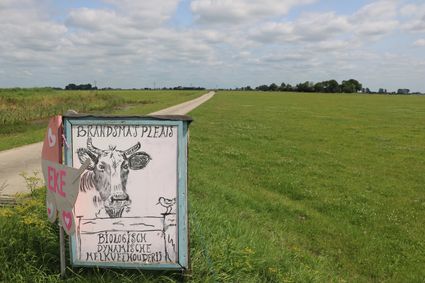
Farm Shop Tsjûkemar
Farm Shop Tsjûkemar Delfstrahuizen
-
SUPAway.nl
SUPAway.nl Grou
-
Watervillapark Idskenhuizen - Grutte Pier
Watervillapark Idskenhuizen - Grutte Pier Idskenhuizen
Book now
-
Bed and Breakfast Het Oude Doktershuys
Bed and Breakfast Het Oude Doktershuys Minnertsga
-
Hotel Workum - Standaard kamer
Hotel Workum - Standaard kamer Workum
Book now
-
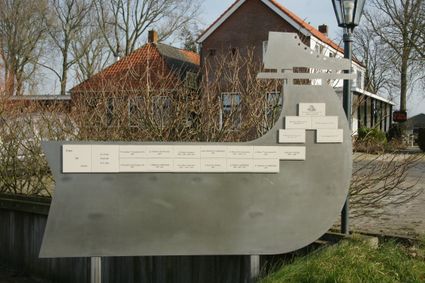
Verzetsmonument Makkum
Verzetsmonument Makkum Makkum