Locations
1249 to 1272 of 2312 results
-
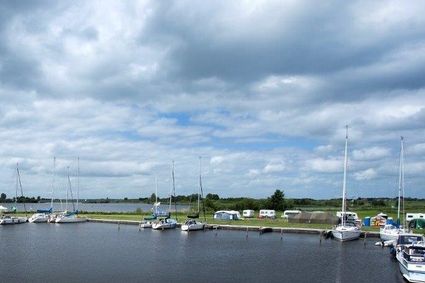
Camping Sotterum en Sotterum Chaletverhuur
Camping Sotterum en Sotterum Chaletverhuur Cornwerd
-
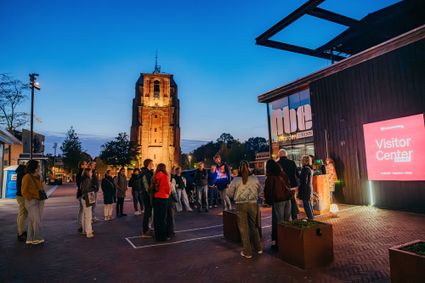
Tall Ships Experience Center
Tall Ships Experience Center Harlingen
-
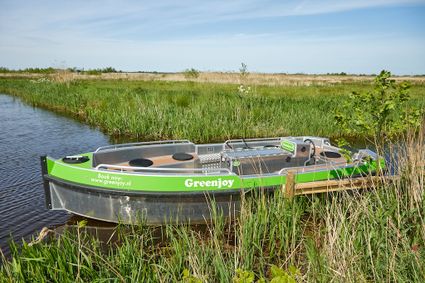
Natuurkampeerterrein minicamping Singel
Natuurkampeerterrein minicamping Singel Jubbega
Direct boekbaar
-
Strand bij Slotermeer: De Baaier
Strand bij Slotermeer: De Baaier Sloten
-
Lies Keramiek
Lies Keramiek
By reservation
Leeuwarden -
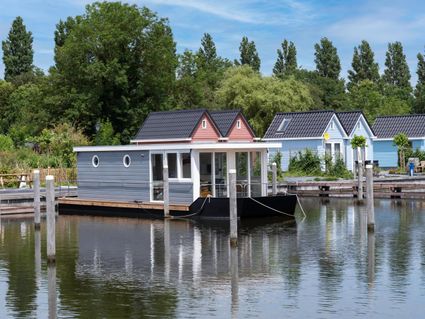
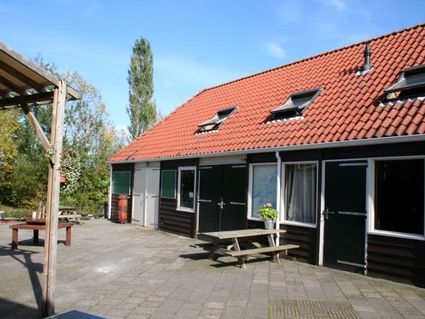
Lutz Watervilla's - Wettervilla Tweintich
Lutz Watervilla's - Wettervilla Tweintich Balk
Direct boekbaar
-
De Wartenster
De Wartenster Warten
-
Special Beer Cafe de Markies
Special Beer Cafe de Markies Leeuwarden
-
Hotel De Doelen
Hotel De Doelen Franeker
-
Memorial stone for Fallen Canadians
Sunday 15 April 1945, Friesland's official liberation day, was also the day Sneek welcomed the Canadian liberation forces. It had been an exciting day, and the Dutch Domestic Armed Forces (NBS) had fought quite a battle with the occupiers.
A day earlier, German troops had begun to withdraw from Sneek and the NBS had tried to hinder their retreat along the Leeuwarderweg as much as possible. Until a column of German parachute troops had entered the fray and forced the NBS to retreat.
The Waag building in the middle of the city centre was used as a weapons cache by the occupying forces during the war. To prevent it from falling into Allied hands, the fleeing troops set it on fire at around three o'clock on Sunday. Loud explosions and bangs resounded throughout the city for half an hour.
Once the enemy had left the city, the NBS operatives gathered at the HBS school for instructions and the distribution of weapons and armbands. They went into the city to round up traitors. Then, rumour had it that hundreds of German soldiers were on their way to Sneek from Lemmer. Immediately, fortifications were built at the Water gate.
Canadian units were alerted. They were now in possession of the latest defence plans for Sneek thanks to NBS intelligence and were advancing from Joure towards the town.
In the evening around half past seven, the first patrol of the Canadian infantry battalion Le régiment De La Chaudière rode into town with flame-throwers and machine guns. The German troops stayed away, and the full Canadian battalion followed.
Sneek was liberated, but freedom was not yet guaranteed as German troops tried to escape via the Afsluitdijk towards Friesland. The Canadian Regiment of the Queens Own Rifles moved through Sneek to the Afsluitdijk and fiercely fought at Wons. Six Canadian soldiers were killed. They were temporarily buried at Sneek General Cemetery. In 1946, they were reburied at the Canadian Field of Honour in Holten.
Canadian guests
While waiting to return to their homeland, hundreds of Canadian soldiers were lodged with families in Sneek for about five months. On 1 June, the Perth Regiment arrived in the town, which they temporarily renamed Stratford. They were involved in the liberation of Groningen. A committee was set up to entertain the soldiers with various activities. From dances to sailing competitions and special church services.Cordial ties developed between the liberators and the people of Sneek. And sometimes more than that. For Gordon C. Compton and Atty Bouma, one could even speak of "love at first sight". When the last soldiers return home at the end of November, Gordon decided to stay in the Netherlands. On 9 May 1946, he married Atty in Sneek. Not long after, Gordon and his "war bride" left for Canada.
Several monuments in the city recall the special bond with the Canadian military, which remains very close to this day.
Sneek
-
Van der Valk Hotel Sneek - Comfortkamer - Waterzijde
Van der Valk Hotel Sneek - Comfortkamer - Waterzijde Sneek
Direct boekbaar
-
Wellekom Watersport - Motorjacht Escape
Wellekom Watersport - Motorjacht Escape Woudsend
Direct boekbaar
-
Execution of ten Dutch collaborators near Oldeberkoop
On the afternoon of 12 April, Oldeberkoop was liberated by "D" Squadron of the Royal Canadian Dragoons. Later that day, they established a temporary headquarters in the village. The movements of "D" squadron were coordinated from the headquarters. This was also the place where prisoner of war from the immediate surroundings were gathered.
These prisoners of war were often Germans, but sometimes also Dutch who served voluntarily in the Waffen-SS, the NSKK (a paramilitary section of the Nazi party NSDAP) or the Dutch Landwacht. On this 12th of April, ten of these collaborators were brought into the encampment in Oldeberkoop amid great interest. Hatred of people who fought with or for the Germans was strong among most of the Dutch population. A resident of Oldeberkoop described the moment the men were brought in:
"The crowd booed and whistled, some spat, and some could not keep their hands off them. One of them got such a blow to the head that hit made his head spin."Not much later, these POWs were taken away again. Presumably with the aim of taking them to a real prison camp in Vledder. But the men would never get there. All ten of them were shot without trial in the Koepelbos just outside Oldeberkoop.
It was long thought that the Canadians were responsible for these unlawful executions. But by 1995, it became clear that Canadian involvement had been minimal. Stories about the involvement of two former resistance fighters were confirmed when one of them confessed to having fired the shots. In addition to himself, a colleague, a Canadian driver and some men who had dug the graves were present at the execution.
The exact reason for the murder of the Dutch collaborators and the exact role of the two Dutchmen and the Canadian have never been fully clarified. There are different accounts of the events leading up to the shooting. On 14 April, the bodies were finally buried in a mass grave on the side of the road. Later they were transferred to the German war cemetery in Ysselsteyn. The names of most of the victims also became known at that time:
Egbert Jan Hommes, Ordnungspolizei
Otto Frikken, Ordnungspolizei
Gerrit Jan Seevinck, Dutch Landwacht
Hendrik Dales, Dutch Landwacht
Heike Ham, Dutch Landwacht
Douwe Jonkman, Dutch Landwacht
Bernard Janssen, Dutch Landwacht
Arnold Pieter Post, Dutch Landwacht
The identities of two men from the Dutch Landwacht could not yet be ascertained. Oldeberkoop
-
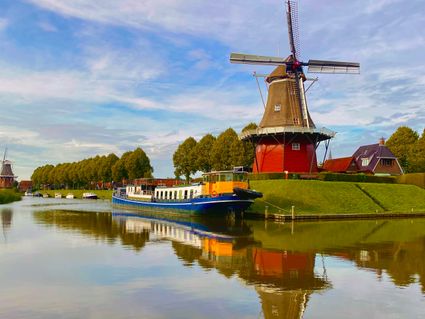
Tollboot "It Driezumer Tolhús" near Dokkum
Tollboot "It Driezumer Tolhús" near Dokkum Driezum
-
Kelder 65
Kelder 65 Leeuwarden
-
Voorarrest (pre-trial detention)
Voorarrest (pre-trial detention) Leeuwarden
-
Villa Singelzicht
Villa Singelzicht Harlingen
-
Camping Oan e Poel - Comfortabele stacaravan Bluebird
Camping Oan e Poel - Comfortabele stacaravan Bluebird Heeg
Direct boekbaar
-
Restaurant Ode
Restaurant Ode Dokkum
-
Onder 't Duin
Onder 't Duin West-Terschelling
-
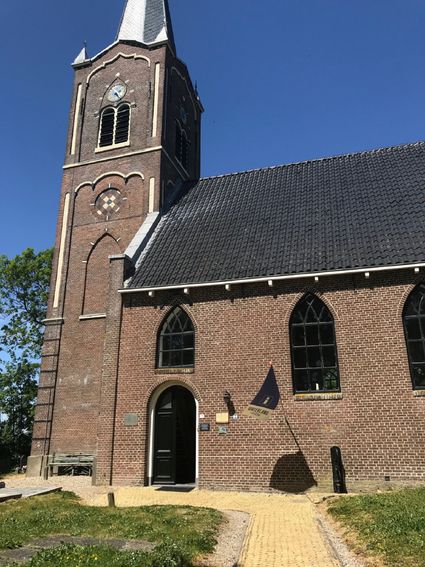
Snikzwaag Bell Tower
Snikzwaag Bell Tower Snikzwaag
-
The Music Box
The Music Box Leeuwarden
-
Fruithof De Struikrover
Fruithof De Struikrover Oldeholtpade
-
Plaque Blauwpoortsbrug
Plaque Blauwpoortsbrug Bolsward