Locations
1513 to 1536 of 2312 results
-
WestCord WTC Hotel - Junior Suite
WestCord WTC Hotel - Junior Suite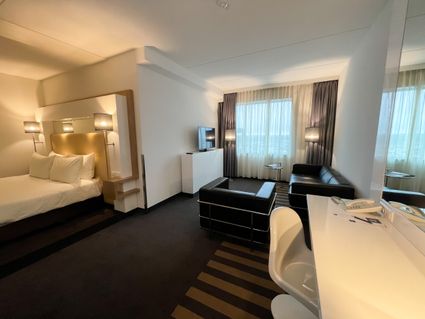
Direct boekbaar
-
Execution of ten Dutch collaborators near Oldeberkoop
Execution of ten Dutch collaborators near Oldeberkoop
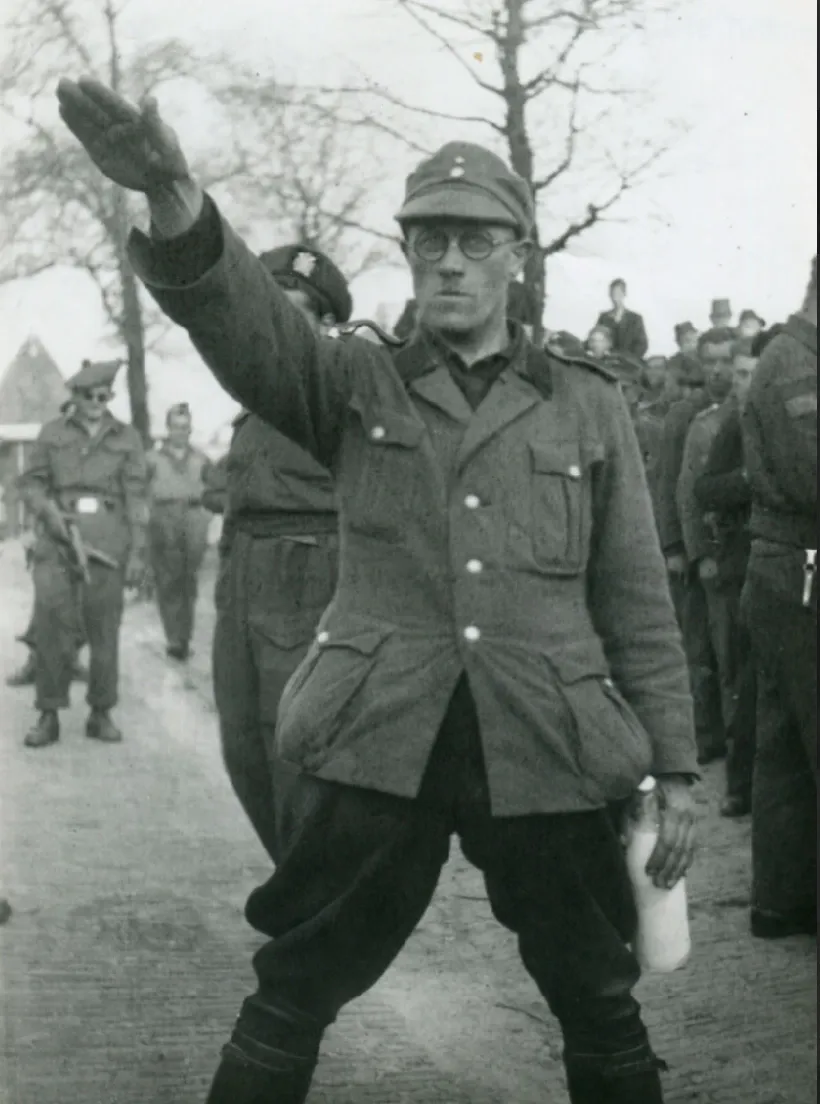
On the afternoon of 12 April, Oldeberkoop was liberated by "D" Squadron of the Royal Canadian Dragoons. Later that day, they established a temporary headquarters in the village. The movements of "D" squadron were coordinated from the headquarters. This was also the place where prisoner of war from the immediate surroundings were gathered.
These prisoners of war were often Germans, but sometimes also Dutch who served voluntarily in the Waffen-SS, the NSKK (a paramilitary section of the Nazi party NSDAP) or the Dutch Landwacht. On this 12th of April, ten of these collaborators were brought into the encampment in Oldeberkoop amid great interest. Hatred of people who fought with or for the Germans was strong among most of the Dutch population. A resident of Oldeberkoop described the moment the men were brought in:
"The crowd booed and whistled, some spat, and some could not keep their hands off them. One of them got such a blow to the head that hit made his head spin."Not much later, these POWs were taken away again. Presumably with the aim of taking them to a real prison camp in Vledder. But the men would never get there. All ten of them were shot without trial in the Koepelbos just outside Oldeberkoop.
It was long thought that the Canadians were responsible for these unlawful executions. But by 1995, it became clear that Canadian involvement had been minimal. Stories about the involvement of two former resistance fighters were confirmed when one of them confessed to having fired the shots. In addition to himself, a colleague, a Canadian driver and some men who had dug the graves were present at the execution.
The exact reason for the murder of the Dutch collaborators and the exact role of the two Dutchmen and the Canadian have never been fully clarified. There are different accounts of the events leading up to the shooting. On 14 April, the bodies were finally buried in a mass grave on the side of the road. Later they were transferred to the German war cemetery in Ysselsteyn. The names of most of the victims also became known at that time:
Egbert Jan Hommes, Ordnungspolizei
Otto Frikken, Ordnungspolizei
Gerrit Jan Seevinck, Dutch Landwacht
Hendrik Dales, Dutch Landwacht
Heike Ham, Dutch Landwacht
Douwe Jonkman, Dutch Landwacht
Bernard Janssen, Dutch Landwacht
Arnold Pieter Post, Dutch Landwacht
The identities of two men from the Dutch Landwacht could not yet be ascertained.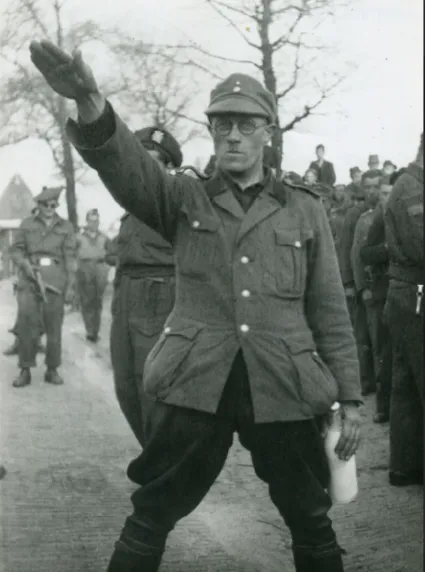
-
-
Kitesurfing Spot at Makkum
Kitesurfing Spot at Makkum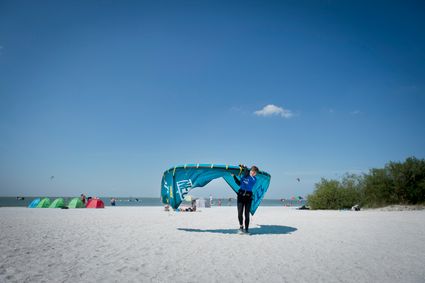
-
Familieboten
Familieboten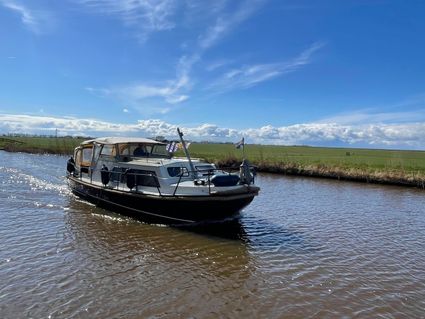
Direct boekbaar
-
Vino & Verder
Vino & Verder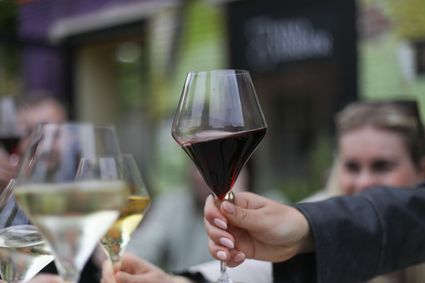
-
'Living Room Theatre' De Wier Koarnjum
'Living Room Theatre' De Wier Koarnjum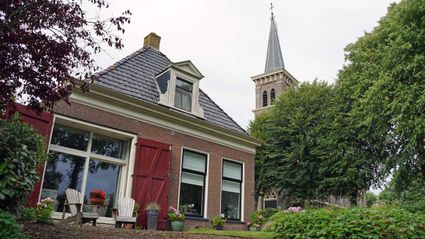
-
1622lifestyle
1622lifestyle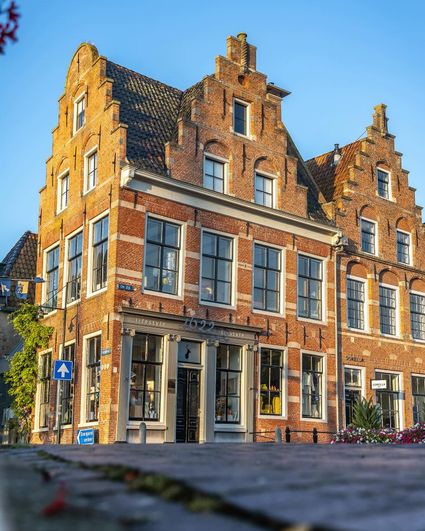
-
Memorial Torch Graveyard in memory of Jeen Hornstra
Memorial Torch Graveyard in memory of Jeen Hornstra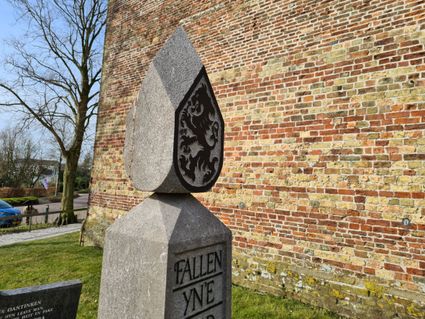
-
Craft cotton printing factory, Kleine Lijn
Craft cotton printing factory, Kleine Lijn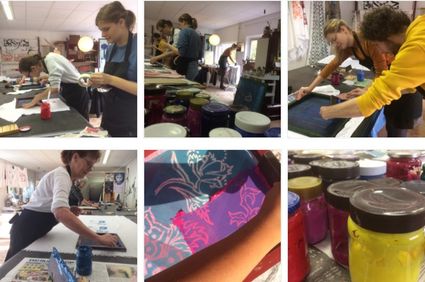

-
Het Wapen van Leeuwarden
Het Wapen van Leeuwarden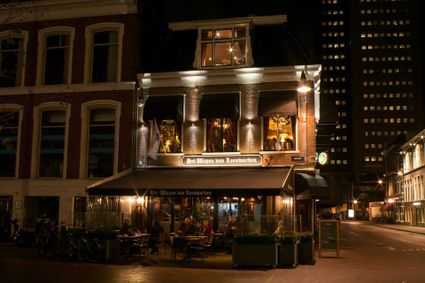
-
De Mindfulgids
De Mindfulgids
-
De Marlijn
De Marlijn
-
City farm De Sibbe
City farm De Sibbe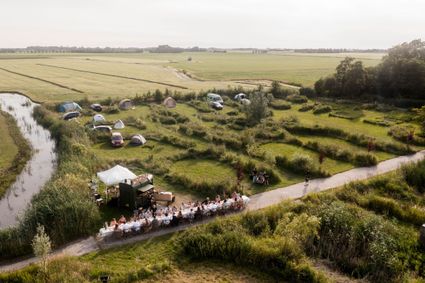
-
Locks and the Sylhús
Locks and the Sylhús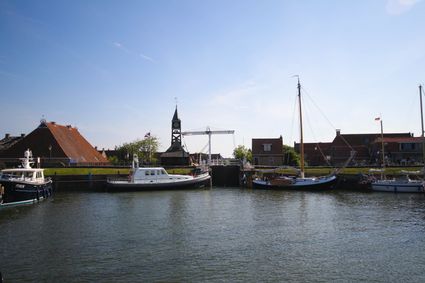
-
Remains of the Atlantic Wall in Harlingen
Remains of the Atlantic Wall in Harlingen
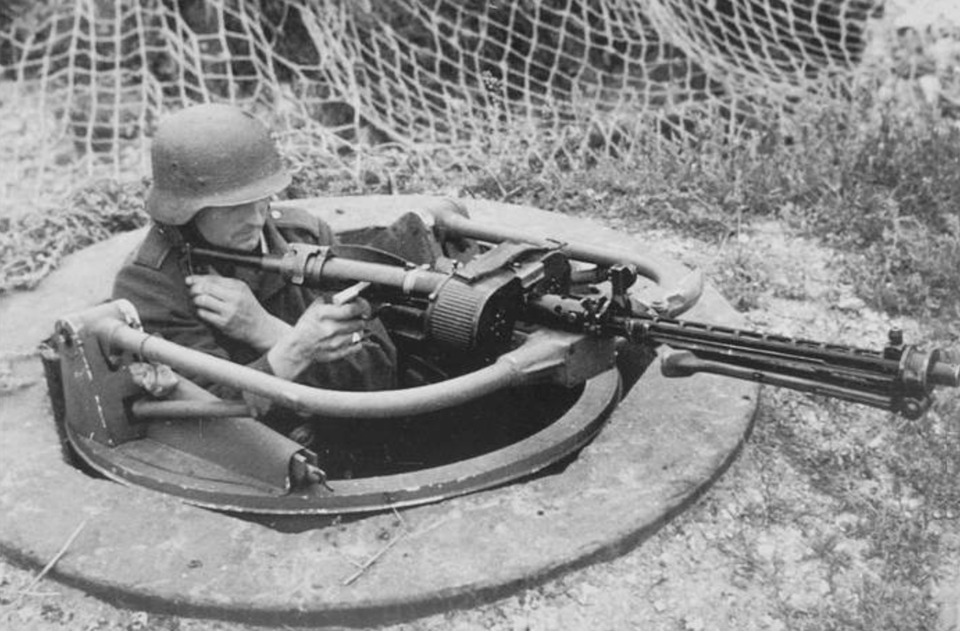
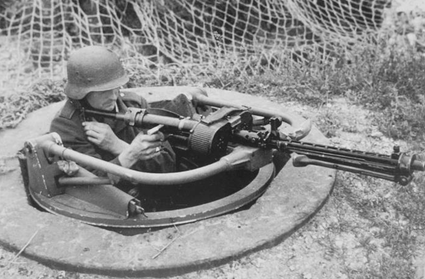
The bunkers at Harlingen were part of the Atlantic Wall: the more than 6,000-kilometer-long German defense line from Norway to Spain. The Atlantic Wall is one of the largest structures of the 20th century.
The line was built during the Second World War between 1942 and 1945 to prevent an Allied invasion of the Western European mainland from the sea. The Atlantic Wall was a series of separate smaller and larger support points that could give each other fire support.
In many cases they consisted of bombproof bunkers, sometimes with a wall and roof thickness of at least two meters of reinforced concrete. Due to a lack of labour, equipment and fuel, only 510 bunkers of the planned 2000 had been built in the Netherlands. In the English Garden in Harlingen is a German bunker that was part of the Atlantic Wall. It concerns a Communications Command Post with which the Germans coordinated the Frisian coastal defences.
-
-
Atelier Basalt
Atelier Basalt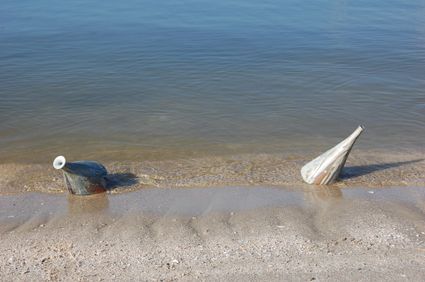
-
Information point Joure (Passantenhaven)
Information point Joure (Passantenhaven)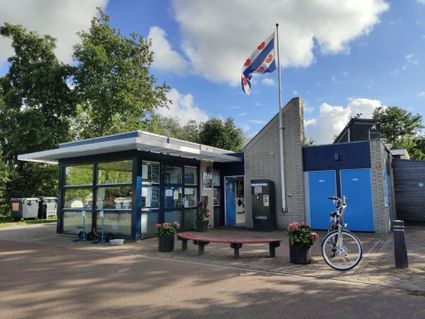
-
Villa Envie luxe B&B - Island in the Frisian Lakes
Villa Envie luxe B&B - Island in the Frisian Lakes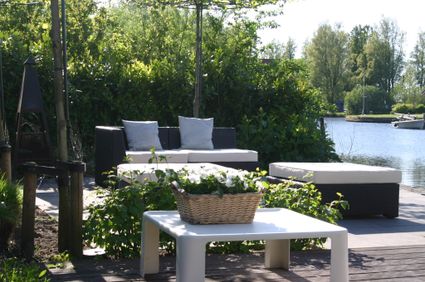
-
Fun4rent
Fun4rent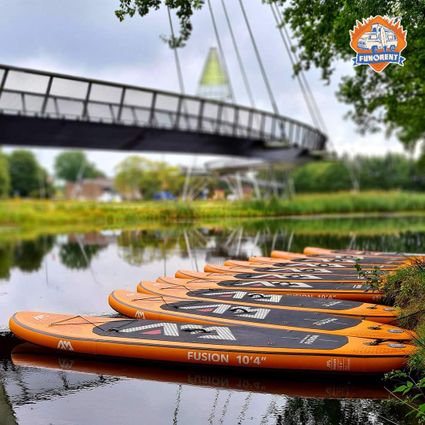
-
Recreatiebedrijf de Koevoet
Recreatiebedrijf de Koevoet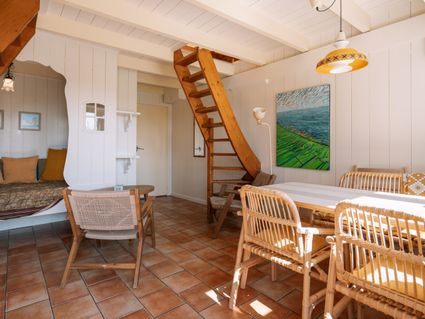
Direct boekbaar
-
Tusken de Marren - Vakantiehuis Anker wellness 14p
Tusken de Marren - Vakantiehuis Anker wellness 14p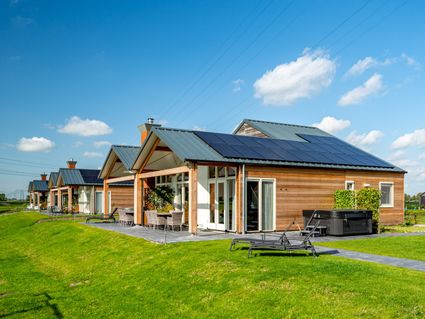
Direct boekbaar
-
River Linde
River Linde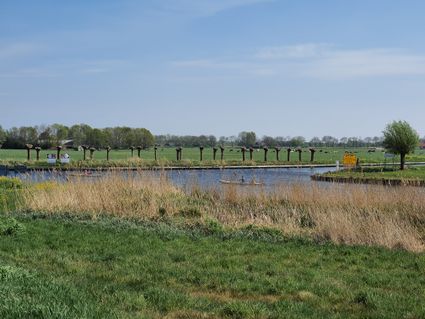
-
Grachtenrondvaart Sneek
Grachtenrondvaart Sneek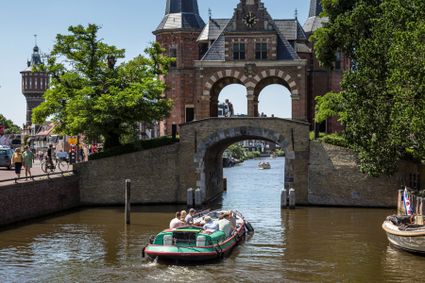
Direct boekbaar
-
Museum Sloten
Museum Sloten