Indoor activities in Friesland
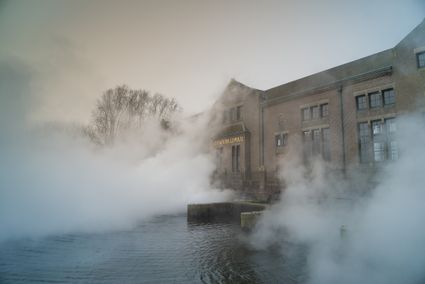
Even if the weather lets us down, you won't get bored in Friesland. Come enjoy our indoor activities. How about an indoor playground, arcade or go-kart track, for example? And don't forget our paresl in Franeker and Lemmer: the Eise Eisinga Planetarium and the Woudagemaal. Are you coming through the Afsluitdijk? Then take a look at the Afsluitdijk Wadden Center!
1225 to 1248 of 2755 results
-
Tour de Wadden
Tour de Wadden Lauwersoog
-
Aira Boats
Aira Boats Sneek
-
Túnmanswente
Túnmanswente Cornjum
-
Freulevijver Pond
Freulevijver Pond Wijnjewoude
-
Harinxmastate
Harinxmastate Beetsterzwaag
-
Eysinga State - Vakantiewoning Op ‘e Pleats
Eysinga State - Vakantiewoning Op ‘e Pleats Sint Nicolaasga
Book now
-
Wijngaard De Heidepleats
Wijngaard De Heidepleats Sint Nicolaasga
-
B&B Langweer
B&B Langweer Langweer
-
It Flinkeboskje - Vakantiewoning het Voorhuis
It Flinkeboskje - Vakantiewoning het Voorhuis Hemelum
Book now
-
Aardappelhandel De Jong farm shop
Aardappelhandel De Jong farm shop Ternaard
-
Hotel Pub Restaurant de Posthoorn
Hotel Pub Restaurant de Posthoorn Dokkum
-
Bed & Breakfast ByPaula - Kamer Huishoudster
Bed & Breakfast ByPaula - Kamer Huishoudster Easterwierrum
Book now
-
Wellekom Watersport - Platbodem lemsteraak WB22 – Wellekom
Wellekom Watersport - Platbodem lemsteraak WB22 – Wellekom Woudsend
Book now
-
Camping 't Hop
Camping 't Hop Wijckel
-
Tourist Information Franeker
Tourist Information Franeker Franeker
-
Smaak van Water
Smaak van Water Woudsend
-
The battle for the Tjonger bridge in Mildam
In the afternoon of 12 April, rumours had reached Mildam that Englishmen or perhaps Canadians had been sighted at Peperga. The Canadian vanguards had entered Friesland. For the inhabitants of Mildam it was still a surprise when at first one and shortly afterwards another military vehicle with a few men in khaki-coloured overalls stopped at the bridge.
These vehicles were part of a patrol of "D" Squadron Royal Canadian Dragoons commanded by Lieutenant Homer Thomas. These Canadians established that unlike other bridges, the bridge in Mildam over the Tjonger had not yet been blown up by the occupying forces. The fact that the Tjonger bridge in Mildam had not been destroyed was due to the local resistance movement. The Germans had indeed planned to blow up this bridge as well. But at the risk of their own lives, resistance fighters had removed the detonators from the explosives affixed to the bridge.
The Squadron Commander immediately ordered all units to secure the bridge. And the Dutch Domestic Armed Forces were also requested to provide men. The precautions turned out to be justified. In the night of 12 to 13 April, German troops launched one of their few counter-attacks in the province of Friesland. From Heerenveen, they managed to surprise the Canadians in Mildam. They tried to regain control of the bridge three times. During the fierce fighting, Canadian vehicles were knocked out. But the Dragoons stood firm, and the Germans were driven off again. Mildam was freed.Four Canadian soldiers were injured in the fighting. The number of casualties on the German side is unknown. There was property damage in Mildam, but no civilians were killed. With a little less luck, though, there would have been several Dutch casualties. In the early morning of 13 April, a group of dozens of resistance fighters approached the bridge at dusk from the direction of Nieuweschoot. This was the reinforcement requested by the Canadians on 12 April when the undamaged bridge was discovered. The resistance fighters were partly carrying captured German weapons and were not noticed by the Dragoons in the semi-darkness until late.
Lieutenant Thomas, mentioned earlier, almost gave the order to open fire. It was only at the last moment that it became clear that they were not Germans. The resistance members had managed to make themselves known by singing songs in English.
The preservation of the bridge was important. During the following days, the Canadians would make extensive use of the bridge to advance further in the direction of Leeuwarden and liberate the province of Friesland. Mildam
-
Vakantiewoning Sijsje
Vakantiewoning Sijsje Oudemirdum
-
Beach Resorts Makkum - Star+ 6 personen
Beach Resorts Makkum - Star+ 6 personen Makkum
Book now
-
Beach Resorts Makkum - Duinvilla+ 8 persoons
Beach Resorts Makkum - Duinvilla+ 8 persoons Makkum
Book now
-
Klokkenstoel Smallebrugge
Klokkenstoel Smallebrugge Smallebrugge
-
Zwettepoel Recreational Lake
Zwettepoel Recreational Lake Broek
-
Ambush at Oldeholtpade
On 12 April, the bridge over the Tjonger in Mildam fell into the hands of the Royal Canadian Dragoons reconnaissance regiment. Because the occupier had blown up many other bridges, the Canadians attached great importance to preserving this bridge for the crossing of other Canadian units. That is why dozens of armoured cars, mobile artillery guns and numerous other vehicles were sent to Mildam that day to reinforce the bridgehead over the Tjonger.
In one of those armoured cars, a Staghound, was 24-year-old Trooper Wilfred Robert George Berry from Ontario. The young Canadian had volunteered for military service in Europe. And had already fought with the Royal Canadian Dragoons in Italy. At the end of February 1945, they were transferred to Northwest Europe.
For Berry, the war ended in Friesland. In Oldeholtpade, on the road to Wolvega, his vehicle drove into an ambush along with at least one other Staghound. In the vicinity of a broken-down German car, German soldiers had hidden with Panzerfausts. The Panzerfaust was a very powerful and easy-to-use anti-tank weapon. The first shot missed, but the second projectile hit the front Staghound, on the side where driver Wilfred Berry was sitting at the time.2 The Staghound went off the road and overturned. The three other crew members got injured, but were able to leave the vehicle and took cover behind the second Staghound. One of them stated:
"[…]Flames burst through the turret, where the officer and I were half in and half out of the hatches. Any skin surface not covered was burned and the flames badly singed our eyebrows, eyelashes, moustaches and hands, sending me and the officer both wounded to the field hospital."3
Immediately after the first Staghound was hit, the second Staghound opened fire on the Germans. Seriously injured, Wilfred Berry remained in the vehicle. After about fifteen minutes of shooting back and forth, the other Staghounds retreated towards Oldeberkoop. The exact reason for this remains unclear. Berry was already dying and was briefly cared for by the elderly Andriesje Dekker-Oosterhof in the vehicle when the shooting had stopped. The tragedy had unfolded right in front of her house. He died in the wreck shortly afterwards.
Berry's remains were eventually transferred to the farm on "De Bult" in Oldeberkoop and buried there. After the war he would be reburied at the Canadian war cemetery in Holten. The other crew members were eventually able to return to their units after receiving medical treatment. The commander only had burns on his face.
The event made a deep impression on the inhabitants of Oldeholtpade. In 1945, a monument to Berry was erected. And in 1965, a street was named in his honour.
Oldeholtpade
-
Friesland Holland Tourist Information & Travel Service
Friesland Holland Tourist Information & Travel Service Holwerd