Locations
1201 to 1224 of 2318 results
-
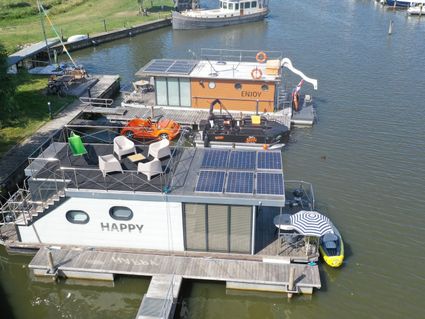
Lutz Watervilla's - Wettervilla Tweintich
Lutz Watervilla's - Wettervilla Tweintich Balk
Book now
-
Fogelsangh State Country House and Estate
Fogelsangh State Country House and Estate Veenklooster
-
Earnewâld
Earnewâld Earnewâld
-
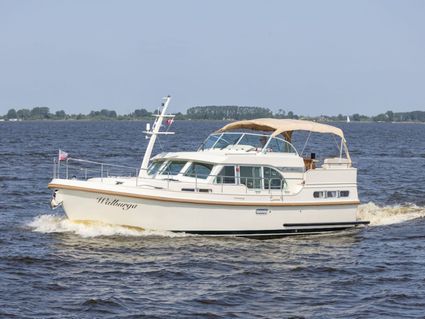
Zijda Yachting - Liona Elite
Zijda Yachting - Liona Elite Jirnsum
Book now
-
Artwork Maarten van der Weijden
Artwork Maarten van der Weijden Burdaard
-
By Peek
By Peek Sneek
Book now
-
De Houtwiel Nature Reserve
De Houtwiel Nature Reserve Broeksterwâld
-
Tusken de Marren - Vakantiehuis Sneekermeer 4p
Tusken de Marren - Vakantiehuis Sneekermeer 4p Akkrum
Book now
-
Ruime familie villa
Ruime familie villa Stavoren
Book now
-
Iezumasyl
Iezumasyl Iezumasyl
-
Graphic studio: Grafisch Atelier Friesland
Graphic studio: Grafisch Atelier Friesland Leeuwarden
-
Botmas
Botmas Engwierum
-
Camping Ykema - Groepsaccommodatie Camping Ykema
Camping Ykema - Groepsaccommodatie Camping Ykema Sandfirden
Book now
-
Recreational Park De Koevoet
Recreational Park De Koevoet Teroele
Sustainability info
-
Boutique Hotel Catshuis
Boutique Hotel Catshuis Leeuwarden
-
Tusken de Marren - Lodge Knilles 4p
Tusken de Marren - Lodge Knilles 4p Akkrum
Book now
-
Execution of ten Dutch collaborators near Oldeberkoop
On the afternoon of 12 April, Oldeberkoop was liberated by "D" Squadron of the Royal Canadian Dragoons. Later that day, they established a temporary headquarters in the village. The movements of "D" squadron were coordinated from the headquarters. This was also the place where prisoner of war from the immediate surroundings were gathered.
These prisoners of war were often Germans, but sometimes also Dutch who served voluntarily in the Waffen-SS, the NSKK (a paramilitary section of the Nazi party NSDAP) or the Dutch Landwacht. On this 12th of April, ten of these collaborators were brought into the encampment in Oldeberkoop amid great interest. Hatred of people who fought with or for the Germans was strong among most of the Dutch population. A resident of Oldeberkoop described the moment the men were brought in:
"The crowd booed and whistled, some spat, and some could not keep their hands off them. One of them got such a blow to the head that hit made his head spin."Not much later, these POWs were taken away again. Presumably with the aim of taking them to a real prison camp in Vledder. But the men would never get there. All ten of them were shot without trial in the Koepelbos just outside Oldeberkoop.
It was long thought that the Canadians were responsible for these unlawful executions. But by 1995, it became clear that Canadian involvement had been minimal. Stories about the involvement of two former resistance fighters were confirmed when one of them confessed to having fired the shots. In addition to himself, a colleague, a Canadian driver and some men who had dug the graves were present at the execution.
The exact reason for the murder of the Dutch collaborators and the exact role of the two Dutchmen and the Canadian have never been fully clarified. There are different accounts of the events leading up to the shooting. On 14 April, the bodies were finally buried in a mass grave on the side of the road. Later they were transferred to the German war cemetery in Ysselsteyn. The names of most of the victims also became known at that time:
Egbert Jan Hommes, Ordnungspolizei
Otto Frikken, Ordnungspolizei
Gerrit Jan Seevinck, Dutch Landwacht
Hendrik Dales, Dutch Landwacht
Heike Ham, Dutch Landwacht
Douwe Jonkman, Dutch Landwacht
Bernard Janssen, Dutch Landwacht
Arnold Pieter Post, Dutch Landwacht
The identities of two men from the Dutch Landwacht could not yet be ascertained. Oldeberkoop
-
Stadhuis van Stavoren
Stadhuis van Stavoren Stavoren
Book now
-
Eysinga State - Natuurkampeerplaats
Eysinga State - Natuurkampeerplaats Sint Nicolaasga
Book now
-
Information Point Makkum (Hotel Vigilante)
Information Point Makkum (Hotel Vigilante) Makkum
-
The battle for the Tjonger bridge in Mildam
In the afternoon of 12 April, rumours had reached Mildam that Englishmen or perhaps Canadians had been sighted at Peperga. The Canadian vanguards had entered Friesland. For the inhabitants of Mildam it was still a surprise when at first one and shortly afterwards another military vehicle with a few men in khaki-coloured overalls stopped at the bridge.
These vehicles were part of a patrol of "D" Squadron Royal Canadian Dragoons commanded by Lieutenant Homer Thomas. These Canadians established that unlike other bridges, the bridge in Mildam over the Tjonger had not yet been blown up by the occupying forces. The fact that the Tjonger bridge in Mildam had not been destroyed was due to the local resistance movement. The Germans had indeed planned to blow up this bridge as well. But at the risk of their own lives, resistance fighters had removed the detonators from the explosives affixed to the bridge.
The Squadron Commander immediately ordered all units to secure the bridge. And the Dutch Domestic Armed Forces were also requested to provide men. The precautions turned out to be justified. In the night of 12 to 13 April, German troops launched one of their few counter-attacks in the province of Friesland. From Heerenveen, they managed to surprise the Canadians in Mildam. They tried to regain control of the bridge three times. During the fierce fighting, Canadian vehicles were knocked out. But the Dragoons stood firm, and the Germans were driven off again. Mildam was freed.Four Canadian soldiers were injured in the fighting. The number of casualties on the German side is unknown. There was property damage in Mildam, but no civilians were killed. With a little less luck, though, there would have been several Dutch casualties. In the early morning of 13 April, a group of dozens of resistance fighters approached the bridge at dusk from the direction of Nieuweschoot. This was the reinforcement requested by the Canadians on 12 April when the undamaged bridge was discovered. The resistance fighters were partly carrying captured German weapons and were not noticed by the Dragoons in the semi-darkness until late.
Lieutenant Thomas, mentioned earlier, almost gave the order to open fire. It was only at the last moment that it became clear that they were not Germans. The resistance members had managed to make themselves known by singing songs in English.
The preservation of the bridge was important. During the following days, the Canadians would make extensive use of the bridge to advance further in the direction of Leeuwarden and liberate the province of Friesland. Mildam
-
Museum Martena
Museum Martena Franeker
-
Church and bell tower Goïngarijp
Church and bell tower Goïngarijp Goingaryp
-
Reformed Church Gerkesklooster
Reformed Church Gerkesklooster Gerkesklooster